
A late creator's donated code revealed how to trigger a 29-year-old Elder Scrolls Easter egg
The Strong’s preservation work supplied the missing input sequence, while the archive’s broader digital collection still needs curation.
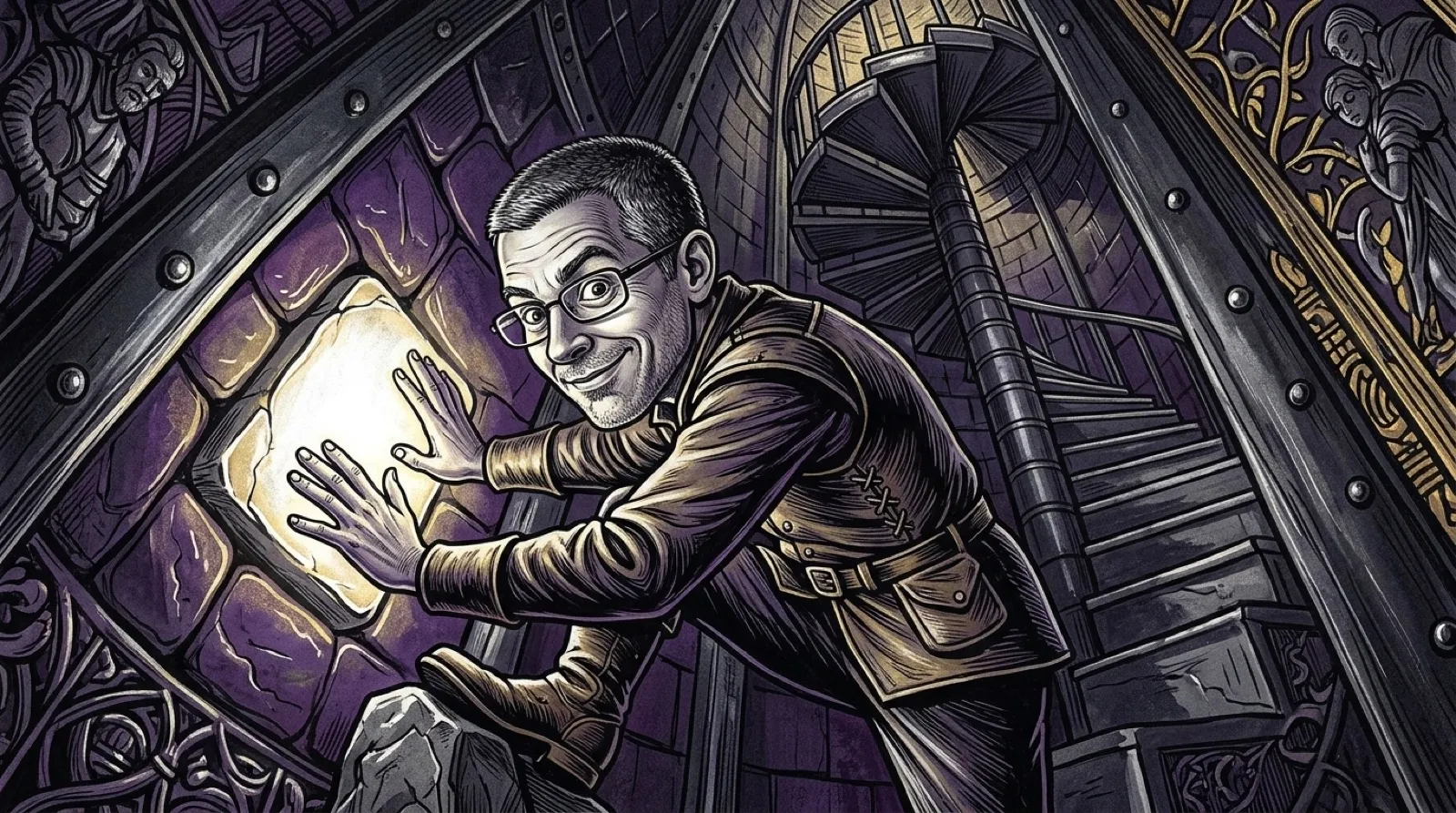
Hold 1, type Spire, and keep your finger there. Battlespire’s team-image Easter egg has a very small activation procedure for a secret that waited nearly three decades to become an explained procedure. The keyboard had been keeping office hours.
Time Extension interviewed Andrew Borman, director of Digital Preservation at The Strong, about the discovery. He says the activation was found in code preserved with the Julian LeFay papers. This is the outlet’s own interview reporting, rather than a retelling used in place of its underlying source.
The report distinguishes finding the assets from knowing how to summon them. Players had already identified the image and associated text; the missing piece was the input sequence that made the running game display them. Owning a photograph of the door does surprisingly little for someone without its combination.
Borman’s instructions include the easily lost detail: releasing the held key makes the image disappear. A player who performs the sequence and immediately lets go could therefore miss the result or conclude that the attempt failed. The last finger movement is part of the reproduction, not a footnote for the unusually patient.
The article links Borman’s own account at @Borman18. It also reports his explanation of the collection’s scope, including work materials and campaign notes connected to The Elder Scrolls. The preserved record can answer questions that the finished game never exposes through ordinary play.
For someone trying the secret in a lawful copy of Battlespire, the practical experiment is narrow: follow the sequence, hold the key and observe. That is more useful than a vague instruction to search for the team image somewhere inside the files. One is a playable discovery; the other is an archaeological address.
The broader preservation value is equally concrete. A game’s executable can contain the effect while supporting source explains its trigger. Keeping both can bridge the difference between knowing something exists and understanding how it behaves. Otherwise the secret remains a prop with its stage direction missing.
The reporting also puts limits on public access to the donated material. Digital files require curation for possible private information, and copyright constrains what the museum can share remotely. Preservation does not automatically mean every file can be downloaded tomorrow. The archive has people in it, even when the headline has an Easter egg.
That could make modest discoveries like this especially valuable as demonstrations. A working input sequence lets the audience reproduce a small result without requiring the museum to release an entire uncurated collection. The proof can be a behavior inside the game rather than a giant public file dump.
More secrets may emerge as records are organized, but a prediction needs no invented treasure chest. This one already turns a known image into an action somebody can perform. The rest of the collection has a longer and more careful path to public access.
The team is still there.