
A Harley diagnostic tool uses an ESP32 and a browser instead of a licensed scanner
A small Wi-Fi board exposes motorcycle diagnostic messages, including commands that can move actual hardware.
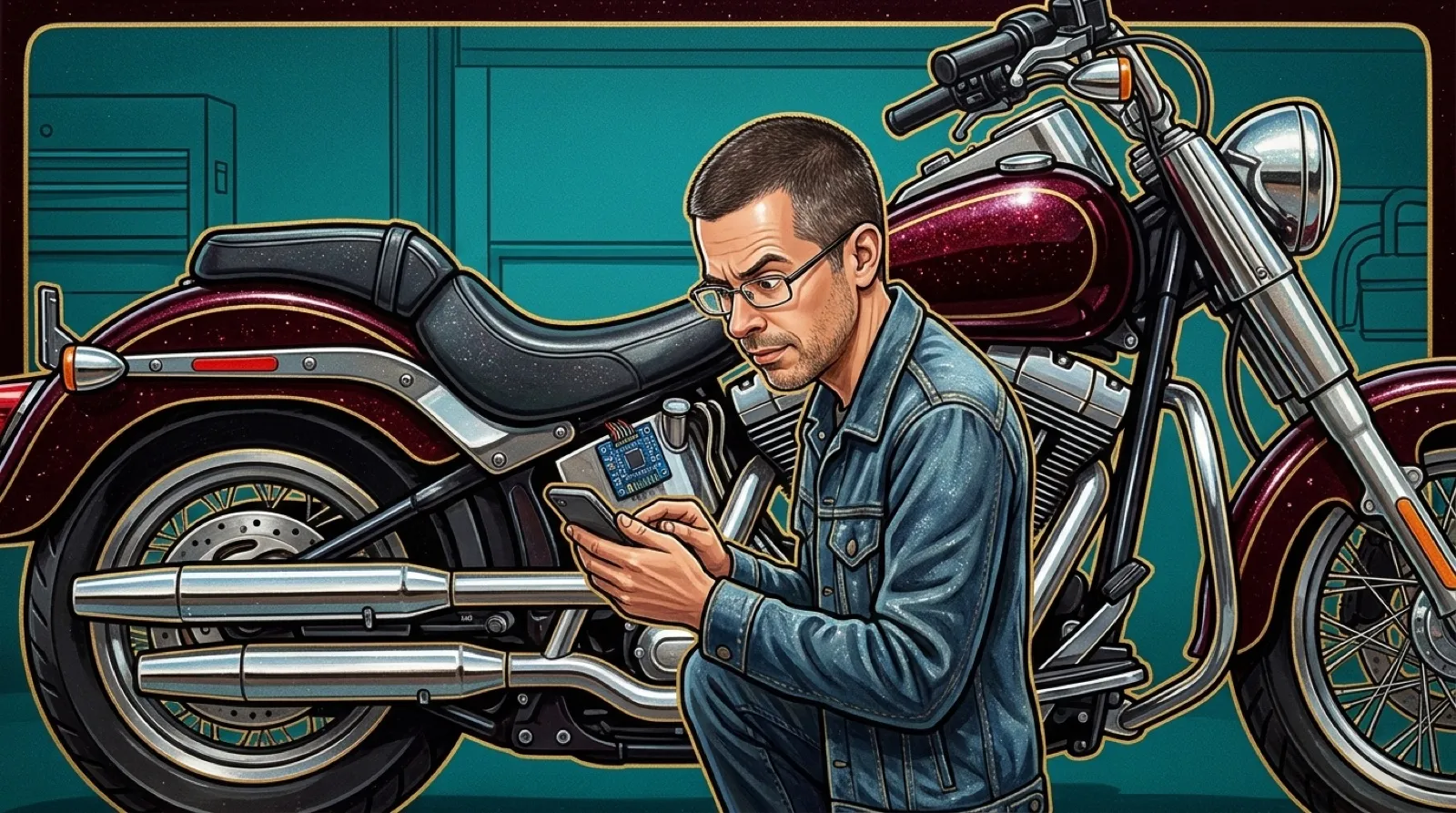
A motorcycle diagnostic tool can fit into a browser tab, but the tab still talks to a motorcycle. ESP32-HD uses a small Wi-Fi board to expose diagnostic functions over the bike’s CAN bus. The interesting part is the inexpensive interface; the important part is what sits on the other end of it.
The GPL-licensed project uses UDS diagnostic messages over CAN transport on a 500 kbps bus. An ESP32 handles the application while a separate transceiver handles the electrical connection. It creates its own Wi-Fi access point, allowing a phone or laptop to open the interface without installing a companion app.
The README lists code reading, module identification and live parameters. Its offline lookup database contains 1,685 trouble codes, and the ECM view offers up to 41 live parameters. Those figures describe the project’s published capabilities. They do not independently establish which messages a particular model year will return or whether a reported symptom has been diagnosed correctly.
There is a much larger distinction between reading a value and requesting an action. The firmware includes actuator tests that can operate pumps, relays and other outputs. A browser interface can make those controls look ordinary, but their effect occurs on real vehicle systems. This is workshop equipment with a web page, which deserves the same care as workshop equipment with buttons.
The connector is another place where appearances can mislead. The documentation identifies the bike’s native six-pin diagnostic connection and warns that pin numbering, wire colors and shells can vary. It specifically calls for checking the actual motorcycle’s wiring information. A connector that looks familiar is insufficient evidence that a homemade cable is correctly wired.
For a builder evaluating the project, the published source is more informative than the dealer-tool comparison in its headline. The code and documentation can be inspected for the modules and operations that matter to the intended use. Connector choice and supported operations still depend on the particular bike.
The underlying hardware is familiar to hobbyists: an ESP32 development board plus an appropriate CAN interface. Buying the board is only one part of the build. Power arrangements, the transceiver, the cable and the operating procedure must all match the actual installation.
The appeal is that the diagnostic conversation is no longer hidden inside a closed handheld box. A reader can inspect how a request becomes a message and how a reply becomes a displayed value. That visibility is valuable precisely because the screen’s simplicity should never conceal the seriousness of a command sent to the bike.
That browser tab has a workshop attached.