
Eternal Darkness’s fake save wipe worried Nintendo about real memory-card damage
Silicon Knights built its horror around ordinary troubleshooting instincts, making the player’s response part of a system inspired by tabletop role-playing.
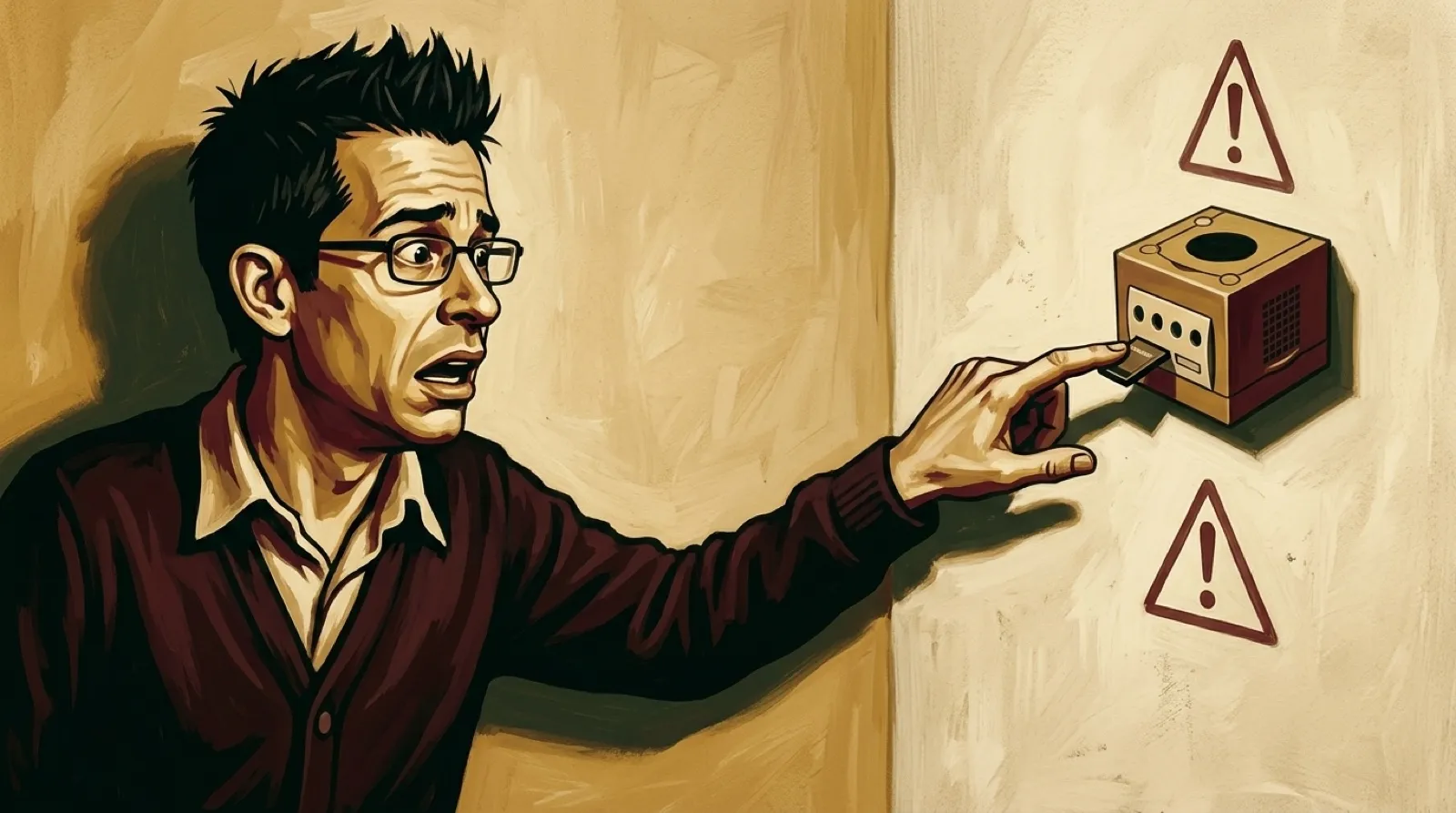
Eternal Darkness could pretend to erase your memory card. The game was messing with the person holding the controller, and Nintendo worried that person might reach for the console.
Lead designer Ted Traver told Time Extension that getting approval for effects that conflicted with Nintendo’s certification process was difficult. Nintendo was “worried about actual damage occurring to the card” if a frightened player pulled it out.
That is a concern he remembers from approval discussions. The interview does not establish a count of damaged cards, a formal certification failure or an incident in which a player actually corrupted a save. The review concern described in the interview was the player interrupting the hardware, even though the formatting screen itself was an illusion.
The sanity system depleted as the player met monsters, triggering effects that could reach beyond the fictional room. Traver traces the idea to the pen-and-paper Call of Cthulhu game. False events, including formatting a memory card, had to read clearly enough that the player could eventually understand the trick.
The trick belonged to a much larger game. Nintendo’s publisher description follows Alexandra Roivas to Rhode Island after her grandfather’s death, then through twelve playable characters across two thousand years. A player had more to lose emotionally than one monster fight. The card held progress through a sprawling story, and the game could make that investment appear to vanish.
The sanity meter also had consequences a player could manage. In GameSpot’s June 2002 review, Shane Satterfield described sanity falling during encounters with enemies. Finishing enemies restored some; characters had different capacities. At the bottom of the meter, seeing another enemy could cost health. The hallucinations therefore grew out of an ongoing resource problem, with pressure to act while deciding whether the screen deserved belief.
Some effects stayed inside the haunted house: blood ran down walls or a character walked on the ceiling. Others suggested the hardware had failed. Satterfield’s contemporary advice was “don’t be too quick to take action.” That restraint was practically a new controller skill. The usual fix-it reflex, reach for a switch when the machine looks broken, could be exactly what the designers were trying to provoke.
WIRED’s Chris Hudak reported experiencing that confusion firsthand in March 2002. His character’s arms disappeared, then her head, before she returned intact. “I took my first such experience to be a software glitch,” Hudak wrote. He nearly dropped the controller. That account shows the effect working on someone who was playing the game, without requiring a later legend about ruined memory cards.
The result needed two kinds of timing: the hallucination had to be convincing, and the human reaching toward the hardware had to get the reassurance soon enough.
A future designer borrowing this idea would have to test the person as carefully as the illusion. How soon does the player stop pressing game buttons and start reaching for the console? A convincing fake error borrows trust from the real interface. Any modern game that tries this trick inherits the same question: how quickly will the player move from believing the warning to touching the machine?