
A browser aquarium makes you grow filter bacteria before you can keep fish alive
Fish Tank Atlas puts preparation ahead of collecting, using a fast-forward setup to make an invisible support system part of play.
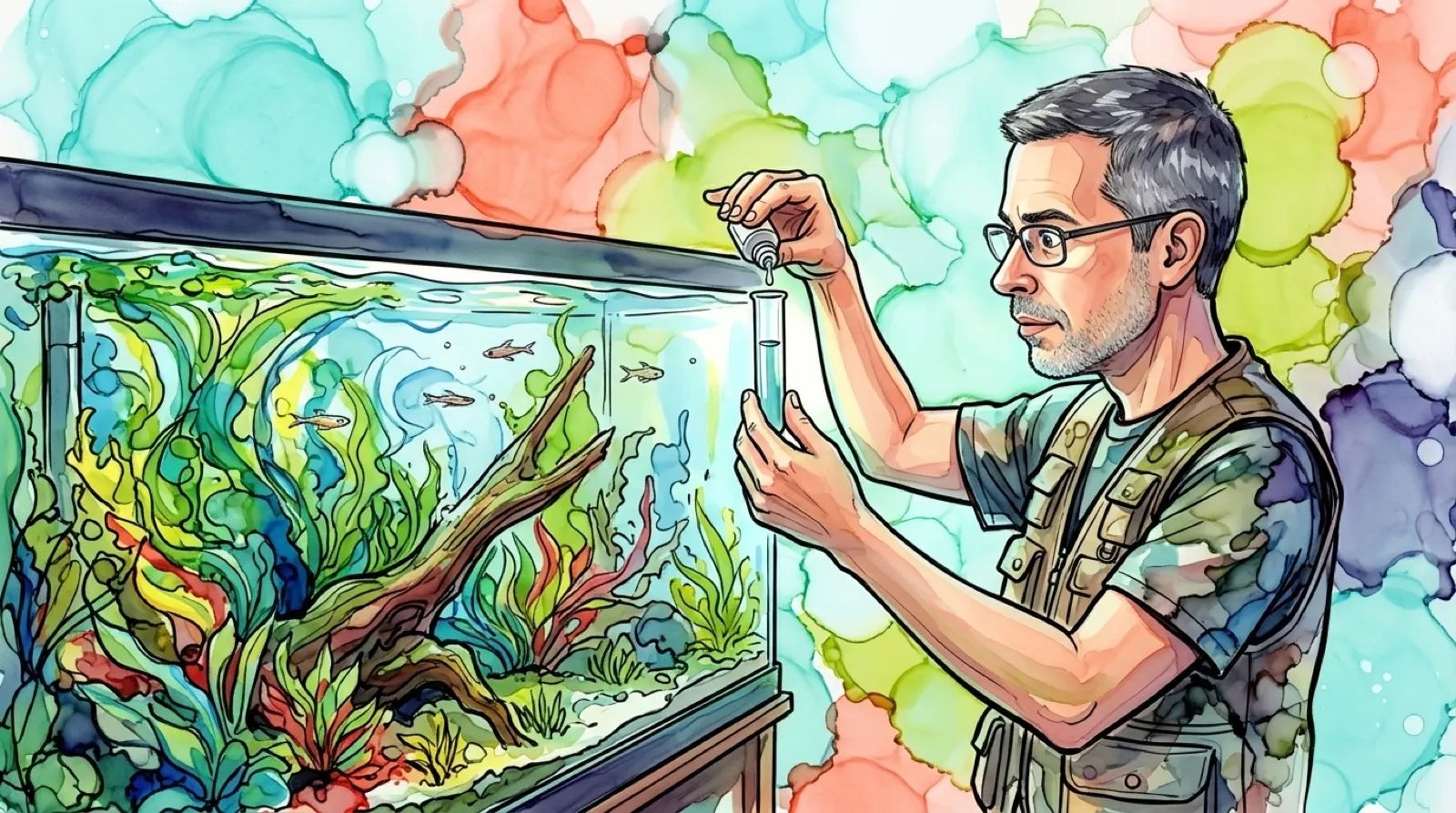
The fish have to wait for the bacteria. Fish Tank Atlas starts its browser aquarium with a preparation sequence in which the player doses ammonia, watches a test kit and grows the filter’s bacterial population before choosing the first fish.
The simulator’s own page describes roughly five minutes of fast-forward setup. It also offers a settled tank as another starting point. Those are two different invitations: learn how the support system becomes established, or begin with something already running.
The interface gives ammonia, nitrite and nitrate their own readings, alongside ordinary-looking controls for feeding, lighting and water changes. A digital fish tank could have reduced care to tapping the food button. This one puts some less photogenic work on the screen. Bacteria rarely get the box art (terrible agents).
The page calls it “a real nitrogen cycle.” That is the maker’s description of the simulation, rather than an independent validation of its biological accuracy. A browser exercise should not become the sole care guide for a living aquarium, especially when the game explicitly compresses setup time.
What the design clearly makes possible is experimenting with sequence. The player sees preparation as something that precedes adding inhabitants. That can be a stronger teaching device than a warning shown after the player has already made the exciting choice. The waiting becomes an activity instead of a closed door.
A reader can try the new-tank route and note how the test readings change before the game offers its first fish. Trying the settled-tank route afterward would reveal what preparation the shortcut assumes. That comparison asks the interface to explain its starting conditions without pretending a five-minute demonstration establishes a real-world timetable.
The ability to accelerate time also changes the emotional cost of an experiment. A consequence can become visible during one sitting, and a player can connect it to the action they just took. The useful question is whether the simulation makes that connection legible rather than merely changing several numbers at once.
This is a quietly different collecting-game premise. The attractive inhabitants depend on an unattractive infrastructure, and the infrastructure gets a turn in the spotlight. Someone who keeps services alive for a living may recognize the arrangement immediately. The thing everybody wants to look at is seldom the whole thing keeping itself alive.
For a teaching session, the simulator could work best beside explicit discussion of what has been accelerated or simplified. A student could describe the game’s sequence and then compare it with an authoritative real-aquarium care source. The game provides an experience to question; the comparison supplies the boundary.
More simulations could make their hidden prerequisites playable this way, giving the maintenance work an observable result before adding the fun part. The promising question is whether players remember why the tank was prepared once they are busy choosing inhabitants. The first fish is waiting on a workforce too small to see.
The smallest pets eat first.