
An ESP32 GTA countdown clock takes pixel-art drive-by breaks
The fan project gives a tiny OLED a cinematic startup, then turns its Wi-Fi radio off between daily clock checks.
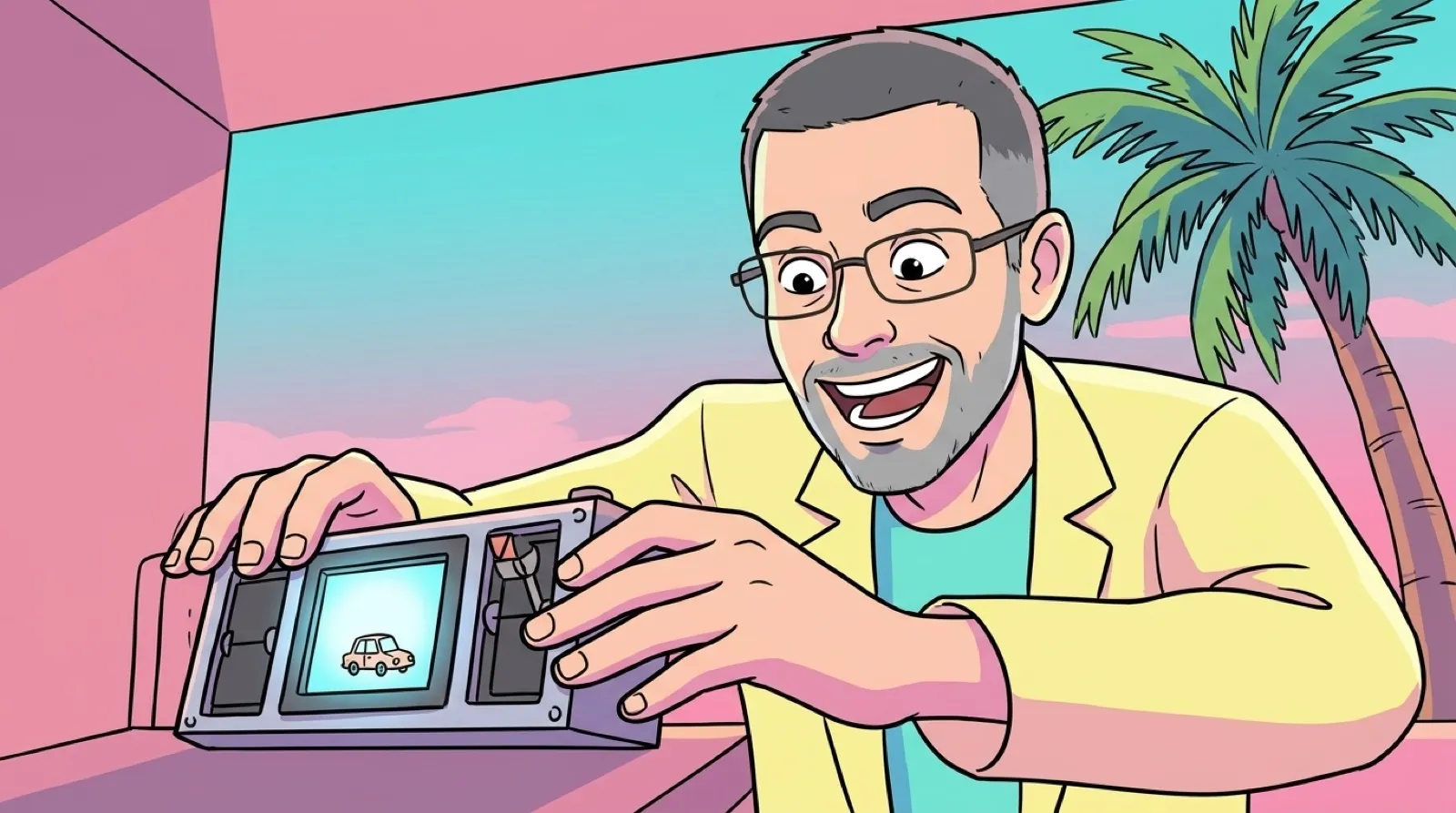
Waiting for a game has acquired a dedicated appliance. A fan’s GTA VI Countdown Clock boots through a miniature cinematic sequence, arrives at a split-flap-style countdown, then occasionally interrupts itself with a pixel-art car swerving through a Miami scene. Apparently even the timer needs a getaway.
The maker’s repository documents an ESP32 WROOM-32 board and a 2.42-inch SSD1309 OLED. The screen has 128 × 64 pixels. Those are tight quarters for a dramatic entrance, yet the project fits a fake old-PC startup, publisher and title cards, a skyline, palms and a scrolling road into the opening sequence.
The startup also contains a useful trick beneath the theater. Its Wi-Fi and NTP status lines reflect real connection state, and the animation keeps moving while those checks happen. It can therefore entertain the person at the desk without hiding whether the network has cooperated. A progress display that progresses while giving useful information. Please alert the rest of the industry.
The README calls it a “fan tribute” and explicitly disclaims any Rockstar or Take-Two connection. Its configured target is November 19, 2026; that describes the firmware’s countdown setting, not an independent guarantee about the game’s release. A hobby clock can count toward a date beautifully and still depend on a date someone may change.
Play the video on YouTubeAfter startup, the clock obtains time over NTP, switches off Wi-Fi and advances using the ESP32’s internal clock. It tries another synchronization every 24 hours. If its known network is unavailable, it keeps its current time and tries on the next cycle. The README warns that an initial boot without ever reaching Wi-Fi has no real time to start from and uses fallback values.
That is a practical little separation between knowing the time and constantly asking for it. The display has a local job it can do between network visits. The maker does not promise zero drift, and the project remains dependent on a successful initial sync. A clock that checks in daily has a much more reasonable attendance policy than a gadget that collapses whenever the router sneezes.
The build notes identify the display controller rather than treating every small OLED as interchangeable. An SSD1306 module needs a different library constructor from the specified SSD1309. Anyone ordering an ESP32 WROOM-32 and a screen should match the actual module to the wiring and display setup before blaming the animation for a blank rectangle.
The target timestamp and driving-scene interval are configuration values. That makes the same design a possible countdown to a trip, a birthday or anything else worth giving desk space to. A future version could make the target editable without recompiling; the maker lists that as a roadmap idea. For now, a changed date still has to reach the firmware before the tiny car can take the correct exit.
Wanted: one punctual release.