
Infrastructureai-videoself-hostinghomelabcloud-costsclaude-code
KitCut moved its AI film studio off a $250-a-month Azure VM onto a used gaming PC, and the same 8-minute film renders in 3m49s instead of 17m42s
KitCut's maker wiped a second-hand gaming PC and installed Linux over SSH with no USB stick and no spare machine, then watched a box on the living-room floor out-render the cloud VM it replaced by 4.6x.
KitCut’s pipeline is unusual before you even get to the hardware. “Claude writes the film as code (every drawing, camera move, caption and music cue),” the write-up on DEV explains. The flow is “idea -> Claude writes film.js -> headless Chromium draws 28,800 frames (8 min @ 60 fps),” then text-to-speech narration with word timing, a scored and mixed soundtrack, and ffmpeg encoding to an MP4. The KitCut repo describes the toolkit as local-first, paired with an agentic film generator.
The cloud version strained. The Azure box had 4 vCPUs, 16 GB of RAM and no GPU, cost about $250 a month, and rendered at roughly 17 frames per second. The narration step eventually needed 12.5 GB on that 16 GB machine and the studio went down. “The cloud fix was a bigger VM at double the price, forever,” the author writes. “I went shopping instead.”
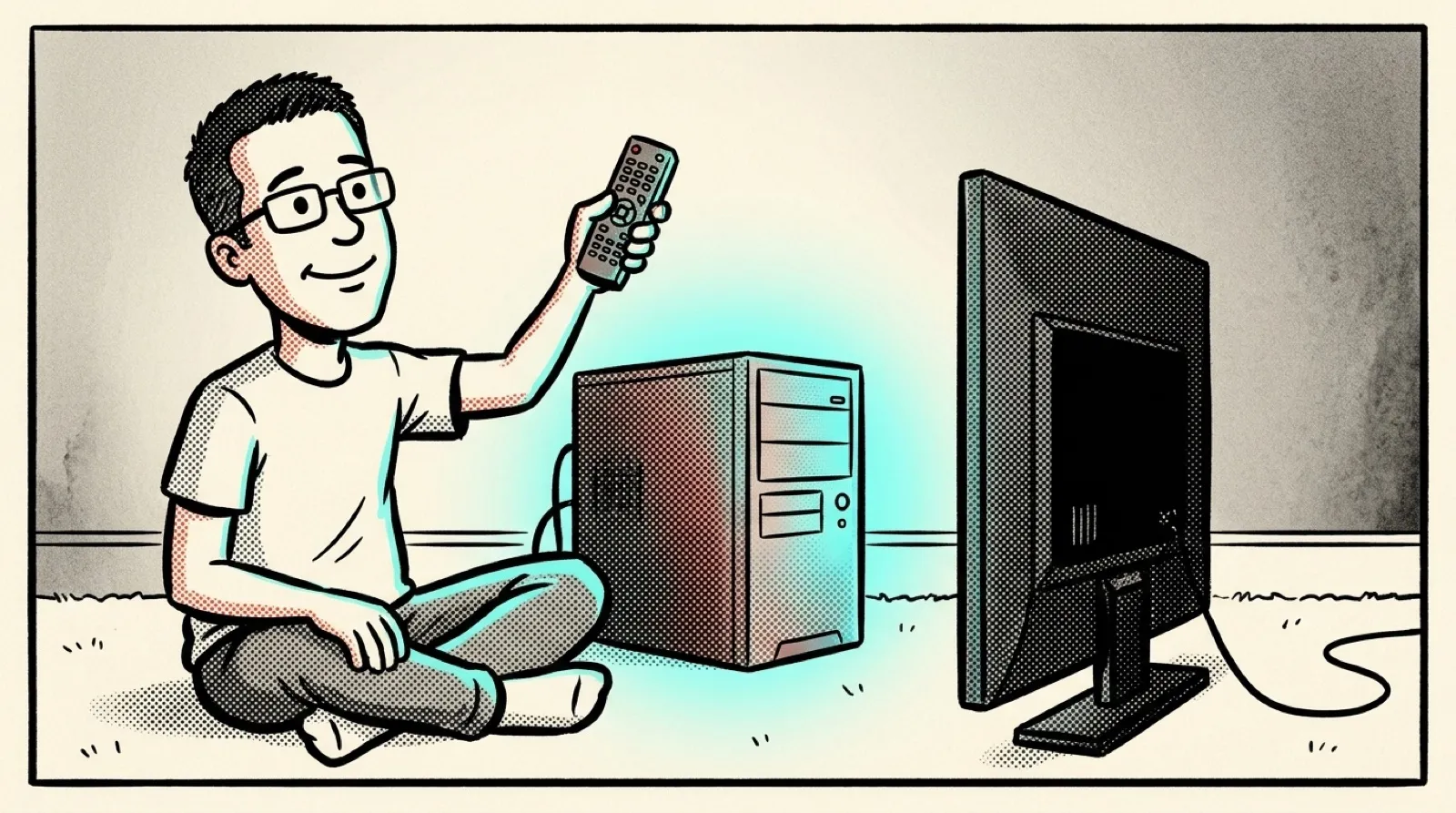
Shopping meant a used tower: an Intel Core i7-12700 with 20 threads, 32 GB of RAM, an RTX 3070 with 8 GB, and a 1 TB NVMe drive, paid for once. There was no monitor in the house, so the setup leaned on a TV bought for the occasion and set on the floor, and there was no USB stick to boot an installer from. If the install failed after Windows was wiped, there would be nothing to boot from at all.
So it was done without one. Claude Code SSH’d into the old Windows install and ran the whole swap “while I held the TV remote,” the author says — the one-shot install worked first time. Cutover happened at 2 a.m. with 16 minutes offline; a deliberate reboot afterward brought the box back in about 30 seconds. The studio’s 496 films (166.5 GB) were restored from a Cloudflare R2 mirror, and a Cloudflare Tunnel keeps it reachable with “no open ports, no static IP, and SSH from anywhere.”
Since the move the studio has rendered 258 films, about 6.4 hours of video, on 13 days of uptime. The headline number is the 4.6x, but the quieter story is a production company whose entire link to the internet is, in the author’s words, “the only cable between our production studio and the internet” — one line to a tower and a floor TV, doing work a cloud provider was happy to bill forever.