
A free tool makes coding agents claim files before another agent can take the same work
Parallel helpers need an ownership check before helpful edits become a merge rescue.
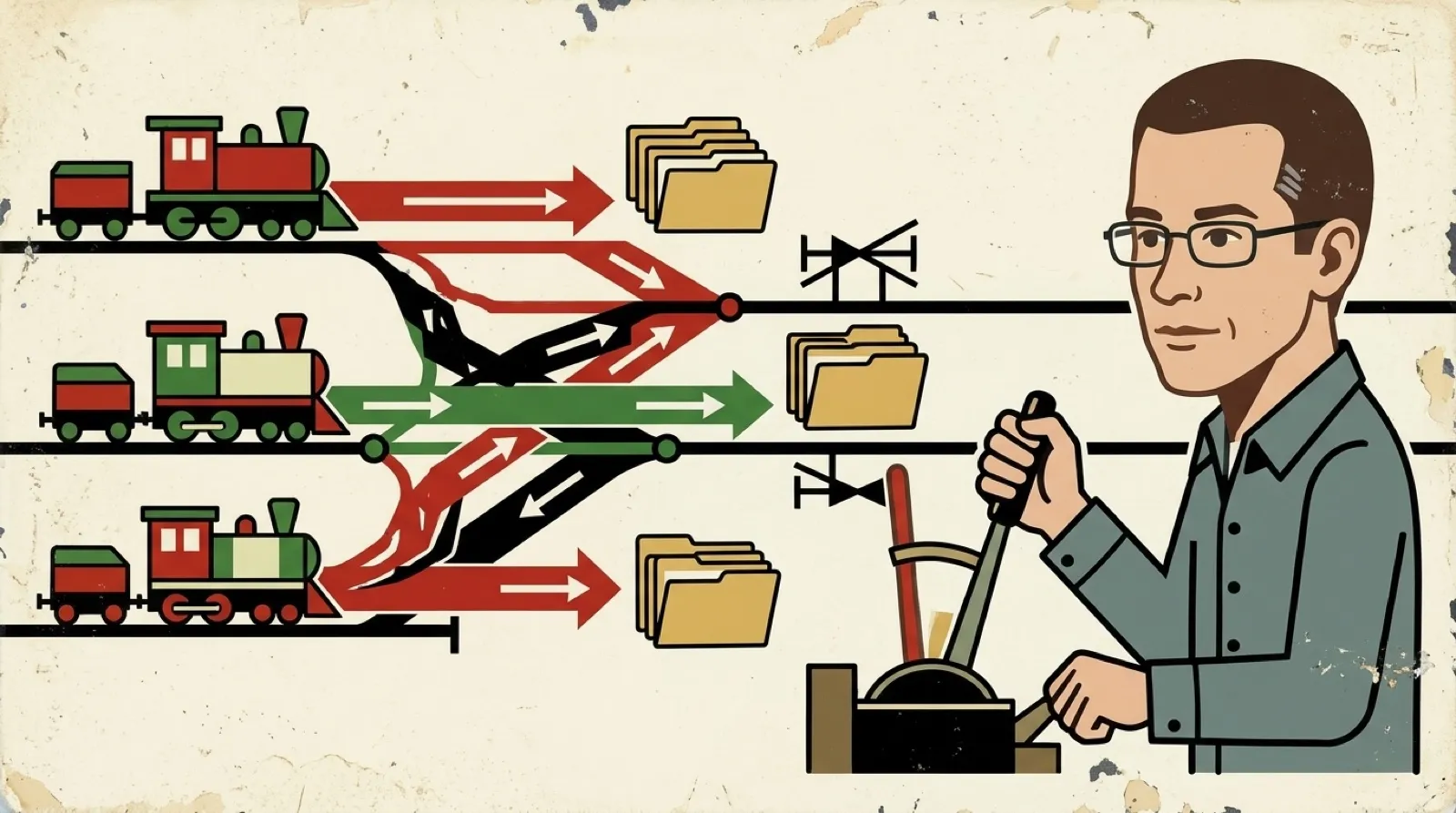
Two coding agents can agree completely about the assignment and still overwrite the same file. Neither has to misunderstand a sentence. They just need to start from the same old copy while the other one is busy being helpful (so very helpful).
The free, open-source aisync project puts a claim in front of that collision. An agent declares which files or directories it intends to change. If another agent already holds an overlapping claim, the command refuses with a specific exit status. There is a machine-readable version of somebody saying, hey, I’m using that.
The maker’s README calls it “one standup for all your AI coding agents.” Its local hub also holds shared rules and a hash-chained journal, with hooks supplying news during sessions. These are the project’s documented capabilities; this account follows its own description rather than an independent concurrency test.
Asking about ownership before work begins moves the conflict ahead of the editing. A beautiful explanation after two edits collide still leaves somebody rebuilding the intended result. The file claim moves the argument to a cheaper point, when stopping means choosing a different task instead of rescuing a broken one.
The guarantee depends on the caller actually claiming the work and honoring the refusal. That distinction belongs beside the installation instructions. A cooperative reservation helps participating tools; it doesn’t make an arbitrary editor physically incapable of changing a file. Calling the reservation command and then ignoring its answer would be a particularly efficient way to recreate the original problem.
The journal answers a separate question. Knowing who reserved a directory doesn’t tell the next worker why a decision changed, whether somebody got blocked, or which commit contains the result. Keeping those facts together can save another agent from confidently solving yesterday’s version of the assignment. Confidence is remarkably portable; context needs a moving company.
For a first trial, pick two small tasks with overlapping files in a disposable project. One agent should obtain the reservation, the other should stop, and releasing the first claim should make the second attempt possible. That would establish whether the actual tools respect the contract before a valuable project depends on it.
Coordination tools become more useful as parallel work becomes ordinary. Adding another worker is easy; teaching every worker what the others just changed is the part that keeps the extra help helpful. The unresolved question is how reliably a particular setup follows the claim protocol through interruptions and restarts.
This standup has an exit code.