
After Dark’s 1994 racing rats return in a browser, with their original music and bad habits
A resource-fork extraction project preserves the sound library as well as the race, with original media supplied separately.
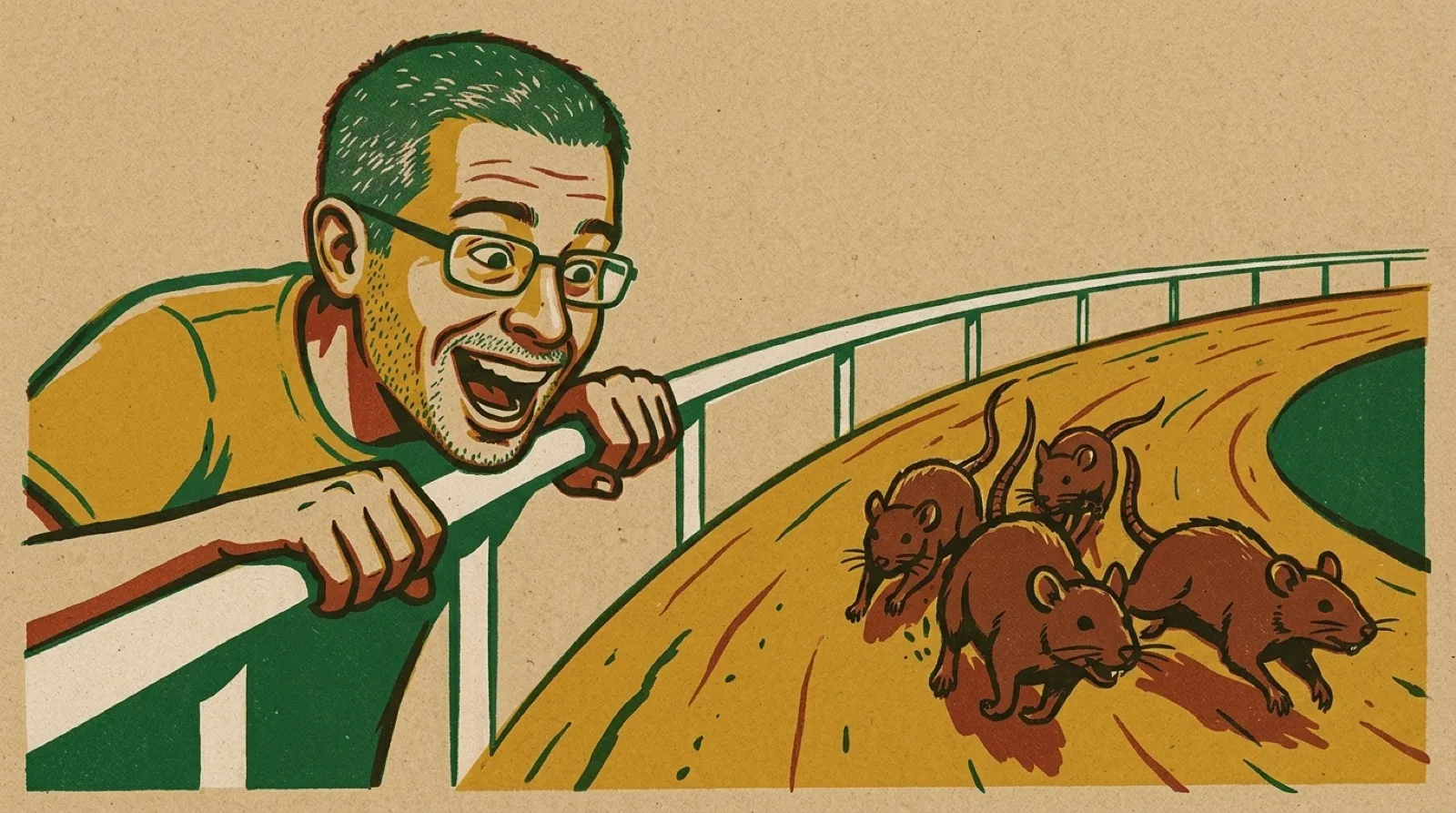
After Dark’s rats have somewhere to be, provided they can resist taking a nap. The browser reconstruction puts the old race back on a track, complete with training settings and the William Tell arrangement. Apparently the office computer needed a work avoidance simulator.
The project’s README credits Andrew Armstrong’s programming and Matt Small’s art for the Berkeley Systems original. It calls the new version a “browser reconstruction,” an important distinction for anyone expecting a classic Mac operating system to boot behind the page. Canvas draws the race; Web Audio handles its recovered sounds.
Getting the original material out takes more than copying a file with a familiar name. Classic Mac resource forks hold the pictures, music and other pieces while the data forks can appear empty. A careless transfer can therefore preserve a perfectly named zero-byte disappointment. The extractor checks the Rat Race version and pulls from the module, shared sound library, faceplate and control panel.
That separation explains why the source repository contains no Berkeley Systems artwork or recordings. The instructions describe extracting them from your own After Dark collection. The preservation work gives old material a new player, without pretending ownership of the player includes ownership of everything it can play. There is still some assembly required (nostalgia has prerequisites).
Once the assets are present, the project builds a static website. Its start screen borrows the old control panel’s flying-toaster slider thumbs. Space pauses the race, R restarts the same rats with fresh luck, and Escape returns to the menu. Browsers require an interaction before audio, so the Run Race button also gives the soundtrack permission to start.
The distinction between restarting and choosing a new race is especially good. The same names and lanes can run again with a different outcome, while a new race returns to the menu. You can revisit the little contest you just watched rather than lose the entire cast whenever somebody decides to stop moving.
The repository also exposes a frame inspector and reproducible seeds. Those tools let curious readers examine animation states and recovered constants instead of treating every nostalgic detail as an unverifiable promise. The documentation names approximations and open questions, which is more useful than declaring the remake magically perfect.
Preservation gets interesting when it keeps the behavior that made a thing memorable. Saving a screenshot would preserve what the rats looked like. Recovering their race logic gives them the freedom to disappoint you again. The build work is there to inspect, and the missing original media remain something the new code cannot manufacture.
The rats can still call in sleepy.