
A free writing tool borrows aircraft-maintenance rules to untangle chatbot prose
STE80 asks an editor to name the actor and trim ornate wording, while leaving factual verification to the writer.
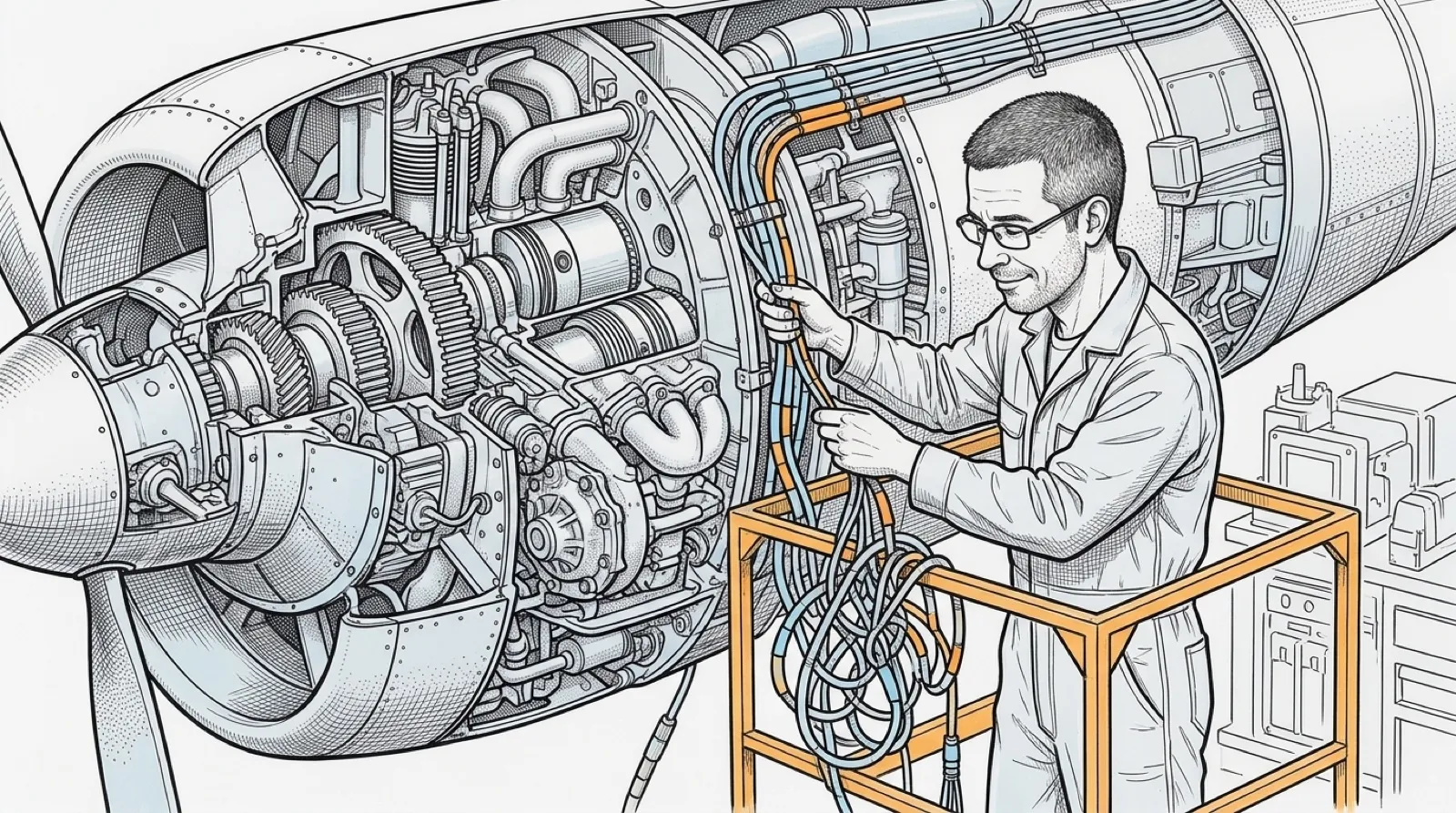
An aircraft maintenance instruction has a demanding reader: somebody who needs to understand what to do, without admiring how the sentence was assembled. STE80 Humanizer borrows that discipline for generated prose. The instruction manual has entered the group chat, and it would like everyone to name the actor.
The open-source skill uses two editing passes. The first targets familiar writing habits such as staged introductions and inflated language. The second works on the remaining sentence structure: active verbs, fewer ideas per sentence, and a separation between explaining a system and telling someone what to do with it.
The distinction is useful because deleting a fashionable adjective does not repair an overloaded sentence. A paragraph can lose all its obvious chatbot phrases while still hiding who performs an action. That leaves the reader doing the rearrangement mentally, especially when the sentence mixes a condition, a consequence and an instruction.
STE80 takes its name from a deliberately softened application of ASD-STE100, Simplified Technical English. The project describes that controlled language’s roots in aerospace maintenance. Its default mode retains the structural discipline while relaxing dictionary restrictions that would sound stiff in an ordinary explanation. A strict mode applies more of those restrictions.
The README’s example concerns a Kubernetes liveness probe. Its rewrite names the component that restarts the container and then explains how an unsuitable timeout can cause repeated restarts. That is a useful demonstration of what shorter prose must preserve: a condition and its consequence. Removing the caveat would make the paragraph easier to skim and less accurate.
The project explicitly says detector evasion is not its goal. That matters because a passage becoming easier to read is observable in a way that its supposed human origin is not. A person can write a muddy sentence, and a model can produce a clear one. Readability and authorship are different questions with different evidence.
For a writer, the interesting review happens after the edit. Check that uncertainty remains uncertain, that numbers retain their qualifiers, and that the actor has not changed. A sentence that originally said a system might fail cannot quietly become a declaration that it always fails, however the new version fits on screen.
The skill is available as files readers can inspect before installing. That makes its instructions and examples more useful than an unexplained button labeled humanize. Treat the output as an edited draft requiring comparison with the original. A clearer sentence must preserve the original meaning; removing an awkward qualification can make a claim smoother and less accurate.
Please keep the meaning aboard.