
Retromacintoshapplefloppy-disks
Apple Hid a Sony Engineer in a Closet While Saving the Mac’s Floppy Drive
The finished storage system needed custom motor control and denser recording, with the launch schedule leaving little room for another homegrown mechanism.
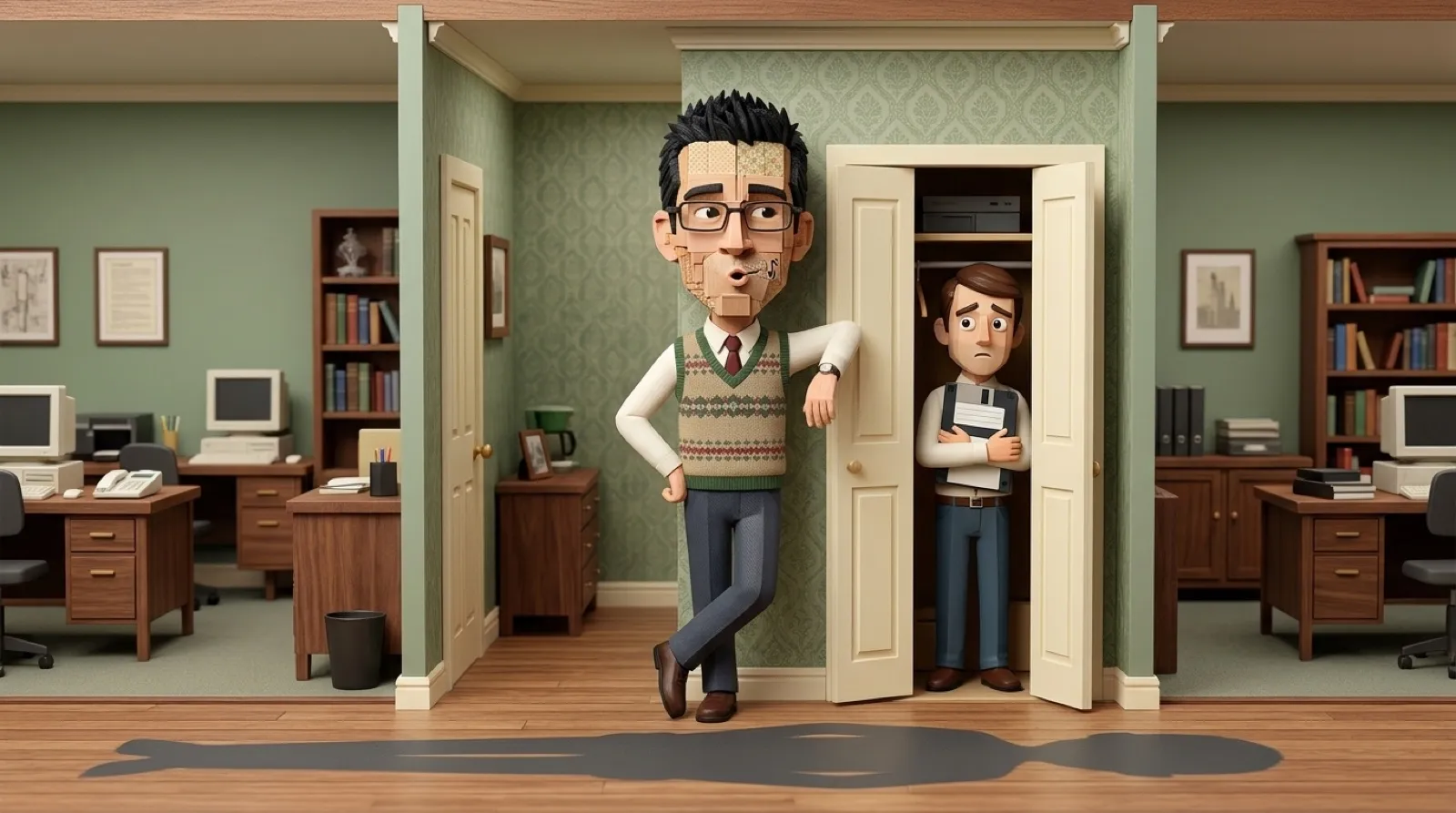
A supplier engineer working on the Macintosh ended up waiting in a janitorial closet because Steve Jobs walked into the room. Vendor management had reached the hide-and-seek phase.
The Mac team’s original Twiggy drive was unreliable, according to Andy Hertzfeld. The Lisa could rely on a hard drive; the Mac had no such escape route. Its entire schedule depended on finding a working replacement.
George Crow obtained a Sony 3.5-inch drive through his contacts at Hewlett-Packard. Jobs liked it, then chose to have manufacturing partner Alps develop Apple’s own version. Fewer than seven months remained before the planned Mac launch. He ordered work on Sony’s drive to stop.
Crow and engineering manager Bob Belleville kept that option moving secretly, with Larry Kenyon handling the interface. Sony sent Hide Kamoto to help specify modifications. When Jobs appeared unexpectedly, Crow hurried Kamoto into the closet for about five minutes. Hertzfeld recalls the visitor’s verdict: “But American business practices, they are very strange.”
Alps returned an eighteen-month estimate a few weeks later. Belleville revealed the backup, and Jobs thanked them for disobeying. That’s the recollection of someone on the team; the closet episode and dialogue depend on Hertzfeld’s account.
The IEEE Macintosh milestone proposal shows how much engineering still sat between buying a Sony mechanism and shipping the computer. It documents a capacity increase from the stock 256 kilobytes to 400 kilobytes. Apple changed the recording method to GCR and varied motor speed between 390 and 600 rpm to fit more sectors on the outer tracks.
That makes physical sense if you picture the disk as concentric circles. An outer track has more circumference available. Changing the rotation rate lets the system use that extra distance while maintaining the linear velocity described in the proposal. The whole disk needn’t behave as though every track were the smallest one.
Crow redesigned the Sony circuitry for variable speed. Burrell Smith, Hertzfeld and Kenyon minimized the control hardware using a channel of the sound generator and software noise shaping. The computer’s sound circuitry had acquired a second job, even when nobody was asking it to play anything.
The same proposal traces the storage controller to Apple’s earlier work. The Integrated Woz Machine put Wozniak’s Apple II controller state machine into one chip. The Mac drive also used software-controlled disk clamping and ejection. Those are tangible integration decisions, down to how the computer lets go of the disk containing your files.
A modern team looking at this episode could give a fallback an owner, a working interface and a date for revisiting the decision. That would preserve the useful part of the Sony detour without asking a visiting engineer to become office furniture. The awkward question is how a project leader makes room for that evidence before the main plan returns with a schedule nobody can use.