
The Macintosh team put its signatures inside the case mold
The credits became a moving target as new employees arrived and manufacturing revisions erased names. A later museum repair found another team hiding under a motherboard.
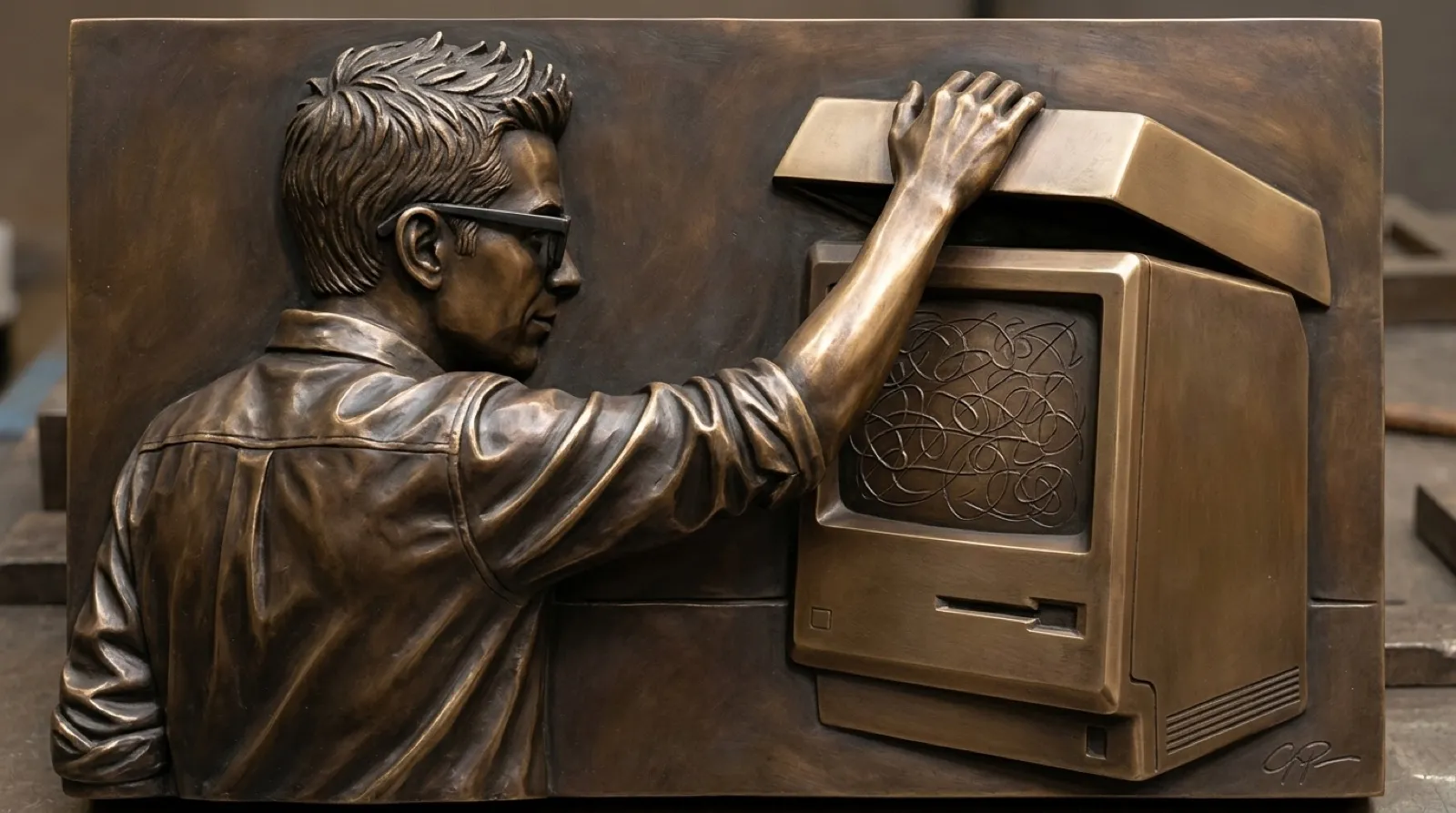
The Macintosh came with credits you could miss for the entire life of the computer. Steve Jobs proposed putting the team’s signatures into the mold itself, according to Andy Hertzfeld’s firsthand account. The factory would reproduce the handwriting with the case. An autograph session with an unusually large print run.
The tooling had the longest lead time of any Mac hardware component. The team had spent more than six months refining the enclosure and made 50 units with a temporary mold before preparing the final tooling in February 1982. At that point, they were aiming to ship in January 1983.
The signing party happened on February 10. Around 35 people took roughly 40 minutes to sign a large sheet of drafting paper. Cake and champagne accompanied the proceedings. Hertzfeld’s explanation for the hidden credits was simple: “we would take pride.” Customers needed a special tool to get inside.
The credits immediately developed a personnel problem. The team wanted the party date to be the cutoff, while also including departed contributors. New arrivals subsequently made it in anyway. Then manufacturing revisions began obscuring and removing signatures. Permanence lasted until someone needed to change the plastic.
MoMA’s collection record supplies a revealing view from outside the case. It credits Apple, Jobs and industrial designer Jerry Manock, lists the material as ABS plastic and other materials, and places the computer in its Architecture and Design department. A factory-made enclosure can sit comfortably in an art collection; the people inside the project had already treated it that way.
The museum’s label also names Susan Kare’s icons and the bundled MacWrite and MacPaint applications. Those details widen the picture beyond the three names at the top of the catalog entry. A computer can carry several overlapping sets of credits, depending on whether you’re looking at the enclosure, the screen or the object label beside it.
A later machine produced a wonderfully literal example. In January 2012, Martin Burch at the Highland Historic Computer Museum described removing a Macintosh IIci motherboard during a repair and finding signatures underneath it. The museum identified seven names, including Gavin Ivester and Pat Jackson. A failed boot had led the repairers to a set of design credits.
That discovery gives collectors a useful next job. A record of the exact machine and the marks inside it would let future researchers distinguish a different team’s signatures from changes to the original Mac mold. Otherwise, “the Mac had signatures” compresses several objects and several groups of people into one attractive anecdote.
Hertzfeld could not identify the last model bearing the original names with certainty. The next documented case could help answer a question the signing party never settled: whose handwriting survived the factory’s next revision?