
NES vs. Nintendo 64: a huge CPU-clock leap still left a cartridge slot
Nintendo’s European hardware tables show how far the internals moved, while requiring care with regional clocks and memory units.
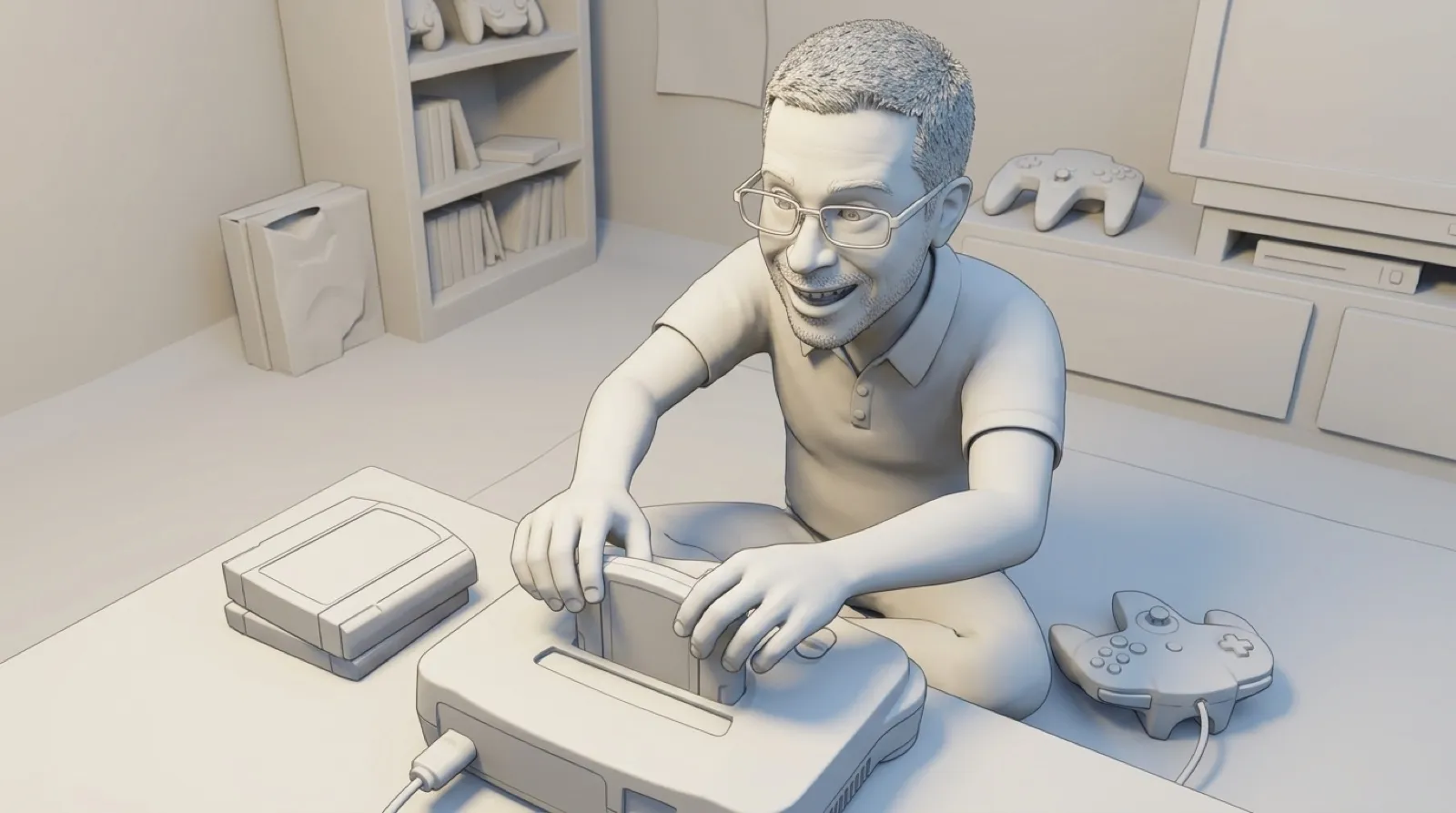
Nintendo kept the cartridge while changing almost everything the machine behind it could do. A Nintendo 64 and an NES both accept a physical game, yet the processor clocks in Nintendo’s European specification tables are 93.75 MHz and 1.66 MHz respectively. That is roughly 56.5 times the clock frequency, and exactly zero reason to push an NES cartridge into an N64.
The NES table matters here because region changes the comparison. Its 1.66 MHz figure is the European specification. A ratio based on a different NES clock cannot quietly migrate into the same chart. Nostalgia already has enough fuzzy edges without letting the denominator go sightseeing.
The Nintendo 64 specification lists “Clock Speed: 93.75 MHz” and identifies a customized MIPS 64-bit RISC CPU, plus an RCP coprocessor handling graphics and sound-related work. The old table lists an 8-bit CPU. Counting bits and megahertz establishes that these are substantially different designs; multiplying their clock rates does not produce a measured game-performance score. Different processors do different amounts of work in a cycle, while graphics hardware has work of its own.
| Manufacturer’s European specification | NES | Nintendo 64 |
|---|---|---|
| CPU description | 8-bit | Customized MIPS 64-bit RISC |
| CPU clock | 1.66 MHz | 93.75 MHz |
| Memory wording | 2 Kb RAM, 2 Kb video RAM | 36 Mbit RAMBUS D-RAM |
| Listed display ceiling | 256 × 240 | Up to 640 × 480 |
The memory row is deliberately faithful to the tables’ wording. Nintendo’s older NES page uses an ambiguous-looking Kb label, while the N64 page gives a bit count. Turning those cells into a giant multiplier without explaining the underlying units would make the chart look more decisive than the source. A specification table can be accurate enough to preserve and still need interpretation before the calculator comes out.
The N64 page also lists texture mapping, a Z buffer, anti-aliasing and perspective correction. Those describe parts of the route to a different visual world. The jump was more involved than asking the older CPU to draw the same pictures faster. A new kitchen can do different cooking; replacing the wall clock does not reproduce the renovation.
A Nintendo 64 is therefore an interesting comparison partner for an NES because the familiar act of handling a cartridge masks a much bigger architectural break. The plastic object in your hand says continuity. The execution environment says the software has a very different home.
For someone shopping for old hardware or planning a retro setup, the useful questions stay specific: which region, which games, which display connection and which machine’s accessories? A bigger clock number does not settle those. Nor does it tell anyone whether their preferred game was designed around a particular limitation.
The next worthwhile comparison would use actual games or a defined technical task and explain the hardware doing the work. Until then, the clean numerical finding is a clock-frequency ratio between two named regional specifications. The cartridge slot survived the transition; the assumptions inside it did not.
Same ritual. Different machine.