
Ocarina of Time on Switch 2 lets you hum Link’s songs into the microphone
Earlier Nintendo composers fought to preserve the feeling of distant music across hardware changes; this remake brings the player’s own performance into that relationship.
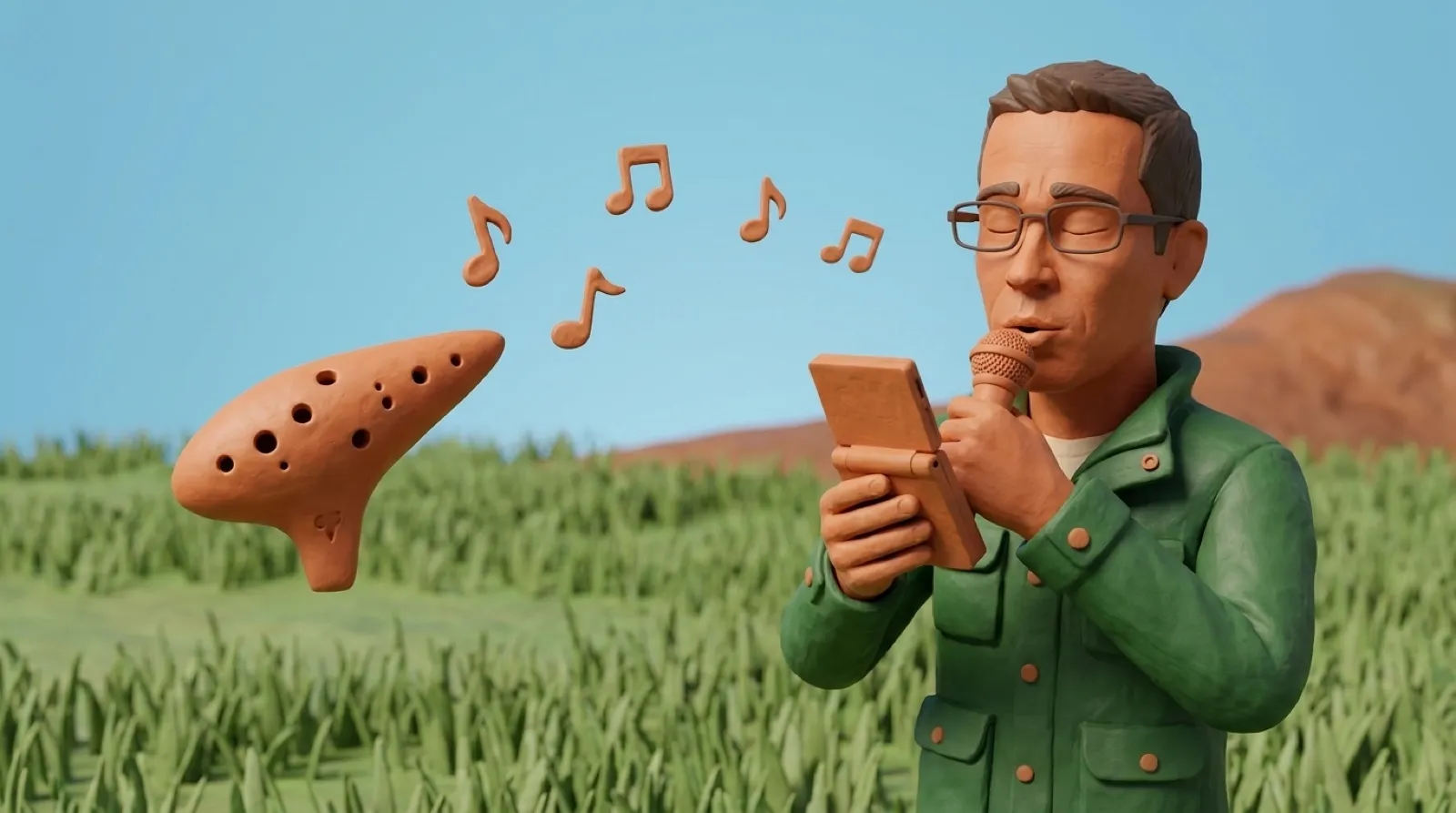
Link can play the ocarina with your humming supplying the notes. Nintendo’s remake lets a tune leave the game, pass through the person holding the controller and come back through a microphone. The couch gets a musical role in saving Hyrule, whether the other people sitting on it wanted one or not.
The official store page offers the same input choices for Link’s Fairy Ocarina and the Ocarina of Time: buttons, humming, or an instrument played into the Switch 2 microphone. Nintendo says the songs can open paths and change day to night. A melody is an action with consequences inside the world.
The announcement trailer introduces the rebuilt adventure. Nintendo describes the release as rebuilt for Switch 2, with revised visuals, orchestral music, voice acting and expanded cutscenes. Those are the publisher’s announced features; the microphone’s tolerance for a particular player’s voice still needs hands-on evidence.
Play the video on YouTubeSound already had a surprisingly physical role in the earlier remake. In Nintendo’s interview about the 3DS version, Mahito Yokota described recreating the title music and having composer Koji Kondo object that the ocarina stood out too clearly. The notes had the right lengths, but the sense of distance was missing.
Kondo wanted the impression of an unseen player somewhere in the forest. Yokota identified the missing reverb, then faced the processing cost of adding it on the handheld. The conversation describes repeated adjustments, with more CPU capacity allotted to sound than usual. Getting the music to feel familiar required changing how the new hardware produced it.
Timing needed work, too. Satoru Iwata put the Nintendo 64 version at about 20 frames per second and the 3DS version at 30. Yokota explained that sound effects had to be adjusted for the changed frame rate. Even the satisfying sequence of pulling in a Gold Skulltula token needed attention. “Same music” concealed quite a bit of engineering.
Switch 2 already contains a built-in monaural microphone. Nintendo lists noise cancellation, echo cancellation and automatic gain control for voice chat. That specification establishes the hardware, without establishing which processing the remake applies to musical input. A microphone that makes conversation clearer hasn’t thereby demonstrated that it recognizes every hummed melody.
In a separate part of the older Nintendo interview, Kondo explained the relationship he wanted between music and the person playing: “Link is you.” Letting that person provide an actual sound could strengthen the connection. It also brings a bedroom, living room or noisy commute into a task that buttons can perform silently.
Nintendo’s audio settings provide an input selector, noise suppression toggle, input volume and a recording-and-playback microphone test. Those controls give players something concrete to inspect. The unresolved part is how forgiving the game will be when a recognizable song arrives slightly off-key, with the television and somebody else’s conversation in the background.