
The iPhone 17 fits 123 times a PalmPilot’s pixels into a similar pocket weight
A 1997 hands-on PalmPilot test makes a better comparison than mixing its RAM with modern flash storage.
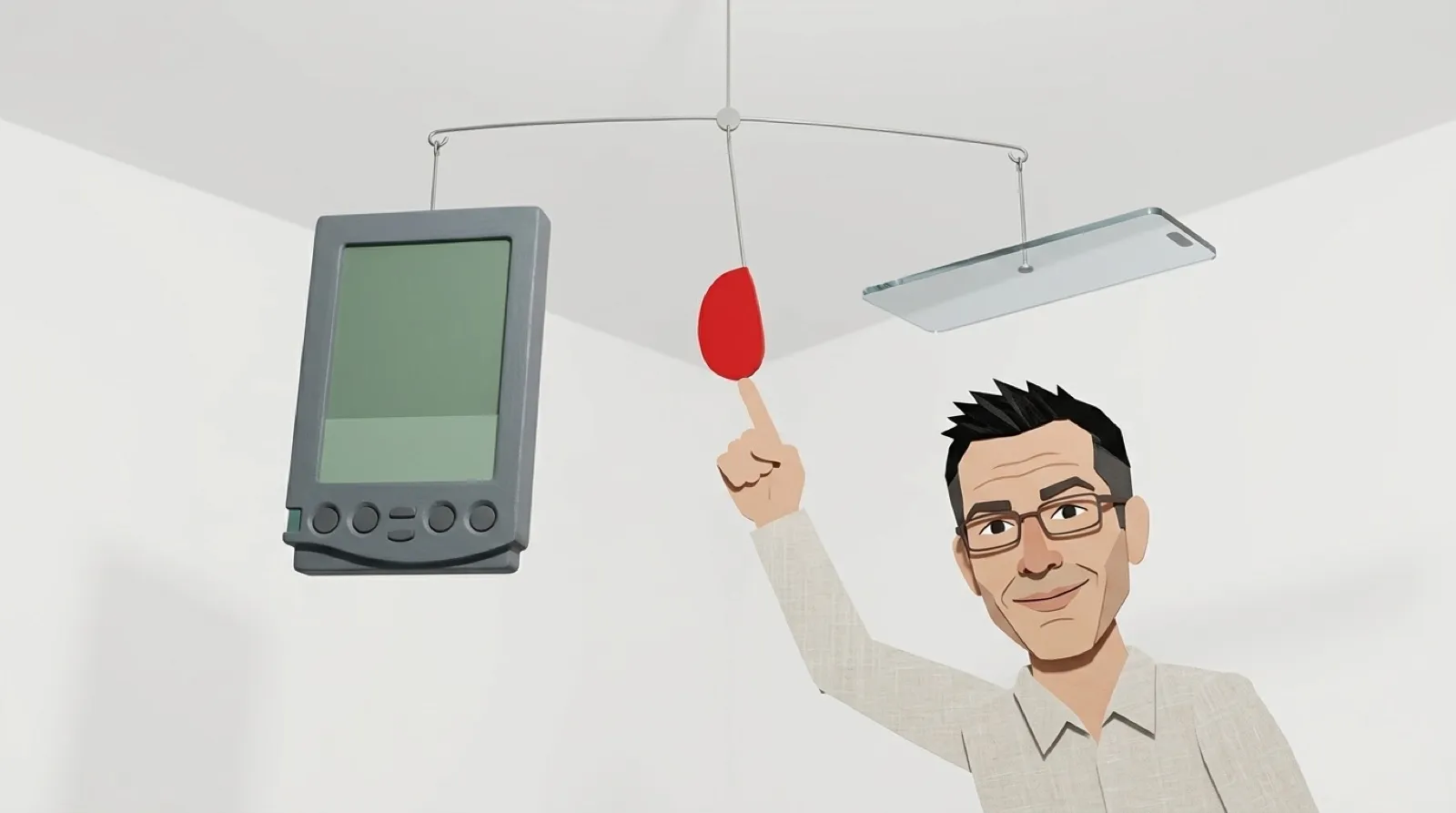
The Windows Magazine test says the PalmPilot “weighs 5.7 ounces with two AAA batteries installed.” That is a measured pocket-weight comparison, with the batteries included.
A PalmPilot’s entire screen held 25,600 pixels. The iPhone 17’s specified rectangle holds 3,162,132. Pocket computing has expanded in a direction your jacket pocket cannot measure.
In Windows Magazine’s June 1997 hands-on comparison, the PalmPilot Professional weighed 5.7 ounces with its two AAA batteries. The reviewer described a device small enough for a shirt or jacket pocket. Apple lists the iPhone 17 at 6.24 ounces, or 177 grams.
| Detail | PalmPilot Professional, period test | iPhone 17, Apple specification |
|---|---|---|
| Display grid | 160 × 160 monochrome | 2622 × 1206 OLED |
| Calculated rectangular pixel count | 25,600 | 3,162,132 |
| Listed weight | 5.7 ounces, batteries installed | 6.24 ounces |
| Everyday input | Stylus and Graffiti area | Touchscreen |
| Power path | Replaceable AAA cells | Rechargeable internal battery |
The pixel ratio is 3,162,132 ÷ 25,600 ≈ 123.5. Apple notes that the display’s rounded corners sit inside that standard rectangle, so this is specification-grid arithmetic rather than an exact count of visible corner pixels.
The weight increase from those ounce figures is 0.54 ounces, or about 9.5%. This uses the period test’s weighed configuration rather than attaching false precision to a different 160-gram listing. The reviewer tested the Professional; the Personal’s lower price and RAM do not silently become this unit’s specifications.
The next useful comparison would measure what those pixels do to attention during a workday. A display can grow 123 times denser without giving its owner 123 times more spare time.