
A developer reverse-engineered Windows drivers to revive a six-chip Pulsar II sound card on Linux
A new driver revives real audio paths while retaining explicit boundaries around unfinished ports and proprietary DSP files.
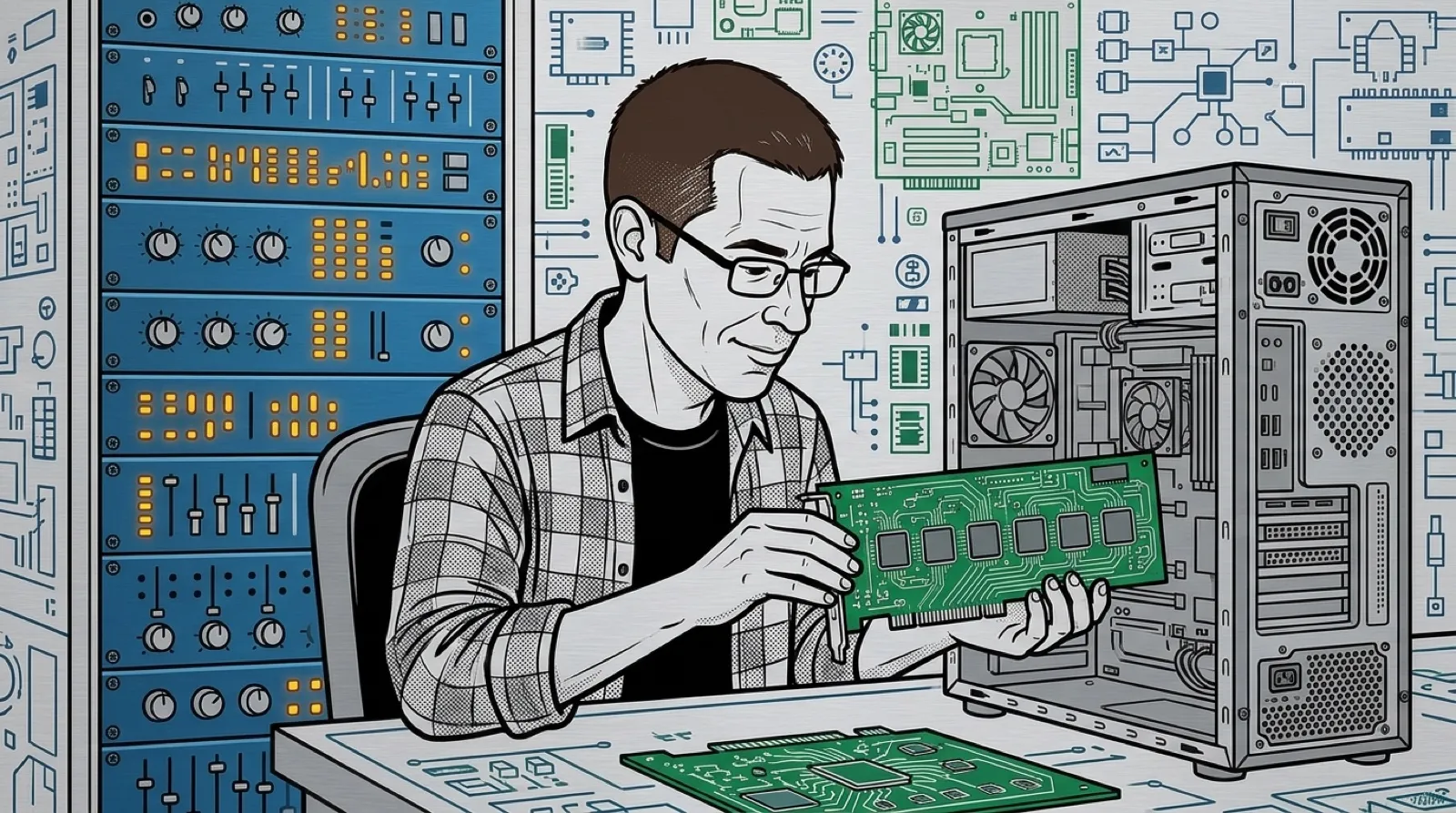
A PCI sound card can have plenty of processing left and no supported route into the operating system you want to use. This Linux project is building that route for the Creamware and Sonic Core Pulsar II. Six SHARC processors have been waiting for someone to find the right doorbell.
The repository describes reverse-engineering the Windows SCOPE 5.1 kernel driver and a supporting library. The result separates the Linux hardware interface from userspace software that starts the DSPs and loads their modules. Recognizing a PCI device is only the beginning; the processors still need their operating images and a useful audio path.
The status table is refreshingly specific. The maker reports analog playback and recording on channels one and two, ALSA and PipeWire integration, and internal-clock operation at 44.1 and 48 kHz. The project’s status table distinguishes working connections from unfinished ones.
Some adjacent features have different labels. External clock support is implemented but untested. Factory synths and the ADAT, S/PDIF and MIDI ports appear among unfinished work. That means a musician who depends on a particular digital connection has a materially different decision from someone experimenting with basic stereo analog input and output.
The DSP files are another essential boundary. They belong to Sonic Core and are not distributed in the repository. The instructions require the official installer and a valid license. Publishing the Linux driver does not transfer ownership of the software images it needs to load, even when both pieces cooperate to make the old card useful.
A modular graphical interface lets users place modules, connect them and save a rack. The project also exposes command-line control through a daemon that owns the running card. Those are layers above the initial device detection, and their presence makes the work more interesting than a screenshot showing only that Linux can see the PCI identifier.
For someone with a Pulsar II card already installed in suitable hardware, the first useful reading is the feature-status table. A studio setup has dependencies beyond whether a test tone plays. Clock source, required ports, licensed devices and recovery from a reboot all need to match the intended session.
The appeal of this work is its attention to the complete chain, from hardware access to DSP loading to an application-visible audio device. Its unfinished sections remain part of the story. An old card does not need every original feature restored at once to become an interesting working experiment, but the musician needs to know exactly which cables can currently carry the tune.
The old card is finding its voice.