
Retrotexas-instrumentsspeech-synthesistoys
Texas Instruments' 1978 Speak & Spell Squeezed a Whole Speech Synthesizer Onto One Chip and Kept Its Words on 128-Kilobit Memory
TI announced it that June at the Chicago Consumer Electronics Show after two years of work. A talker's voice was squeezed to roughly 1,000 bits per second, and the museum catalog notes the toy turned up in films and in music.
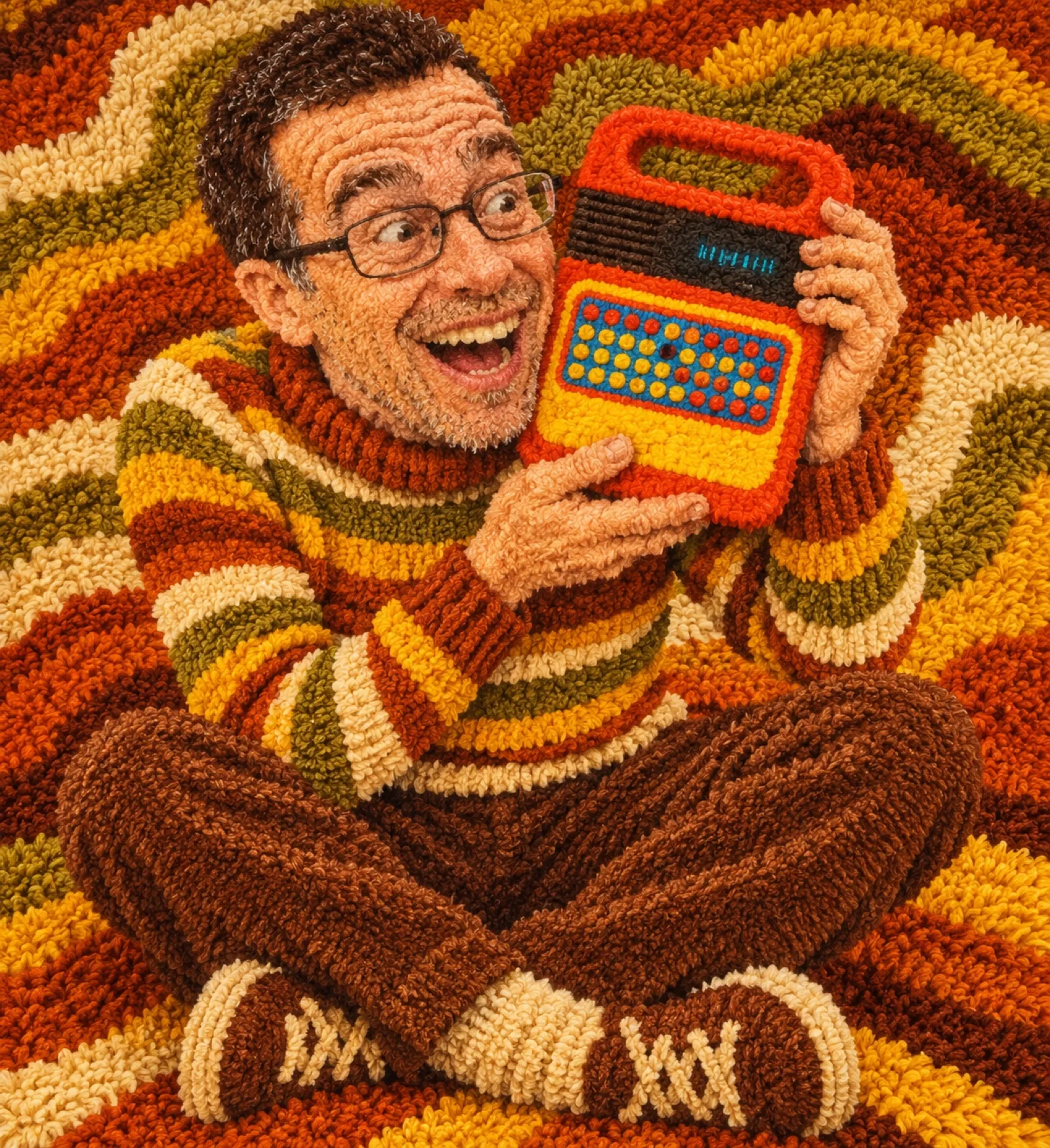
Texas Instruments put a voice on a chip, then hid the chip in a spelling toy. The Computer History Museum lists the Speak & Spell as a 1978 TI product, a slab about 1 1/4 by 7 by 10 inches, and says it used the first single-chip voice synthesizer. The words lived on “the largest available memory chips,” 128 kilobits each.
The press release is dated Dallas, June 11, 1978, and the toy debuted at the Summer Consumer Electronics Show in Chicago, June 11 to 14. The Datamath Calculator Museum says the project started in 1976. The Interface Museum puts the start-up budget at $25,000 and names Paul Breedlove as the engineer and product manager who led it.
The trick was compression. Datamath says the chip’s speech encoding is “pitch excited Linear Predictive Coding,” and that the codes it takes in are twelve synthesis parameters: ten filter coefficients, plus pitch and energy. It runs at an eight kilohertz rate in the Speak & Spell. The Interface Museum says a professional speaker recorded the words, then the recordings were processed down to roughly 1,000 bits per second. It credits Mitch Carr with the voice.
Do the arithmetic and the 128-kilobit chip stops sounding generous. At about 1,000 bits per second, one of those chips holds a little over two minutes of speech. Datamath says the voice data sits in a 128k-bit ROM chip, the TMC0350, so every word the toy could say had to fit in that budget. Later models, it says, shipped with a reduced word list, the Speak & Read added a second speech ROM, and plug-in modules stretched the vocabulary. None of the pages I read give a word count, so I won’t.
Around the voice sat a small, plain toy. The Carleton University Vintage Computing Collection describes an 8-character vacuum fluorescent display, four C cells and a $50 price at release. Its software came on interchangeable ROM cartridges, and nobody could program it. That’s a computer that refuses to take instructions from the person holding it, which makes it a lot like a middle school hall monitor.
The museum catalog adds a bigger claim. It calls the Speak & Spell the first commercial use of digital signal processing, and says it later showed up in several films and in digital music. Carleton records that it appeared in E.T. the Extra-Terrestrial and that its cheap, accessible speech chip made it a favorite of circuit benders, who take the thing apart and make it sing the wrong words on purpose.
The part still unsettled is the paperwork. The pages disagree on the chip’s name. Datamath calls the first chip the TMC0280 in one place and lists the TMS5100 as TMC0281 with TI’s internal name “0280” in another, while Carleton names both without reconciling them and the Interface Museum says the TMC0280 was later known as the TMS5100. Nobody, in the sources I read, says which printed name belonged on the original board.
Expect the next anniversary roundup to keep calling it the first talking computer, which isn’t quite what the record says. The record says the first single-chip synthesizer, in a toy, with a voice compressed hard enough to fit about two minutes into a chip. That’s a smaller claim, and it’s the one that holds up. The likelier legacy is the design habit: pick one cheap chip, squeeze the data until it fits, and sell it as a toy before anyone notices it was a milestone.
Now spell “milestone.”