
CERN's two-year staff turnover gave the Web proposal an office problem to solve
The original memo's dependency questions will sound familiar to anyone who inherited a system after its maker left.
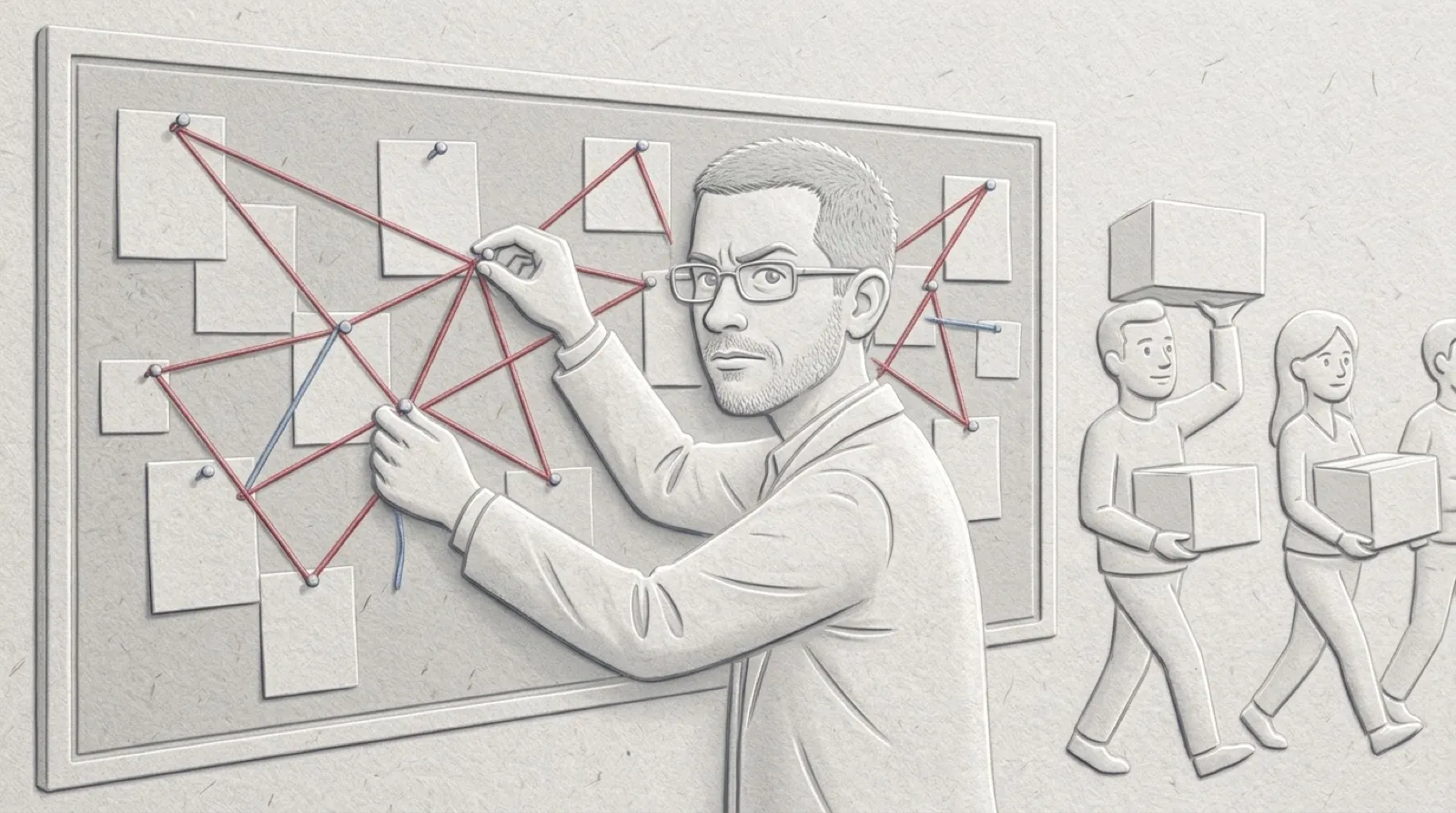
The person who knows why that module exists has left. Somebody remembers a document. Nobody can find it. CERN had this problem before a missing wiki page could send an entire team into a meeting about improving the wiki.
Tim Berners-Lee put it in his 1989 proposal: “When two years is a typical length of stay, information is constantly being lost.” The sentence sits inside a practical discussion of keeping track of people, hardware, software and experiments.
That makes the proposal surprisingly recognizable. Its questions include which systems depend on a device, who wrote code and where that person works. The office wanted answers that survived a change in the office.
Turnover was one problem among several in the document. CERN’s projects also changed over time, crossed organizational boundaries and involved incompatible systems. Calling staff departures the sole cause of the Web would flatten the proposal into a motivational poster (now with hyperlinks).
A fixed hierarchy struggled to represent those relationships. A module might belong to a project while depending on hardware owned elsewhere. Forcing it into one branch of a filing tree makes the other relationships somebody’s memory problem.
The proposed notes could link to people, concepts, documents and equipment. Relationships could express use, dependency or authorship. That gave a reader more routes to the same answer, including routes the original filing scheme had never anticipated.
The document even separates recording from finding. Information can exist and still be effectively lost. Anyone who has received a folder named Final_Final_Actually_Final can appreciate the distinction without another productivity subscription.
For today’s system owners, the useful comparison is with the handover that begins after the resignation email. A directory full of files may preserve bytes while losing the reason one component talks to another. The missing link is often a literal link that somebody never wrote down.
A small practical check follows from those questions. Choose one component and try to follow its dependencies using the documentation alone. If the next step requires asking a particular colleague, that colleague is still part of the retrieval system. Their vacation will provide an unscheduled availability test.
The proposal also makes an argument for allowing documentation to grow locally. A central outline becomes expensive to revise whenever the organization changes. Linked material can acquire a new connection without requiring every department to agree on a replacement filing cabinet.
That does not make links self-maintaining. A dead address, an obsolete owner or a renamed project can leave the same old mystery behind a tidier interface. The hard part remains keeping the relationships meaningful after the people who established them have moved on.
The original questions still deserve answers.