
Unix mail alerts still carry a dog’s obituary in the biff manual
OpenBSD preserves the human history beside an unusually blunt notification system that can interrupt whatever is on your terminal.
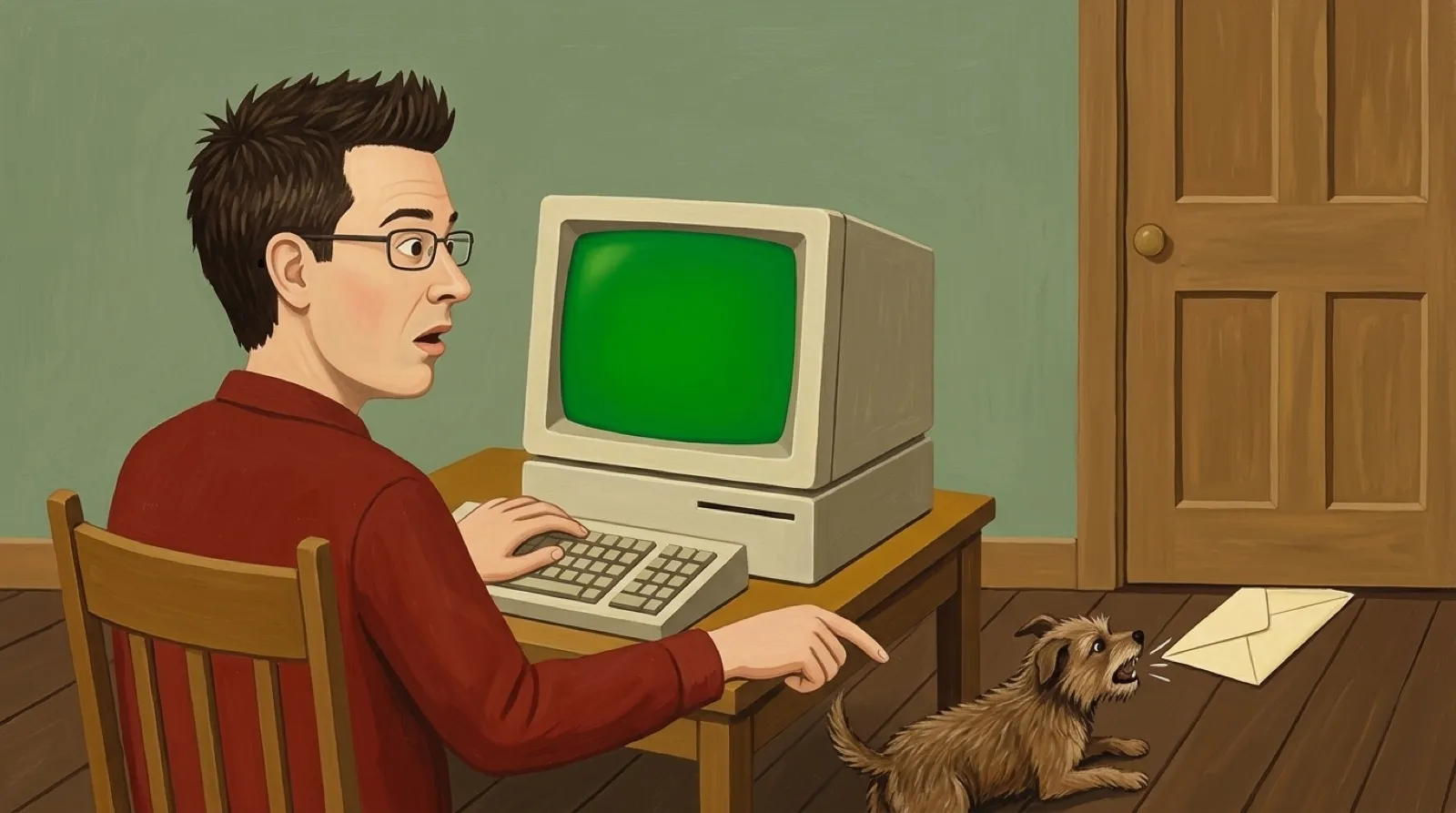
A dog has a permanent place in the Unix manual, immediately below the instructions for turning mail notifications on and off. His name was Biff. The command kept the name, and the documentation kept the obituary.
The manual’s history section places the command’s arrival in 4.0BSD. The dog died later, in August 1993, at 15. Those dates describe different events; reading the obituary as the command’s birthday would give Biff credit for arriving long after his namesake program.
The practical interface takes very little explaining. biff y enables the notification request, biff n disables it, and the setting applies to the current terminal session. There is no account-wide notification center to wander through. The next alert can arrive while something else occupies that screen. A program that promises to “be notified if mail arrives” also needs somewhere to put that notice, which becomes the more interesting problem when the terminal is already busy.
OpenBSD’s comsat documentation describes the server half. A mail-arrival message identifies a user and a position in a mailbox. The server checks the logged-in user’s terminal and, when notification is enabled, prints a short excerpt there. The dog supplies the name; a separate process does the barking.
That division is useful when the command appears to do nothing. Asking for notifications and having a working notification service are separate conditions. Changing the terminal preference cannot conjure the server or its incoming mail reports into existence. It’s the familiar doorbell problem: pressing the button is only one part of getting a sound inside the house.
The alert is fairly literal about occupying the terminal. Comsat limits the excerpt to seven lines or 560 characters, with selected mail headers retained. Its own BUGS section says notification should appear in a separate window so it doesn’t disrupt the screen. Even the manual would appreciate a less intrusive notification design.
That complaint makes the old command feel surprisingly current. A notification can be technically correct and still arrive in exactly the wrong place. Putting mail into the same space as ongoing work saves an interface, then asks the user to absorb the interruption. Anyone whose chat app has covered a button at the decisive moment can follow the tradeoff.
A command with a personality can still require a service diagram. Keeping both pieces of documentation close makes the joke repeatable and the behavior understandable. Biff’s biography is settled on that page; the manual’s wish for a separate notification window remains an unfinished feature request worth recognizing on today’s desktop.