
Retroemulationdos486javascriptretro-computing
Jan de Jager's Browser Emulator Builds a Whole 486 PC, Motherboard, Jumpers and Plug-In Cards, Then Boots DOOM in One Tab
e486-web is a dependency-free JavaScript emulator of an 80486DX2-66 that draws the motherboard and lets you hot-plug ISA and VLB cards while it boots real SeaBIOS and FreeDOS.
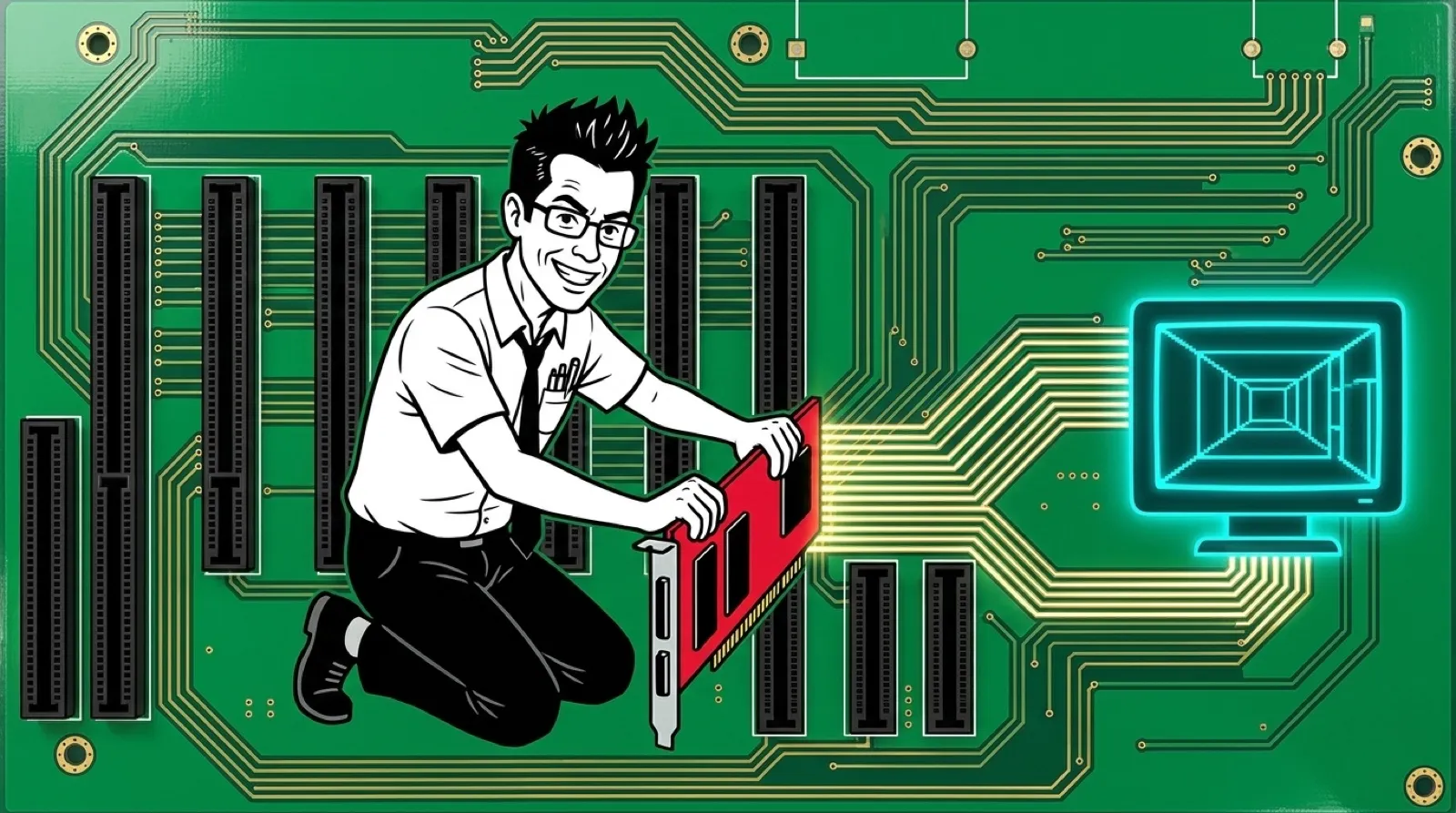
The README calls it “a 100% browser-based, dependency-free” emulator of an “Intel 80486DX2-66 PC, Motherboard & Modular ISA/VLB Adapter Card.” That is a mouthful, and every word of it is doing work.
Most browser PC emulators hand you a screen. This one hands you the board. An “interactive 486 Motherboard visualizer” shows the address and data bus live, the IRQ lines lighting up, and a 7-segment POST display counting through the boot the way a diagnostic card did in a repair shop.
The cards are separate files in the repo, one per card: SVGA with Bochs VBE, EGA, CGA, a multi-I/O board for IDE and floppy, a Port 80h POST card, an MPU-401, a PC speaker, and a “SoundBlaster 16 + AdLib OPL3 Card” synthesized through WebAudio, complete with “configurable IRQ/DMA/Port jumpers.” Set the IRQ wrong and you get to relive 1994.
Underneath sits an emulated 80486 with an 80487 FPU, real, protected and virtual-8086 modes, and paging with a 4,096-entry TLB. There’s a live register view and a physical-memory hex inspector beside the screen. Machine state persists in the browser’s IndexedDB and localStorage.
Jan de Jager put the repo up on October 21. Two days later a commit titled “Add NE2000 network card, AI chatbot project, and untrack extra_disks” did three things at once. It added a network card. It added a DOS chatbot project, a Norton-blue text program that talks over the emulated serial port to a Python gateway, which forwards to Gemini, OpenAI, Claude or a local Ollama model. And it removed the bundled DOOM, Duke Nukem II, Keen 4 and Wolfenstein 3D floppy images from the repo, which now ignores that folder.
The README still names those four games as what it runs. Whose disk images go in that folder now is left to whoever clones it.
A real 486 cost a few thousand dollars and arrived as a beige box you were nervous to open. This one opens itself and labels the parts.
Projects like this tend to live or die on two boring things: a license that lets people build on it, and a hosted page where someone can click once and watch a BIOS count memory. Neither exists yet. Until one does, running it means cloning the repo and starting a local server, and the README gives two ways to do that: npm start or python3 -m http.server 8080.