
A 2009 Chumby One Gets Nine Podcast Stations, With a Knob That Actually Tunes Them
Static gives the old Chumby One a reversible new job: nine shared podcast stations, native audio decoding and a physical tuning dial.
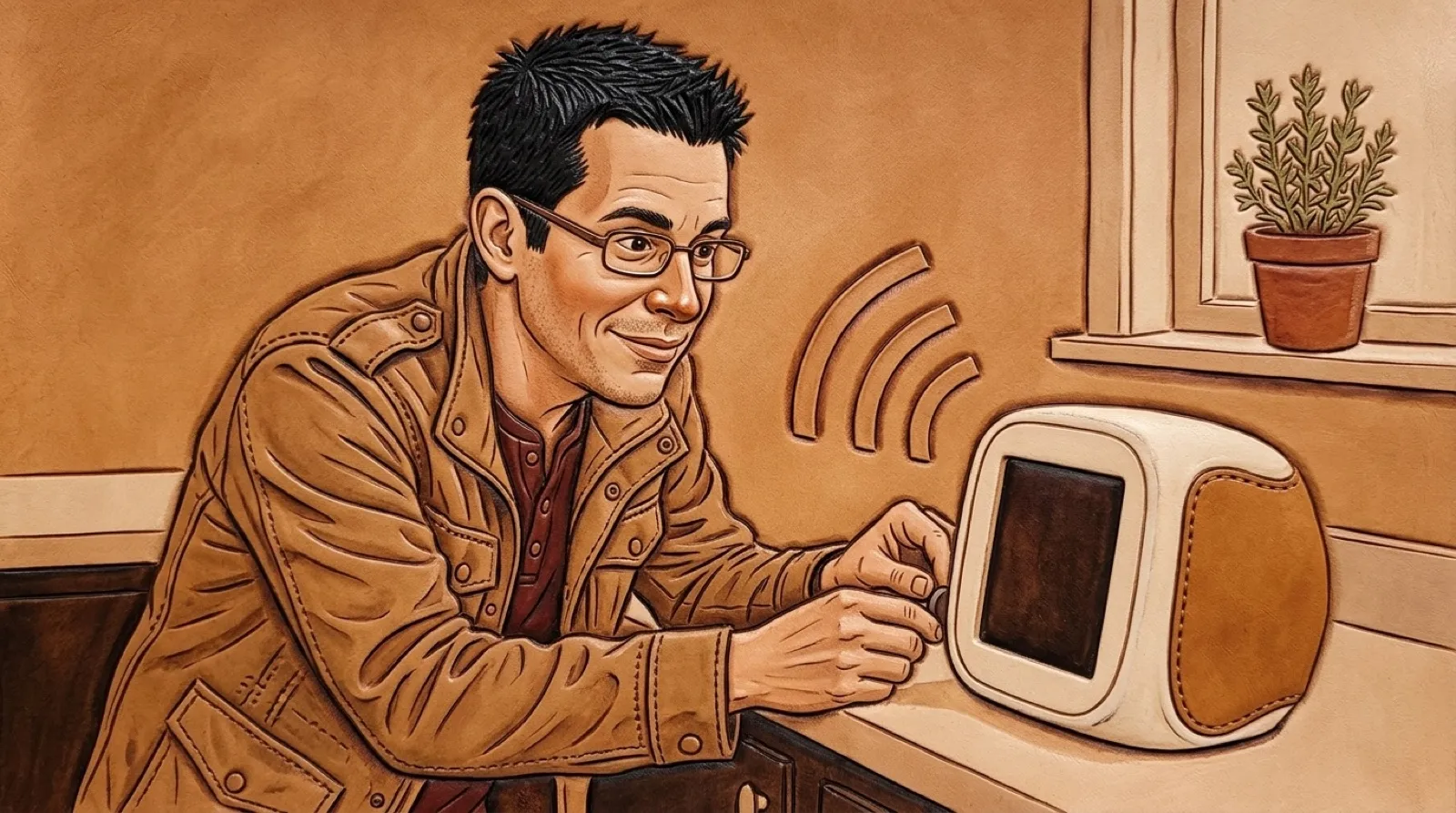
The knob gets its job back. Turn it, change stations, hear a crossfade. Static’s stations run on shared timelines, so tuning in drops you into the same moment as everybody else listening.
The maker’s README calls it a “radio made of podcasts.” That description also explains the appeal: somebody has already picked what is playing. The listener gets to be a listener for a change.
Play the video on YouTubeA native client decodes MP3 and HE-AAC with fixed-point math on the Chumby’s 454 MHz ARM9 and 60 MB of RAM. Neighboring stations stay loaded for quick changes. The tested machine is specifically the Chumby One; other models remain untried.
The interface keeps the gadget’s small collection of controls busy. Holding the top button while turning the knob changes volume; holding it without turning opens the system menu. A tap on a station name jumps straight there. Favorite shows get a saved list, and the information view supplies a QR code for the episode page. There is still a screen, but hearing something different doesn’t require poking at it.
The implementation notes explain why station changes can feel immediate on such old hardware. The client resolves podcast redirects ahead of time, probes the audio files and buffers nearby stations. It mixes the streams during a change instead of stopping one player and waiting for a new player to start. The music-radio behavior comes from software anticipating the next click.
The network route also matters. The schedule comes from Static, while the audio streams directly from each podcast publisher. That division leaves the little box dependent on the schedule service and the publishers’ reachable audio files. Reviving the hardware doesn’t make every outside service permanent; it gives the existing controls a new service to operate.
Permanent installation adds an update policy. The README describes twice-daily release checks, SHA-256 verification and installation during the 4 a.m. hour, with a return to the previous version after repeated crashes. The maker also documents a file that disables automatic updates. A bedside gadget has acquired the sort of maintenance choices usually buried in an appliance support page, except this time the instructions explain how to back out.
Those details make the USB trial useful. It lets an owner check station changes, audio and the return to stock software on the actual Chumby before making it the default. A 2009 clock radio gets another chance without requiring a declaration that its old life is over.
The performance figures come from the maker’s own account. Its instructions begin with a working Wi-Fi setup on the stock screens. A USB stick cannot repair an existing network problem, however persuasive its little activity light looks.
A useful next test for these revivals is whether the original buttons remain the best way to use them. Here, the dial has a reason to survive the touchscreen.