
A homemade Wi-Fi drive serves Sony Mavica floppy-disk photos at floppy.local
The released board, firmware and printable housing turn a small camera archive into a portable browser-accessible project.
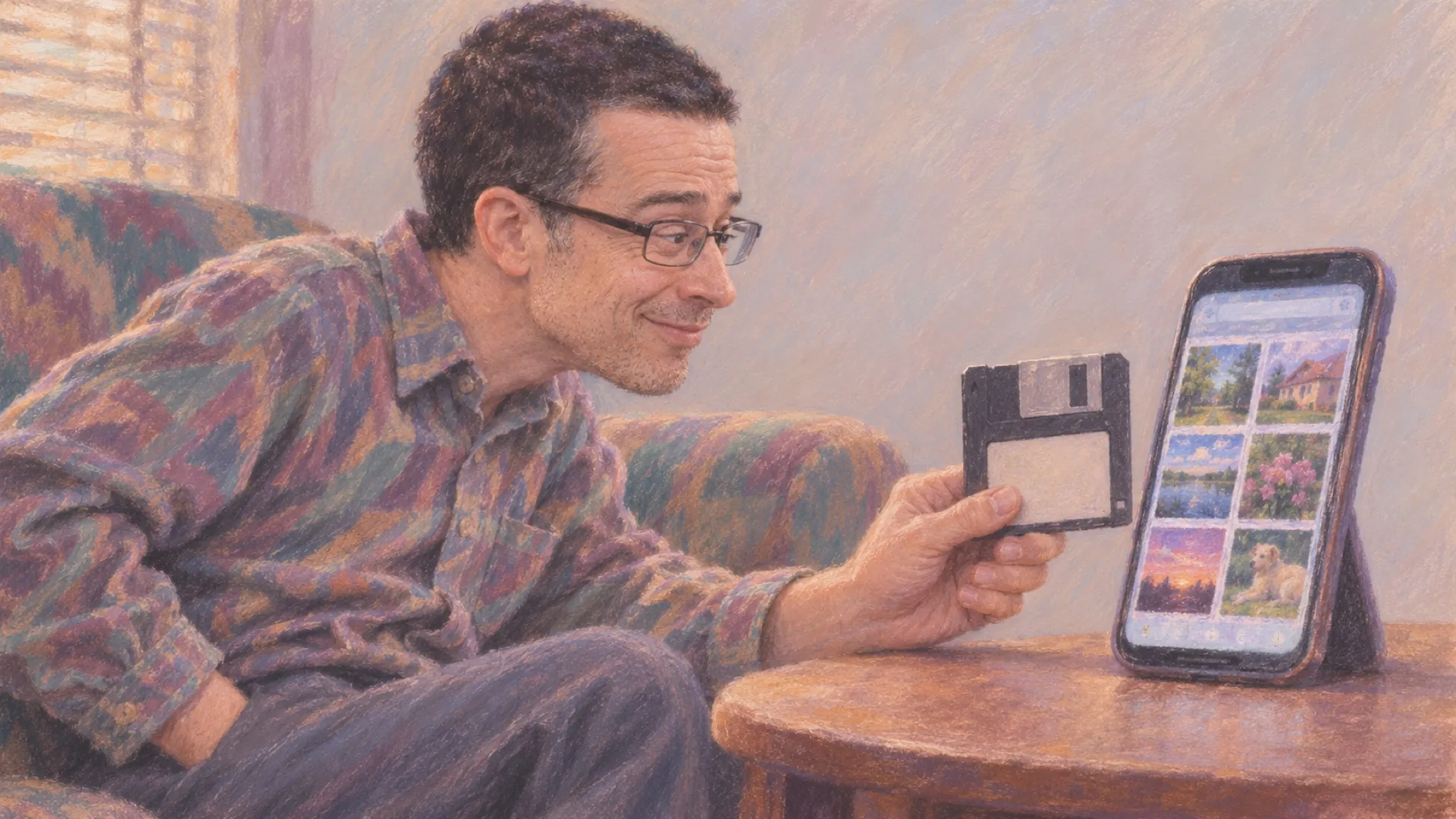
A Sony Mavica photograph can now travel from its floppy disk to a phone through a homemade Wi-Fi drive. The name at the other end is floppy.local, which sounds considerably friendlier than discovering which drawer contains a working disk drive. The floppy3.5 project gives the old camera’s media a new route out.
The maker calls it “A Portable 3.5” Disk WiFi NAS.” Its README shows a slimline floppy drive connected to an RP2354A, which talks over SPI to an ESP32-S3. That second chip handles the browser connection and microSD side. The division lets the spinning-media job and the network-facing job occupy their own parts of the board.
According to the repository, supported media is FAT12 1.44 MB high-density disks, with the web page showing files in the root folder. That boundary matters more than the broad word “floppy.” A collection with a different format needs a separate compatibility answer before anybody declares the whole archive readable.
The project also offers a separate Greaseweazle USB route. Its controller firmware ports that work to the RP2354, and the README explains using the host tool with an explicit device port. That gives a builder a second way to work with the drive without confusing the browser’s supported file handling with every task a disk-imaging tool can perform.
The useful surprise is how much ordinary product behavior surrounds the absurdly small medium. A portable reader needs to identify a disk, report trouble and avoid confusing one camera file with another. Otherwise the new convenience merely moves the old uncertainty to a nicer screen.
For an archive, a sensible trial would start with a known readable disk and compare the retrieved files with an existing copy. Only after that comparison would it make sense to entrust a unique set of photographs to a freshly assembled reader. A successful page load answers less than a successful file comparison, even if the page has the better presentation.
The README’s build instructions include electrical details and an initial board self-test. Anyone planning the project should budget for that assembly and bring-up work, rather than treating a repository as a finished retail accessory. Free design files can save some decisions; they don’t solder the board while you’re making lunch.
Small storage can still justify careful engineering when the files matter. This project could make an old camera more pleasant to use again, provided a builder gets the physical drive and the new board cooperating. The photos don’t need a larger disk to deserve another look.
A little network attached nostalgia.