
A Bluelab water monitor escaped its cloud after a locked Wi-Fi board was replaced
The ESPHome conversion keeps the measurement controller and substitutes a locally controlled connection to Home Assistant.
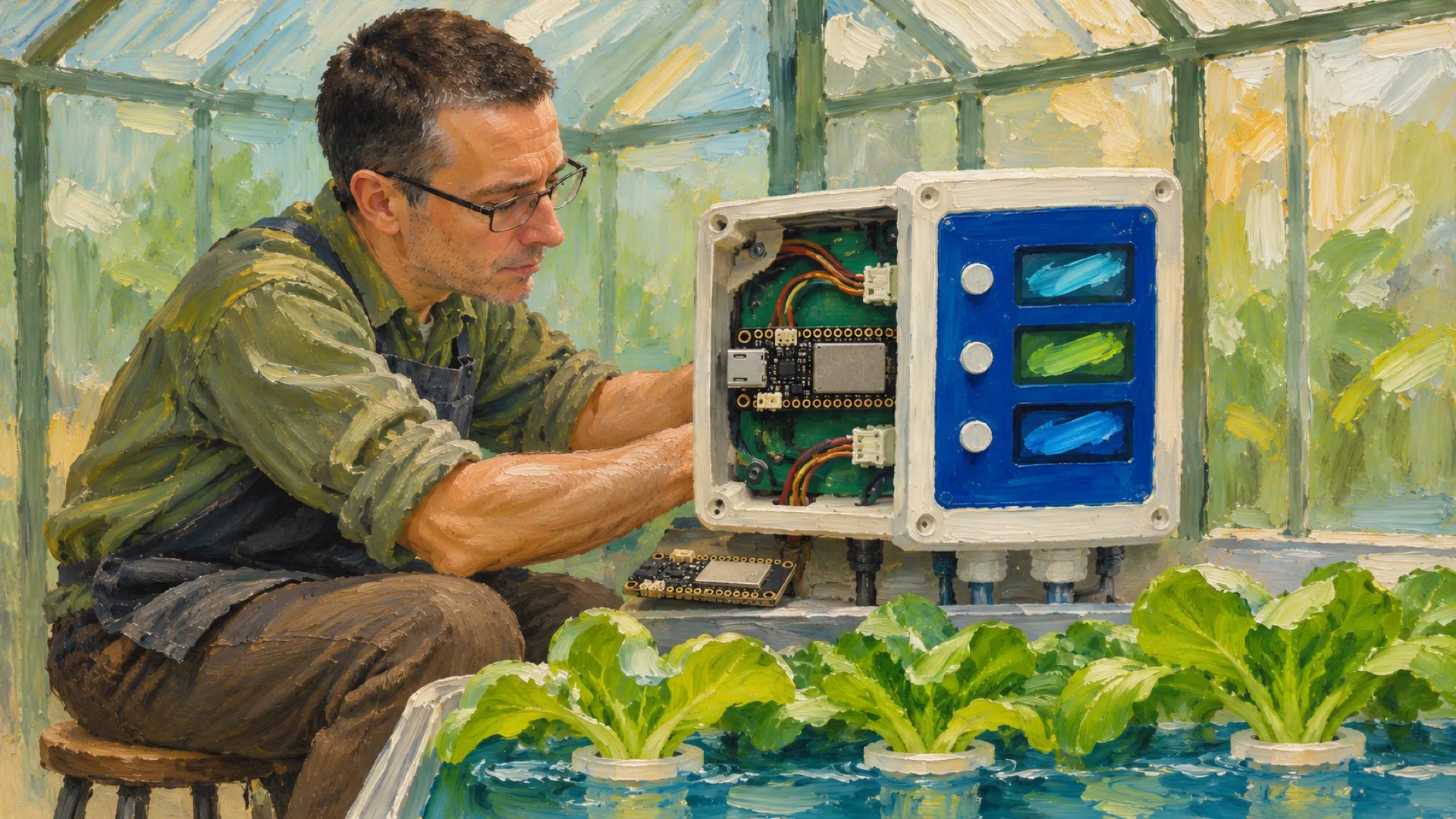
The hydroponic monitor already had an ESP32-S3 inside it. The problem was who could put software on that chip. This Bluelab Guardian conversion replaces the manufacturer’s locked Wi-Fi module with another ESP32-S3 board, leaving the main sensor controller in place. Same chip family, different permission to leave the cloud.
The maker’s documentation explains that the original module has Secure Boot enabled with Bluelab’s key, so it runs only firmware signed by the manufacturer. Replacing the module avoids trying to install unsigned firmware on the locked one. The sensor and display board still does the measurement work.
The tested replacement is an Adafruit ESP32-S3 Feather, product 5323, with 8 MB of flash and no PSRAM. The project links to the exact part and describes the wiring. That specificity matters because an ESP32 board name alone doesn’t establish its pinout, power arrangement or suitability for the documented installation.
The Guardian’s main PIC18 board and its Wi-Fi daughterboard communicate over a serial connection. ESPHome on the replacement bridges that internal conversation into Home Assistant, exposing conductivity, pH and temperature alongside alarm thresholds, status and calibration information. Changes made on the physical front panel are meant to stay synchronized with the local interface.
This is a soldering project. The README calls for desoldering equipment, wire and insulation, and warns that opening the monitor may void the warranty. It is tested on the pictured Guardian Monitor Wi-Fi rather than every monitor carrying the same brand. The word local has acquired a fairly literal hardware requirement here.
The setup order is also important. The replacement is flashed and tested over USB before installation. Once the Guardian powers it, the documentation says it “must never be plugged into USB again.” Updates and logs then travel over Wi-Fi. That restriction belongs beside the attractive result, rather than buried beneath the victory photo.
Home Assistant connects through ESPHome using a configured API encryption key. The setup instructs the owner to keep that key because future updates and integration use it. Moving readings away from a vendor cloud still leaves a local network service and credentials to manage. The plants have gained a local administrator.
The original measurement circuitry remains useful, which is the clever economy of the modification. Replacing a communications board can recover local access without replacing the sensing hardware. It doesn’t establish that all cloud-connected appliances have an equally accessible boundary or a documented serial protocol.
For this particular monitor, the repository supplies the implementation, wiring instructions and limits. A successful conversion on another unit still needs to match the tested hardware and electrical instructions. The unresolved work is on the bench, where the serial link and power connections have to be right.
The roots kept their readings.