
A $450 bioprinter holds living bacterial prints upright in a support slurry
A syringe conversion and a supporting bath give soft materials time to become stable structures.
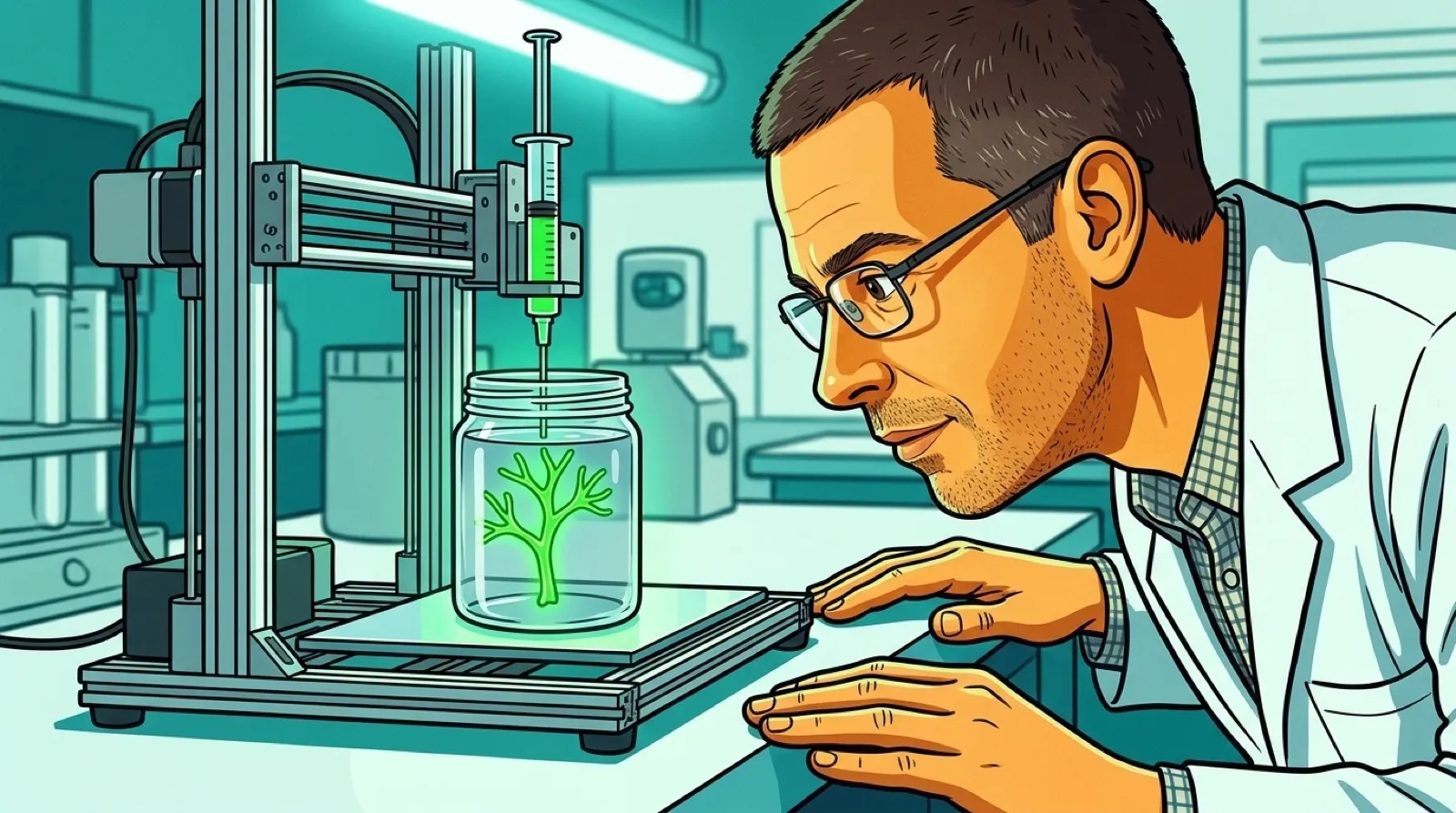
A low-cost bioprinter can squeeze living material into a shape. Keeping that shape from collapsing is a separate engineering problem. Researchers at the University of Rochester paired a syringe-based printer conversion with a supporting slurry to address both.
The team replaces a conventional plastic printer’s filament extruder with a syringe pump. The pump can push out bio-ink and retract it to reduce oozing. The material combines cells with a polymer solution that becomes a gel.
The university reports a $450 construction cost and structures exceeding 100 printed layers. Its account also describes two support formulations: one intended to make removal easier, and another that kept microbes alive for four or more weeks.
Those are research results reported by the university, not a price for a complete commercial laboratory or a guarantee for every living material. The cells, support medium, sterile work, and measurement still matter. A cheap printer does not make biology a low-stakes hobby.
The bath is the especially useful part of the design. A soft layer can hold its place while the next layer arrives, rather than being asked to carry the finished structure immediately. The geometry gets temporary help while the material develops the properties it needs.
Call it a support group with unusually specific laboratory requirements.
The university describes potential uses for bacterial living materials, including environmental work. That possibility needs to stay separate from a claim that this machine has already become a deployed wastewater-treatment system. A shaped sample in a lab and a dependable treatment process answer different questions.
For another research group, the interesting comparison is the experiment the low-cost setup permits. Can it make the geometry you need? Can the cell type remain viable through printing and observation? Can somebody else reproduce the result with the same materials? A machine price alone cannot settle any of those.
That also changes how to interpret a photograph of a successful print. A crisp structure establishes something about shape. To judge a living material, you also need evidence about what survives inside it, how long it survives, and what useful activity it retains. The prettiest cylinder does not automatically win that competition.
For a classroom discussion, this is a better example than the familiar promise of printing an entire organ. It exposes the actual design choices: move a delicate material, keep it in position, and preserve the conditions its cells need. Each choice is understandable without pretending the remaining biology has disappeared.
The strongest part of an affordable research tool is the possibility that more groups can test it. An independent replication can show where a promising setup travels well and where local materials change the result. A lab that can afford to try the design can contribute a useful result even when it finds a limit, particularly if it identifies which material or cell type changed the outcome.
More than printer ink.