
A Pico 2 W drives a 1080p display by drawing each line just before it is needed
TV-Top builds display lines just before they are needed, with overclocking and radio configurations setting real limits.
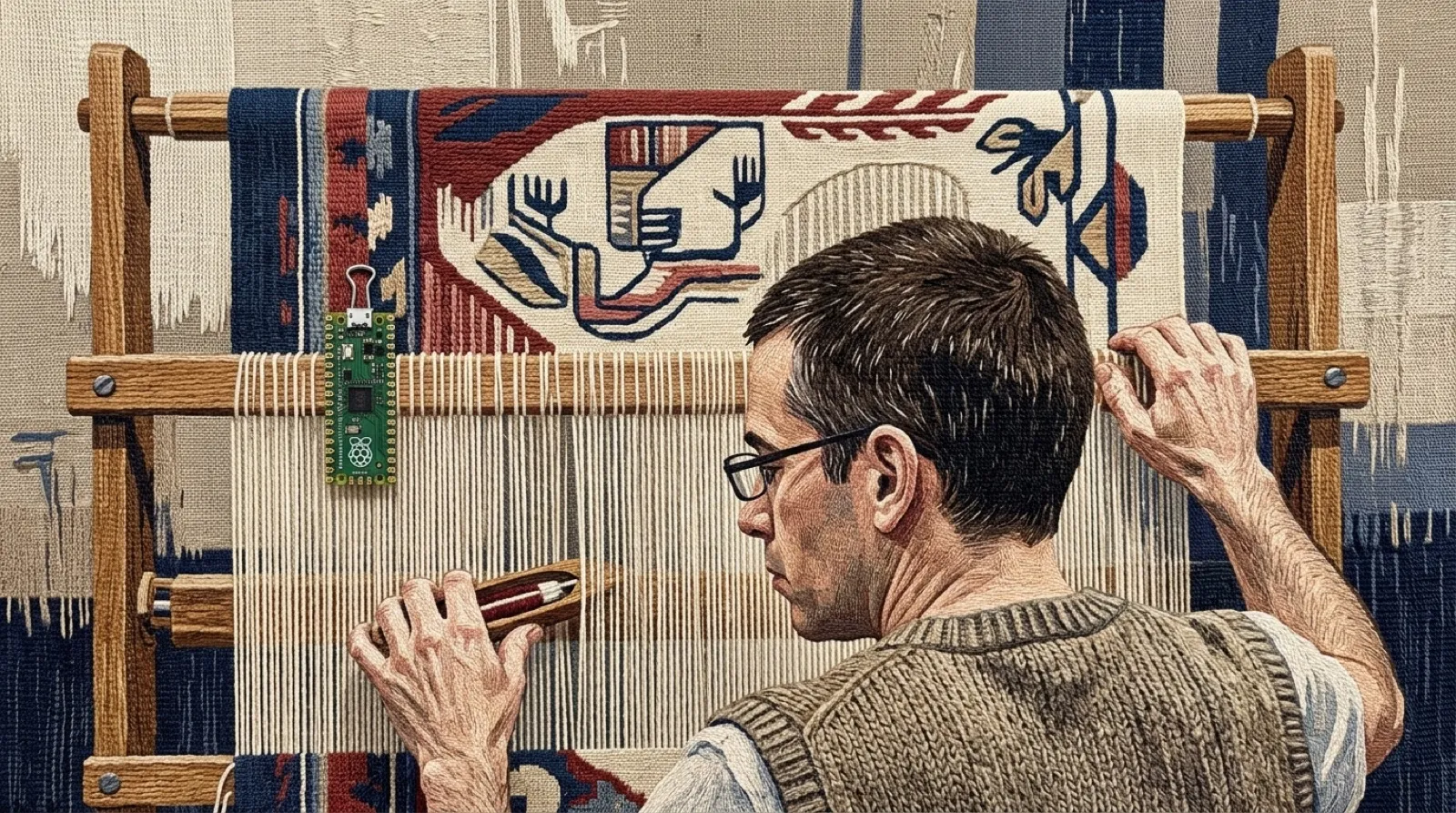
A full 1080p color frame needs almost six megabytes. The RP2350 has 520 kilobytes of RAM, so this firmware gives up on keeping the whole picture around. It prepares the next scanline shortly before the display needs it, like a kitchen plating a meal without space for the entire buffet.
The TV-Top Kiosk project uses the chip’s HSTX output hardware and vector geometry cached in flash. It turns each line into a run-length command stream, working six lines ahead. The trick is a change in what must exist in memory at once, rather than a hidden extra frame buffer outside the chip.
That suits its purpose as a board-game display. The television shows the shared board while players use their own phones. A mostly stable scene does not have the same update demands as a fast-moving game that replaces every visible detail continuously. The output mode and the frequency of meaningful scene changes answer different questions.
The electrical demands remain substantial. The documentation describes a 372 MHz system clock and 1.30 V core setting, with the serializer driven beyond its rated per-pin data rate for 1080p. That makes wiring quality, display timing acceptance and chip margin part of the result. A picture achieved by this build is not a general manufacturer guarantee.
There are two network arrangements. One uses the Pico 2 W’s onboard radio; the other moves Wi-Fi and TLS work to an ESP32-C3. The author developed the 1080p work on the latter configuration. That extra board changes both the memory budget and where the encrypted network connection is handled.
The simpler-looking configuration needs a particularly clear label. The README says onboard Wi-Fi at 1080p with TLS builds successfully but has not run on hardware. Its small remaining heap must accommodate a TLS handshake. A successful link step cannot establish that the complete network-and-video workload will fit while the device is actually operating.
For a Raspberry Pi Pico 2 W experiment, the maker recommends beginning at 480p60 and working upward with short, paired connections. The documented default is 720p60. Those choices give a builder a way to separate basic wiring problems from the narrower margins of the headline mode.
The firmware is published, while the server and protocol specification are not open source. That boundary matters to someone considering reuse beyond the original game platform. This article does not report a hardware test. The achievement visible in the documentation is specific enough: draw the line about to be shown, keep a small lead, and spend memory on the information needed to create the picture.
Six lines ahead is still ahead.