
A homemade printer turns your weekly GitHub activity into a 25-centimeter receipt
A custom board turns a weekly GitHub snapshot into a small physical object with a deliberately slow schedule.
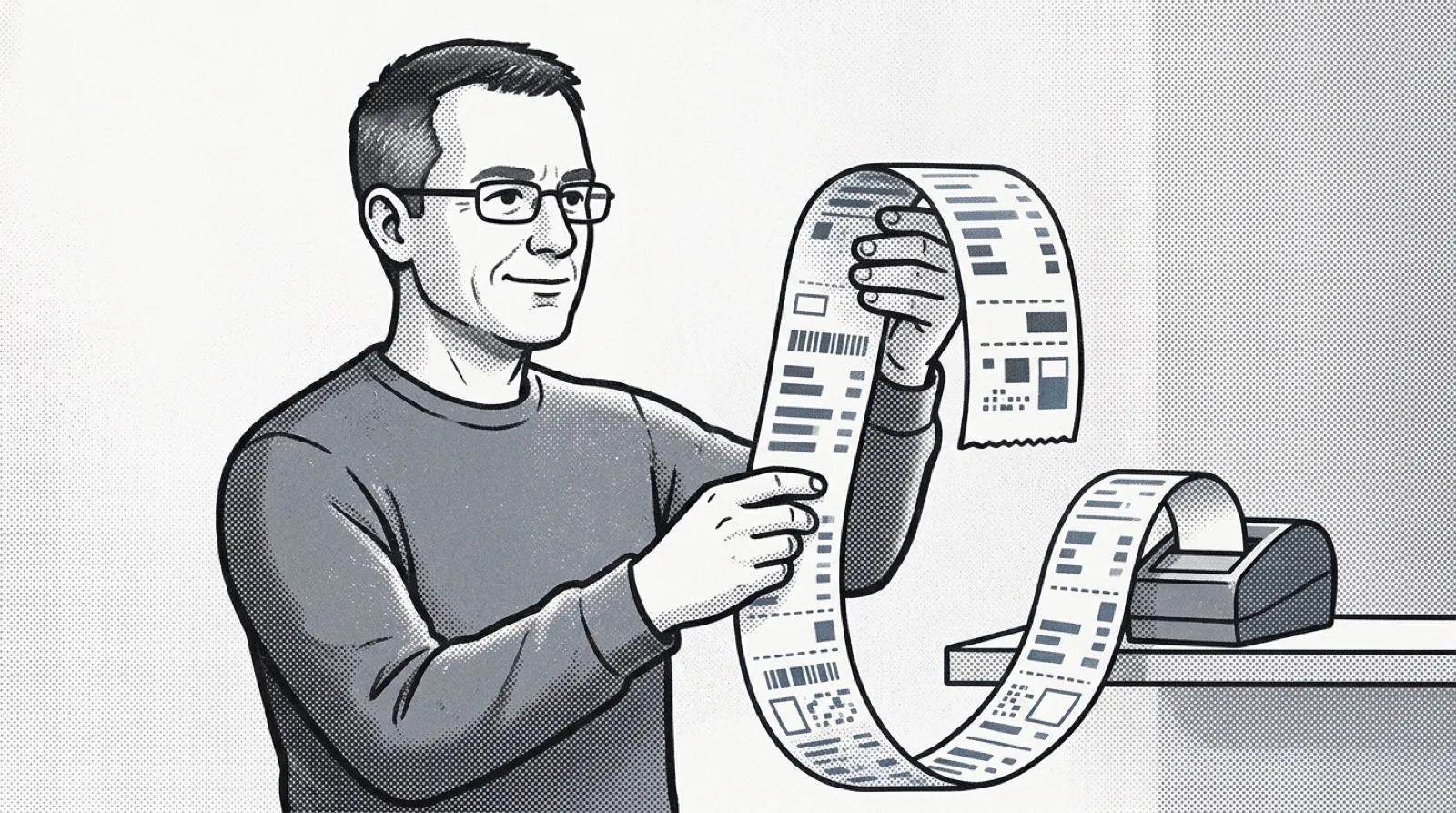
GitHub activity usually arrives as another page to check. Alban Petit built a small machine that prints it instead, once a week. PaperFlux gives a software project the sort of receipt normally reserved for discovering that three groceries somehow cost forty dollars.
The build account describes a custom USB-C board paired with a thermal printer. The desired object had one power connection, Wi-Fi access and an autonomous schedule. Keeping it calm was a design requirement: a reboot should not produce another receipt, and a failed print should not become an endless roll of retries.
The work is divided between a server and the board. A Ruby service collects GitHub information and renders an HTML layout using a headless browser. The result becomes a 384-pixel-wide, one-bit image matching the print head. The small controller does not need to lay out type or interpret a web page itself.
Instead, the ESP32-C3 downloads the image and sends it to the printer line by line. That is a useful division of labor for a constrained device. Complicated layout happens where a browser is available, while the board concentrates on fetching and delivering the final dots. The physical ticket is the common format between those two worlds.
Power is less trivial than the little paper strip suggests. A thermal head needs current to heat a row of dots. Petit uses USB Power Delivery to request 9 V, with 5 V as a fallback, and supplies the controller and printer from the same connection. A USB-C socket alone would not establish that a charger can deliver the intended power profile.
The repository includes the firmware, server, circuit design and enclosure files under an MIT license. That makes this a documented build rather than an announcement for a sealed gadget. A reader can examine the electrical decisions alongside the scheduling behavior, which is helpful when the failure case could otherwise leave a printer repeatedly trying to work.
The firmware synchronizes its clock and checks for due work each minute. The default weekly cadence is important to the character of the object. This is a periodic summary, rather than a physical notification for every commit. Paper would become much less charming if every small edit demanded its own little monument on the desk.
A 58 mm thermal printer is one component, with interface and power compatibility still to verify against the build. The account is worth reading for the way it follows a pleasant idea into the less photogenic requirements: power negotiation, duplicate prevention and a sensible response when printing fails.
Your commits have a paper trail.