
Apple’s early mouse prototype borrowed a deodorant ball and a butter dish
Dean Hovey’s reviewed oral history connects a weekend mockup to the friction and maintenance problems his team had to solve.
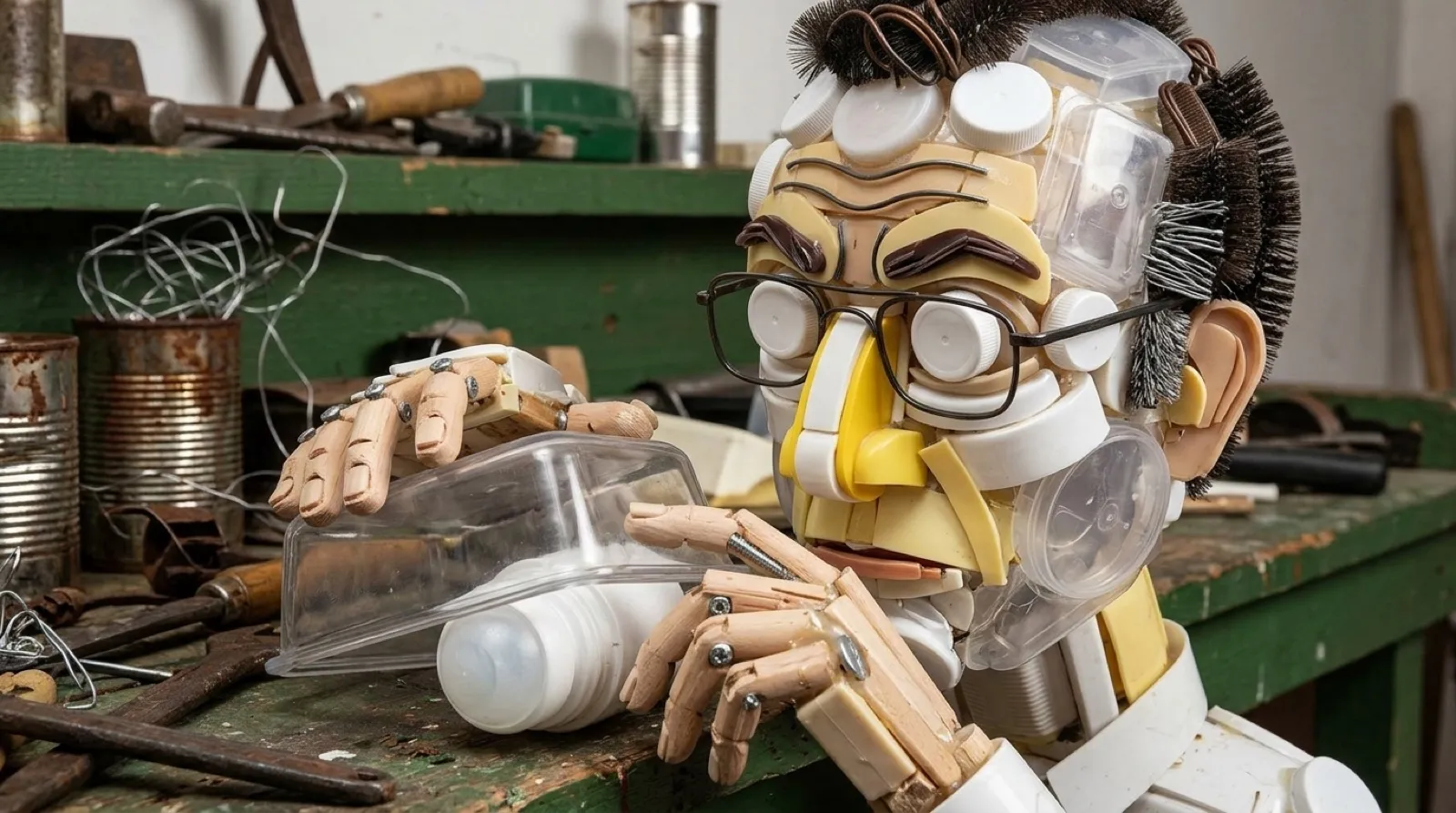
Dean Hovey went shopping for a computer peripheral at Walgreens. The relevant departments were deodorant and housewares, which probably made more sense than asking where they kept the mouse prototypes.
In his reviewed oral-history interview, Hovey recalls using a Ban Roll-on ball in a weekend spatial model. Butter dishes supplied candidate shapes. This was an early experiment in what the device could feel like, rather than a production bill of materials with an unusually personal scent.
The distinction saves the story from turning into one of those technology myths that improves every time somebody forwards it. The funny shopping trip was real according to the designer’s recollection. It doesn’t mean a finished Lisa or Macintosh mouse contained a deodorant dispenser. Nor does Hovey’s account establish that Apple invented the mouse.
He was recounting the work in 2000, about two decades later, and repeatedly acknowledges the limits of memory. Stanford identifies the transcript as edited by interviewer Alex Pang and reviewed by Hovey. That makes it valuable first-person evidence, while leaving the reader room to distinguish a recalled weekend from a dated engineering drawing.
The later problem was friction. Hovey describes a Xerox design whose ball both tracked motion and supported the case. Pressure on the ball encouraged slipping, which meant motion at the desk could disappear before the computer registered it. Fancy electronics would have had very little useful to say about a ball that failed to roll.
Separating those jobs changed the design. The ball could move with less interference while the mechanism read its motion. That is why the butter dish makes a good opener but a poor stopping point: the team still had to turn a shape that felt plausible into something that reliably followed a hand.
Dirt supplied the second problem. A removable ring let people release the ball, clean it and put it back. Hovey’s phrase was “easy to clean.” The design accepted that desks contain grit, which is refreshingly practical for an industry that sometimes seems surprised people have fingers.
The useful question for a new device is where its inevitable mess goes. An input device lives where people eat, work and accumulate the small debris of being alive. A design that permits routine cleaning gives the owner a way back to normal without purchasing a replacement or pretending the dirt never existed.
That question carries forward even after optical sensors remove the particular ball. Can the part you touch be cleaned? Can the part that wears be reached? A beautiful exterior offers remarkably little comfort once a tiny obstruction makes the whole thing irritating to use.
The interview leaves some meeting details uncertain. Hovey remembers the physical realization more clearly than exactly who stood beside him. But the maintenance decision survived well enough that an entire generation learned how to open a mouse from underneath.
The ring comes off.