
Gitmsg turns every chat message into a Git commit, including the embarrassing edits
The experiment borrows collaboration tools built for programmers, including repository invitations, pull requests and a permission model worth reading before signing in.
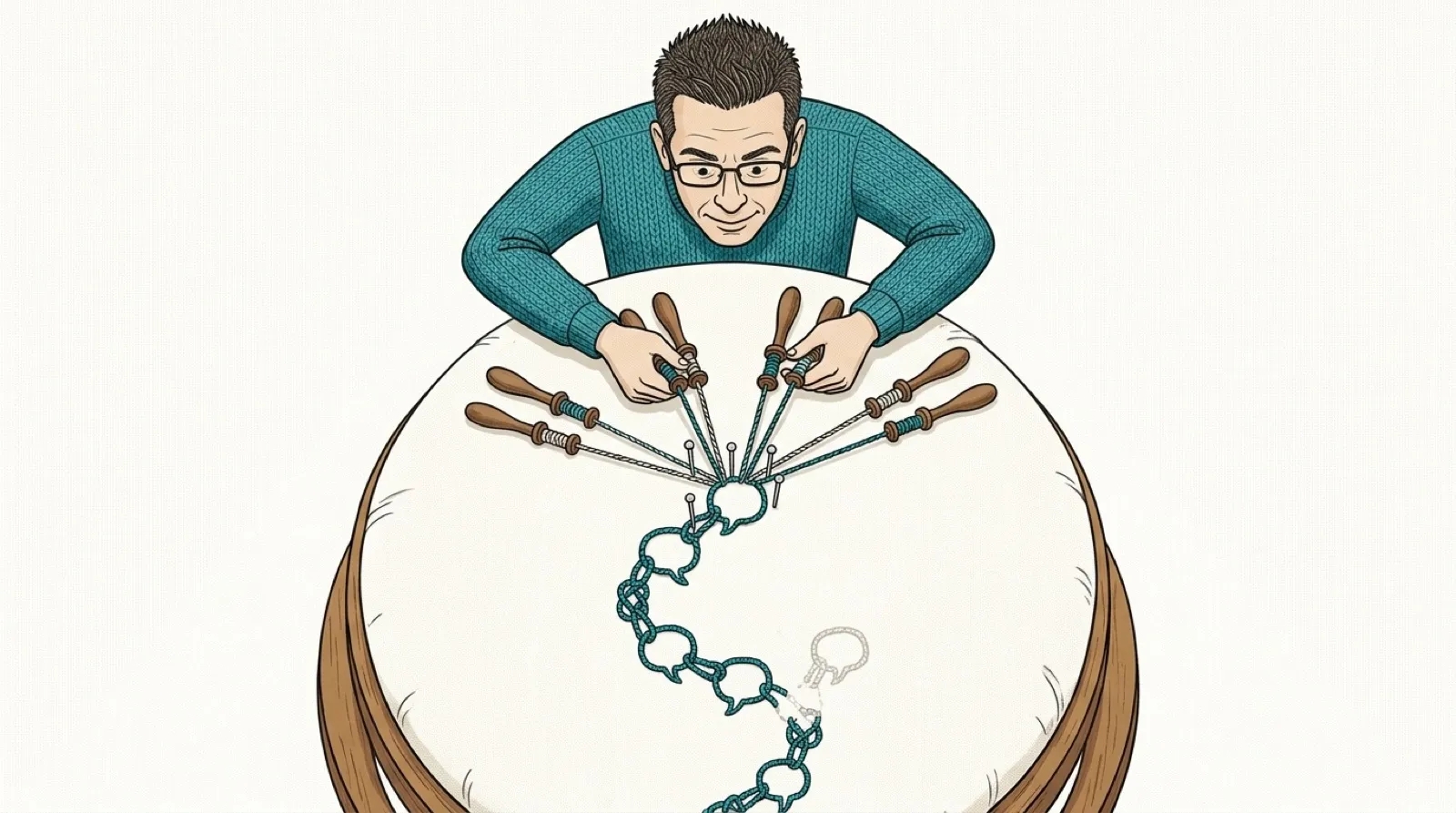
Deleting a message in gitmsg can leave the receipt in version control. The chat app makes repositories into conversations, so an edit adds another commit instead of quietly replacing what you said. A typo gets the sort of historical preservation usually reserved for a software release.
The maker, Ilya Krasnov (@yiaany1), publishing as yiaany, describes the arrangement as “Chats are repositories. Messages are commits.” Its README outlines an authenticated API writing event files and commits, followed by the other person’s polling tab. There is no separate persistent message database. This is the maker’s documented experiment; the operating claims here come from the project’s own materials.
A conversation begins with GitHub sign-in and a repository invitation. Signing in alone creates no repository. The other person accepts the invitation before the conversation gets going, which puts GitHub’s collaboration machinery in the middle of an activity normally handled by a contact list.
The event protocol explains how a pile of commits becomes a readable chat. Each event is an immutable JSON file stored in a date-based directory. Its creation commit needs a particular protocol marker and event data in the description; editing an ordinary file won’t make a message appear. The reader follows canonical Git order and deduplicates event IDs rather than trusting a device’s timestamp.
Edits and deletions point back to the original message ID. A delete event leaves what the protocol calls a “UI tombstone.” That explains the uncomfortable bit: hiding a bubble from today’s conversation doesn’t remove yesterday’s bytes from the repository. Chat history has become something you can inspect with the same tools used to investigate a broken build.
Attachments have their own boundaries. The protocol allows up to four per event, with a two-mebibyte limit each before encryption, and voice recordings last at most 60 seconds. Files live separately under a media directory. The client checks a SHA-256 digest before previewing or downloading, and failed sends can leave orphaned blobs. That is more housekeeping than “send photo” suggests.
Optional encryption changes what gets stored, with limits the security document spells out. New content uses a shared AES-256-GCM key. Membership, authors, timestamps, commit counts and approximate sizes remain visible, and earlier plaintext stays in history and clones. Removing a collaborator doesn’t revoke a key they already hold; excluding that person from future content requires a new room and key.
Recovery also becomes the user’s job. There is no password-reset or key-recovery server. Losing browser site data can mean losing access, so the project provides key export and backup. A chat app has acquired the responsibilities of a small encrypted archive, including the possibility of locking yourself out.
Audio calls take a different route: WebRTC carries live audio directly, while Git stores signaling. The README warns that no TURN relay is available, so some networks won’t connect. Its separate terminal alpha also still has a publication gate; the unrelated npm package called gitmsg isn’t this project.
A conversation you can diff could suit experiments where the record itself is useful. Everyday messaging would ask more of the interface: it would have to make retention and key ownership understandable before the first regrettable message. Whether that explanation survives an inviting Delete button remains unresolved.