
Gaminggame-boygame-gearbatteries
Game Boy Promised Up to 30 Hours While Game Gear Ate Six AAs in About Four
Sega sold a pocket television while Nintendo defended outdoor visibility. Their hardware choices made portability mean two different things.
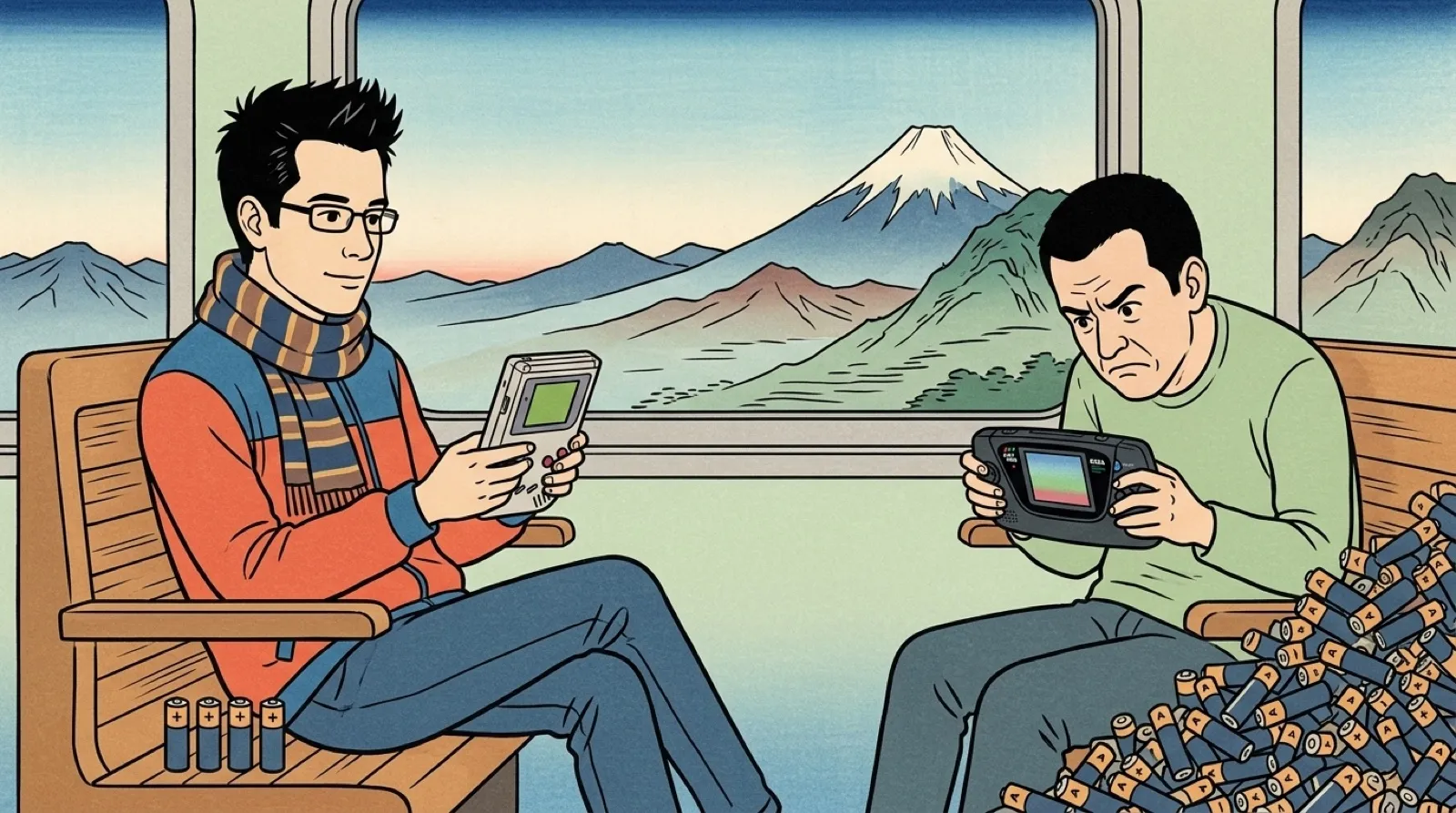
Sega’s color screen brought a second game: finding the next set of batteries before the trip was over. Its handheld could also become a television, which makes the six-battery appetite a little more understandable. You were carrying more than a game cartridge reader.
The Game Gear history page dates its Japanese launch to October 6, 1990, at 19,800 yen. Sega fitted a backlit 3.2-inch color LCD and offered a separate TV tuner. The screen could show 32 colors at once from a palette of 4,096 during games; television mode could display all 4,096. That was an actual feature difference you could see, without reading a processor specification or believing a marketing department.
Sega also lists a brightness control, stereo headphones support and a range of power options: AC adapter, car adapter and battery packs. Those accessories answered the same practical question from different directions: where would the next few hours of electricity come from?
Nintendo’s Spanish support table gives the original Game Boy a 160-by-144-pixel LCD, four AA batteries and “Hasta 30 horas,” or up to 30 hours. Sega specifies six alkaline AAs for approximately three to four hours of continuous use. Neither page presents these figures as the result of a shared experiment.
That distinction matters before somebody divides 30 by three and declares a tenfold victory. One figure is an upper bound; the other is an approximate range. Battery chemistry, test procedure and the condition of surviving hardware aren’t controlled by putting two manufacturer tables next to each other. The tables establish the advertised choices, and they already make the compromise clear enough.
Nintendo later explained why its supposedly inferior display suited the job. In the company’s 2020 management briefing, Shigeru Miyamoto said monochrome LCDs “were easy to see under direct sunlight.” He also cited longer battery life. A handheld that remains readable outside gets something useful from the light that a showroom comparison can miss.
Miyamoto connected the example to Gunpei Yokoi’s approach of finding new entertainment in existing technology. In his explanation, familiar components helped developers work and helped keep the resulting product affordable. Choosing the most advanced screen wasn’t the only route to giving somebody a better afternoon with a game.
Sega’s own retrospective is surprisingly candid about the fully accessorized result. It shows Game Gear wearing the tuner, Big Window II magnifier and rechargeable pack, then observes that the size and weight make calling it a portable game machine difficult. The same passage says it was relatively inexpensive compared with contemporary color LCD televisions of similar screen size. Evaluated as a television, that awkward bundle had a different argument to make.
A future handheld comparison could profit from that honesty. Put the complete travel setup on the table, give both machines the same workload and report how long they last. A brighter replacement screen in an old console deserves a new measurement, too. The remaining question is how much of the original endurance survives the upgrade.