
Meta's 135-kilowatt AI rack needs plumbing inside the data center
Dense GPU installations turn cooling loops, electrical capacity and building retrofits into prerequisites for adding compute.
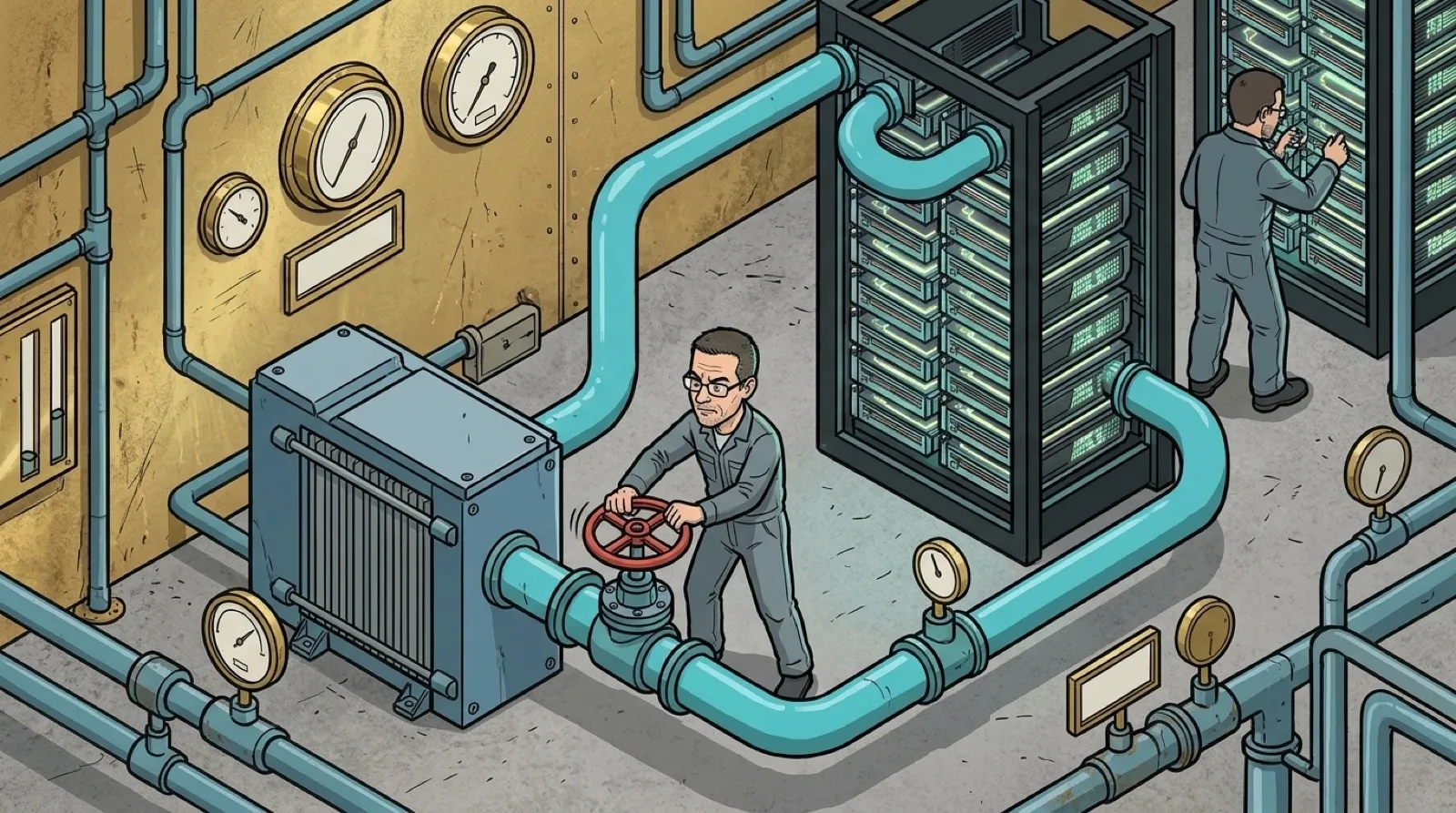
A server rack has become a plumbing problem, which the facilities team probably noticed long before the model finished its sentence.
Meta’s Prometheus cluster in New Albany, Ohio, offers a concrete view of the change. Its engineering write-up describes hundreds of thousands of GPUs working across interconnected buildings. Roughly a million is the stated full-scale destination, rather than the installed count to paste into a headline today.
The density explains why an ordinary-looking building now needs extraordinary preparation. Meta lists approximately 120 kilowatts across its two-rack GB200 configuration. The newer GB300 design brings 72 GPUs into one rack at roughly 135 kilowatts. Those numbers describe different physical arrangements. Dividing the first by two and calling it a measured generational efficiency improvement would send a very confident spreadsheet into a very embarrassing meeting.
For an operator, the first question is where that electrical load can go and how its heat leaves. Empty floor space answers neither. I’d want the planned operating load, electrical headroom and cooling arrangement beside the rack count before treating a room as ready for more machines. A floor plan has never tripped a breaker, which may explain its unreasonable optimism.
Meta’s cooling account describes water mixed with glycol circulating through the hardware and heat exchangers, then returning to do the job again. It expects that coolant to remain in use for up to a decade. The fluid transports heat; the heat still has to leave the system somewhere.
The modular approach is particularly useful to understand. Meta says racks can contain pumps and heat exchangers that provide the closed-loop arrangement on a smaller, distributed scale. That creates a route for liquid-cooled equipment into a building that wasn’t originally fitted for it. It doesn’t make the original building’s electrical or heat-removal limits disappear. A new kitchen faucet doesn’t increase the house’s water pressure, either.
This is also where the power and water conversation can go wrong. An impressive compute figure, a coolant-lifetime claim and an annual utility reading answer separate questions. I’d ask which building, which cooling design and which measurement period each figure covers. Otherwise a vendor can supply three accurate numbers and leave the reader with one inaccurate impression.
An AI build-out therefore changes the purchase discussion before the servers arrive. Facilities and IT need a shared plan for power, heat rejection, service access and the retrofit’s sequence. The useful comparison is the workload a particular site can sustain after those constraints are met, with assumptions written down. These Meta accounts describe its designs; they don’t provide an independent audit of every facility’s resource use.
More GPUs. Same laws of physics.