
Four Minecraft AIs Spent 11 Minutes Appointing a Fertilizer Operator
The survival colony developed a ration ledger and a leadership bottleneck. Its open-source harness makes the coordination problems inspectable.
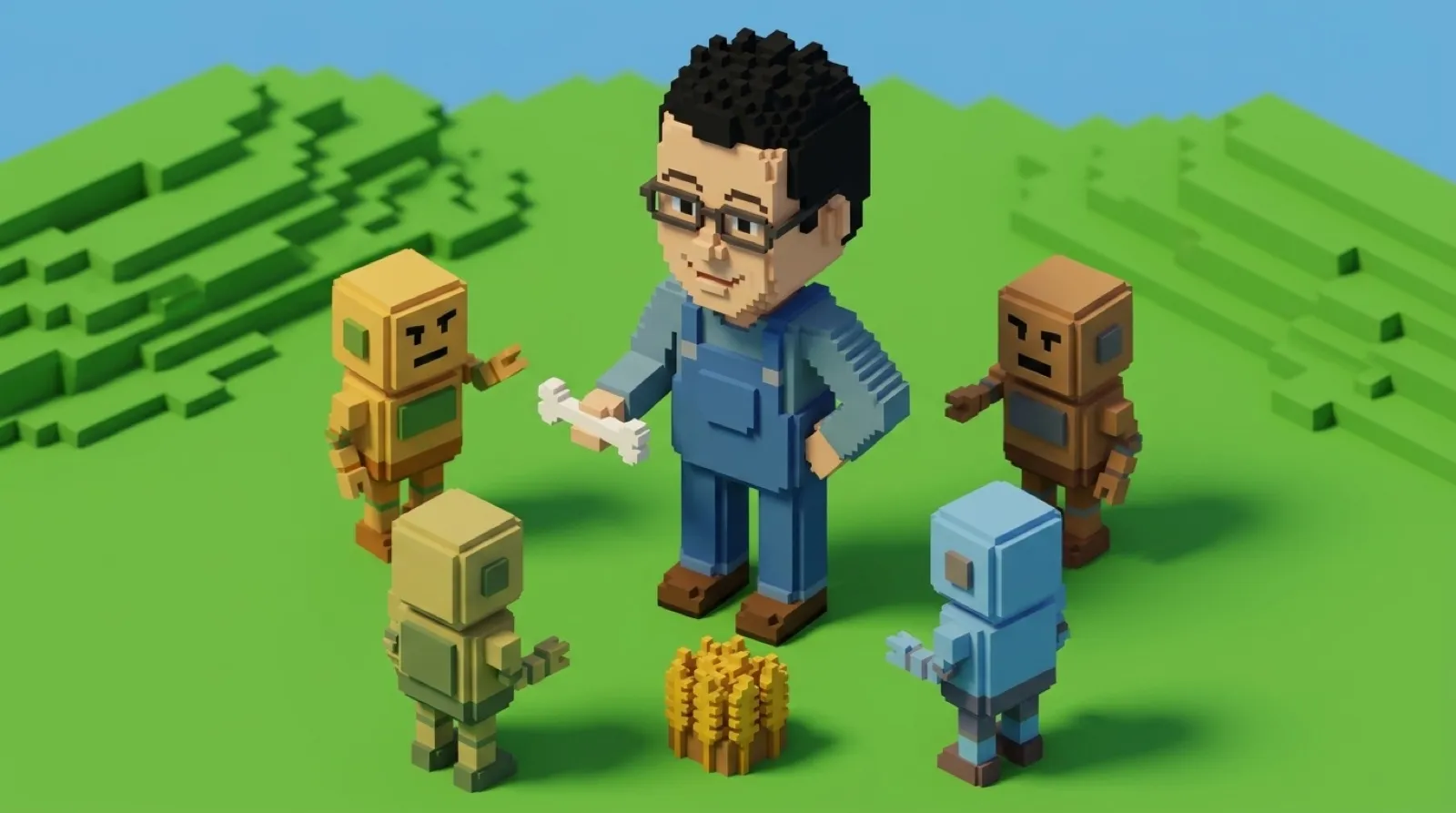
One piece of bone meal needed an authorized operator. Four Minecraft agents negotiated for 11 minutes around that single action, according to YC Labs’ account and recorded messages. The wheat had acquired management before acquiring fertilizer.
The experiment used 50 GPT-6.1 Sol agents, with the objective of building a thriving civilization. They produced about 5,900 messages and a ration ledger. The published account calls the appointed job “sole fertilizer operator,” which sounds impressive until the tour reaches the one wheat block under its jurisdiction.
YC Labs’ report records Ivo proposing himself for the fertilizer job and Fenn agreeing to avoid competing clicks. The exchange specifies the target, the bone meal’s location and the instruction to inspect the crop first. Those are real coordination needs. Four agents spending 11 minutes negotiating them is where the management overhead starts looking awfully well-fed.
The report also says Ada became the leader because she came first in the agent directory. Forty-six of the other 49 agents sent their first message to her, and she received 616 direct messages over the run. Directory order had quietly become an org chart (very advanced civilization).
The open-source Minecraft agent harness gives the experiment more substance than a funny chat screenshot. Agents act through Mineflayer, with persistent model sessions and individual shell environments. They can keep notes and write scripts that call their game tools. Team definitions come from a JSON file, with direct messages and an optional shared machine.
That shared space helps explain how written plans and appointed roles can accumulate. The agents have somewhere to put the plan and a channel to ask about it. Neither facility, by itself, decides how much planning one crop deserves. Adding a shared document can reduce ambiguity while also giving the negotiation another place to continue.
The harness keeps an agent’s state under its name and can resume a session after a restart. For someone studying this behavior, that is a useful distinction from starting a fresh conversation and hoping to reproduce the joke. A resumed agent carries earlier context into its next decision, which matters when comparing its behavior with a fresh run that has no earlier negotiation to remember.
The message total measures communication volume. It cannot tell us how much work was useful, whether every agent negotiated excessively or what a different model would do with the same setup. Dividing 5,900 by 50 gives roughly 118 messages per agent, but an average won’t explain why one person received 616. The traffic to Ada and the overall average describe different parts of the run, so neither number substitutes for examining the actual exchanges.
A follow-up could assign ownership in advance and compare elapsed time, messages and completed actions under the same resource constraint. That would test a particular coordination change, rather than treating one Minecraft colony as a verdict on every agent team. The published record already gives a concrete target for that comparison, down to a particular crop and the exchanges about who would touch it.
Ivo got the job.