
Sega Saturn vs. Dreamcast: eight times the main RAM, with the modem finally built in
Sega’s successive consoles changed the memory budget and moved network access into the standard hardware package.
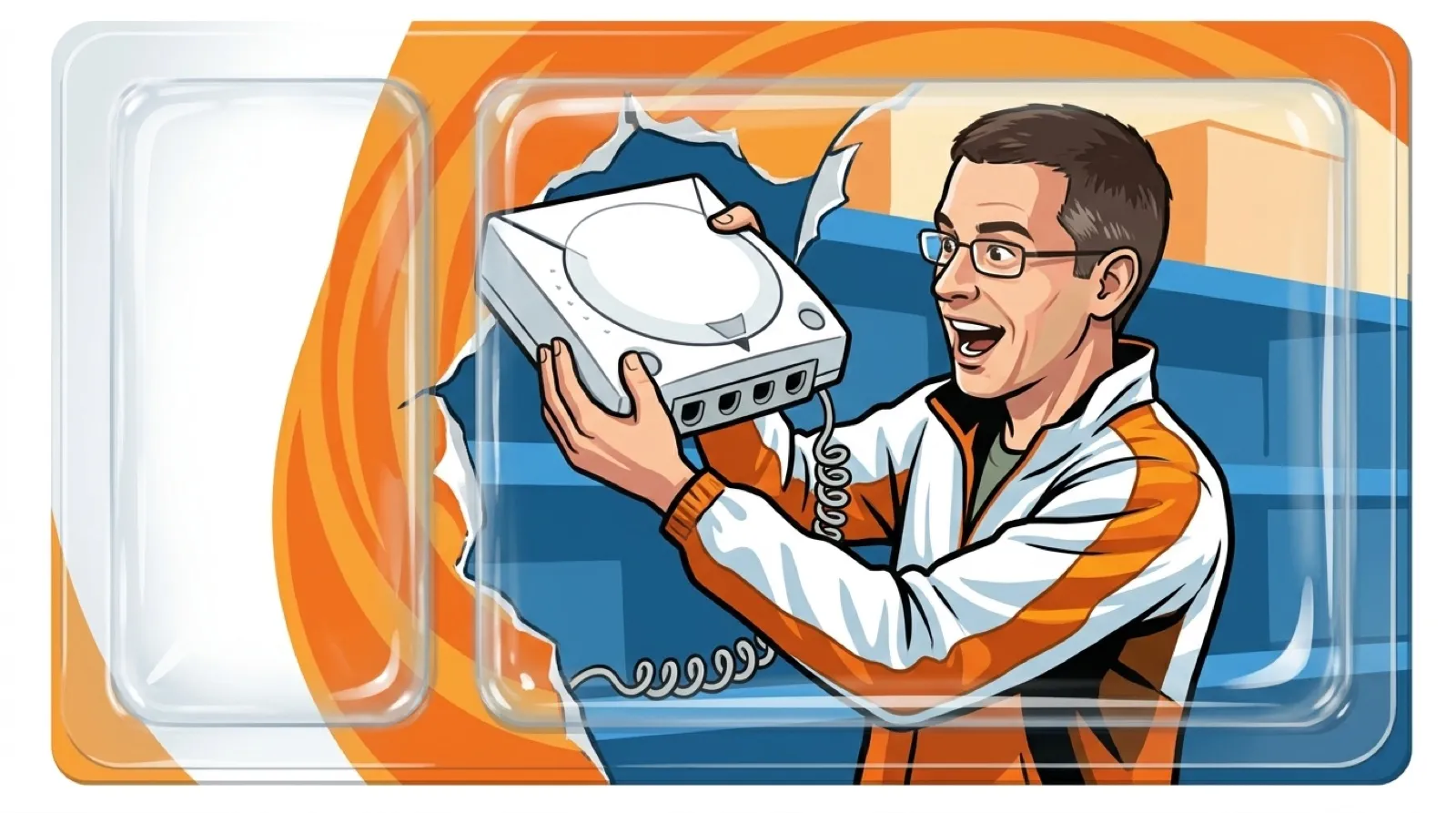
The Dreamcast’s modem made a visible promise before you connected anything: this console expected a telephone line to be part of the setup. The Saturn could also go online, but Sega describes that as an option. The difference lived in the standard box, alongside a substantial increase in memory.
Sega’s Saturn specification lists 16 megabits of work RAM. Divide by eight to express that as 2 megabytes. This is an easy place for an impressive comparison to go wrong: an uppercase B changes the unit, and leaving the conversion out would make the old machine appear eight times more capacious than that figure actually describes.
The Dreamcast page uses megabytes for its memory figures. It lists 16 MB of main memory, 8 MB for textures and 2 MB for sound. Keeping those purposes distinct avoids turning every kind of RAM into a single number that conceals how the machine uses it.
| Published allocation | Saturn | Dreamcast |
|---|---|---|
| Work/main RAM | 2 MB | 16 MB |
| Video/texture RAM | 1.5 MB video RAM | 8 MB texture memory |
| Sound RAM | 0.5 MB | 2 MB |
| Online hardware | Optional | Standard modem |
Those labels preserve the manufacturer’s categories rather than suggesting perfectly interchangeable architectures. The main-memory comparison is eightfold. It does not mean every game, graphical effect or loading operation became eight times faster. A memory budget tells a developer how much can fit, while the rest of the machine determines what can be done with it.
For the modem, regional specificity is useful. The Japanese history page lists a removable 33.6 kbps unit. That number should not be silently replaced with a specification from another market. Someone buying an imported console needs the details of that actual unit, including connections and intended region, rather than a worldwide average Dreamcast assembled from several listings.
Sega’s page describes web browsing, chat and online games as uses for the network hardware. Standard equipment made those possibilities visible to every owner receiving that package. It still did not guarantee the existence of a compatible service indefinitely. The hardware socket can survive long after the service it originally reached has changed.
For a present-day Dreamcast or Saturn purchase, choose the games and the actual hardware configuration first. The specification comparison explains how Sega changed its design assumptions. The modem is a particularly tangible piece of that history: a standard invitation to connect, printed into the shape of the console.
The phone line got a console port.