
Windows Solitaire's removed boss key disguised the game as C code
Wes Cherry's own interview preserves a telling detail about an office escape hatch that never reached the released game.
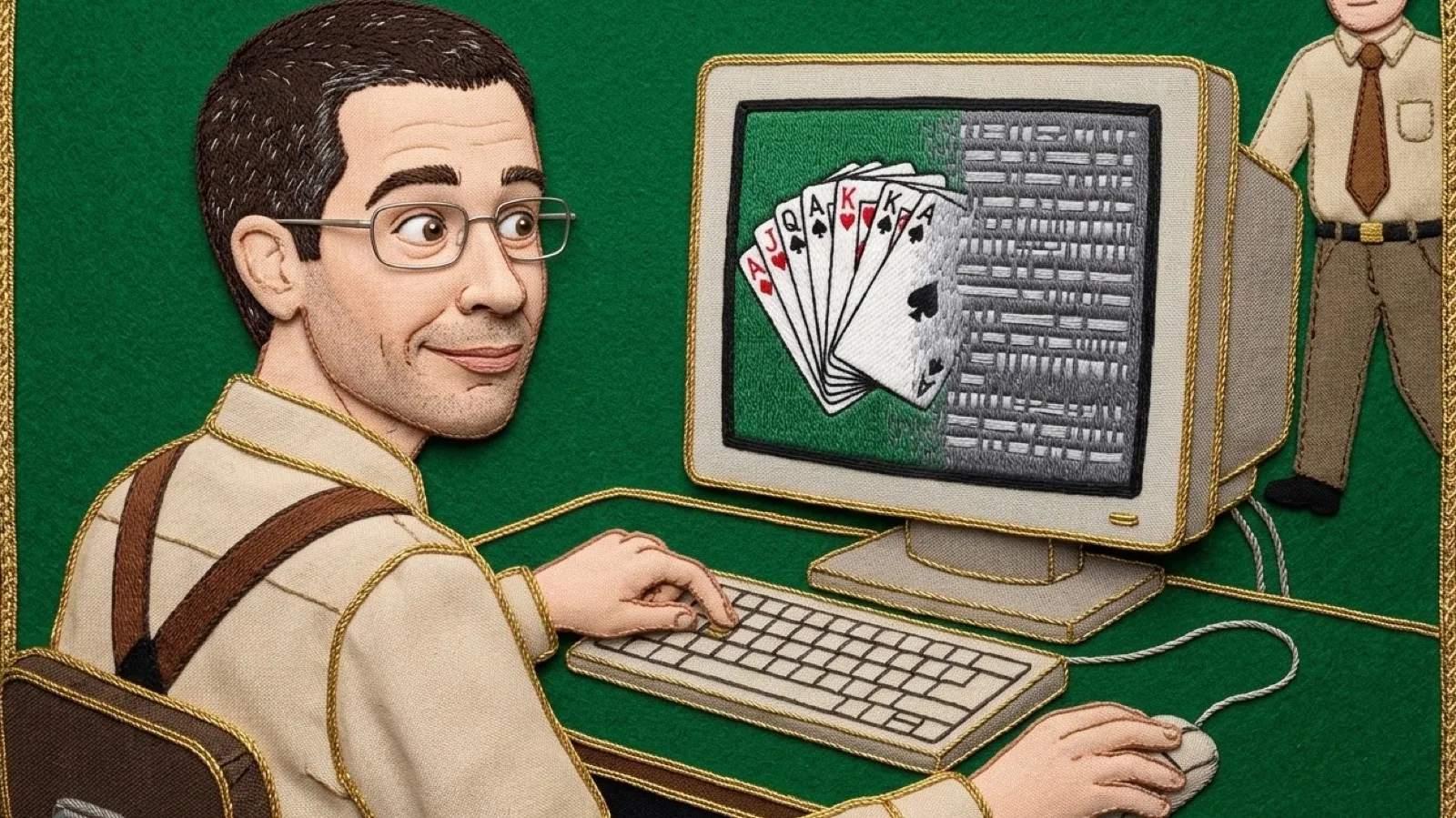
Solitaire once offered a way to look busy that was almost too appropriate for a software company: replace the cards with source code. Apparently the next deal could wait; the fake development work was urgent.
Wes Cherry described the discarded feature in a direct interview with B3ta. Asked about getting caught playing at work, he said the key displayed “some random .C code.” His next sentence gives the outcome: Microsoft required its removal.
The distinction is worth keeping attached to the anecdote. The screen Cherry describes is C code. A fake spreadsheet is a different prop, and swapping it in changes the developer’s own account. The joke still works with the actual detail, particularly for anyone who has seen a screen full of code accepted as proof that Something Technical Is Happening.
The Strong National Museum of Play’s entry places the game in Windows 3.0 and identifies Cherry as the programmer and Susan Kare as the card-deck designer. The museum also frames the familiar card game as an approachable way to practice using the mouse. A quiet game in the operating system could make the unfamiliar interface less intimidating.
Those two uses pull in amusingly different directions. A player could learn the gestures needed for work while doing something that looked suspiciously like avoiding work. Cherry’s proposed disguise took that tension literally and supplied a shortcut for the moment a supervisor walked by.
The hypothetical boss would only need a glance to be fooled by random code. That assumption is part of the joke, and a fairly sharp comment on judging computer work by the shapes on the display. A full editor window can be as idle as a card table. The screenshot alone doesn’t record whether anybody has made progress.
The broader design question is more interesting than whether a hidden key would have been useful. A feature can be perfectly understandable to the person who built it and still be something the distributor refuses to endorse. Shipping software gives the joke a different audience, including the organizations expected to allow it on their computers.
A modern app could borrow the playful teaching method without copying the concealment feature. Give somebody a task they recognize, make the control useful immediately, and let repetition teach the motion. That possibility is much more durable than designing for the ten seconds before a manager reaches the desk.
The surviving story leaves the rejected screen described in an interview, rather than somewhere to summon in the released game. Anyone going hunting for that key in an ordinary Windows installation has already been dealt the wrong expectation.
Microsoft folded that feature.