
Hardwareadafruitesp32raspberry-piarduinomicrocontrollers
Adafruit's $34.95 Metro ESP32-P4 Hydra Puts Raspberry Pi Display and Camera Connectors on an Arduino Uno-Shaped Board
Adafruit's Metro ESP32-P4 Hydra routes the ESP32-P4's two-lane MIPI display and camera buses to 22-pin connectors that take Raspberry Pi Touch Display 2 panels and Zero cameras, on a board laid out like an Arduino Uno.
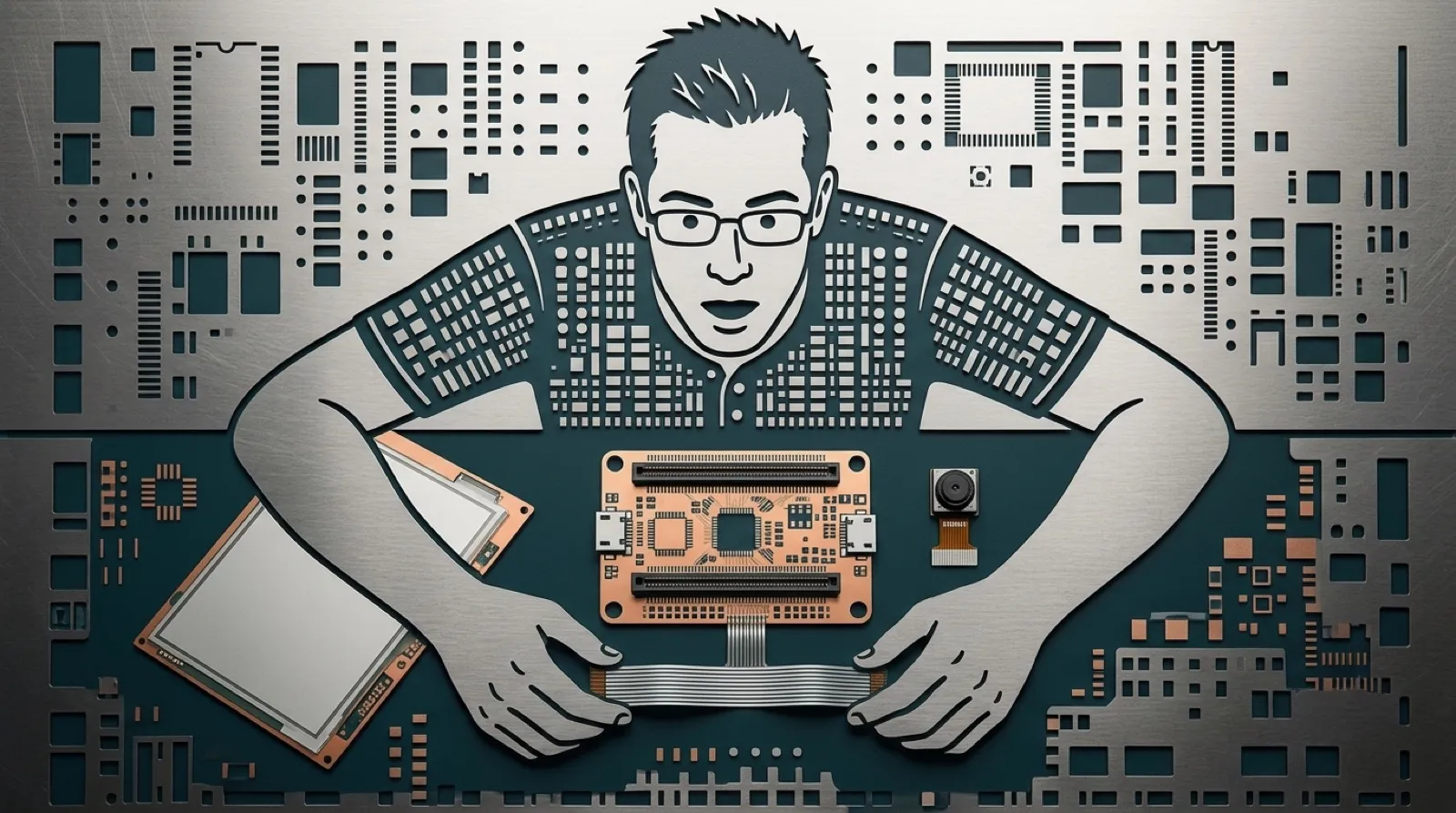
The trick is in the ribbon cables. Adafruit’s product page lists “Separate 22-pin, 0.5 mm-pitch MIPI display and camera connectors, each carrying two data lanes.” Those are the same skinny connectors Raspberry Pi uses, so the accessories a lot of makers already have in a drawer just plug in.
“Thanks to the built-in DSI display and CSI camera connectors, we can re-use many Raspberry Pi-compatible displays (with 2 lanes) and “Zero v1” cameras just by plugging them in!” Adafruit writes. The supported list names the “7″ Raspberry Pi Touch Display 2 - 720x1280, with capacitive touch” and its 5-inch sibling at the same resolution, plus the Zero Spy Camera (OV5647) with 70, 120 or 160 degree lenses.
The rest of the board is pure Arduino muscle memory. There are “Metro/Arduino Uno-style headers with D0–D13, six analog inputs, I2C/I3C, and a separate six-pin SPI header,” with every GPIO at 3.3 volts. Add USB-C, a USB-A host port, microSD, a STEMMA QT plug and “a single-cell LiPo battery connector with battery-voltage monitoring, onboard charging & charging/status indicators.”
The brains are a “Dual-core 32-bit RISC-V processor, up to 360 MHz,” with “16 MB PSRAM internally” and 16 MB of NOR flash. Wireless lives on a separate chip, an “ESP32-C6 wireless coprocessor” that talks to the P4 over SDIO. Adafruit adds that the C6 radio “also supports Bluetooth LE 5.3, Thread, and Zigbee,” though those may need extra firmware.
Then comes the fine print, in capital letters: “PLEASE NOTE: This is NOT the ESP32-P4X chip, we are currently shipping with “v1” chips,” and “if you need the “v3” P4X do not purchase this item!” Raspberry Pi’s newer camera is also off the list: “Note that IMX708 “v3” cameras aren’t supported!” And the page currently reads “Out of stock,” with an email signup and no restock date.
Here is how it stacks up against Adafruit’s previous Metro and Arduino’s own Wi-Fi Uno, using each maker’s spec page:
| Metro ESP32-P4 Hydra | Metro ESP32-S3 | Arduino UNO R4 WiFi | |
|---|---|---|---|
| Price | $34.95 | $24.95 | not on spec page |
| Processor | Dual-core RISC-V, up to 360 MHz | Dual-core Tensilica, 240 MHz | Arm Cortex-M4 (RA4M1), 48 MHz |
| PSRAM / SRAM | 16 MB PSRAM | 8 MB PSRAM | 32 kB SRAM |
| Display and camera connectors | Two 2-lane MIPI (DSI + CSI) | None listed | None listed (12x8 LED matrix) |
| Radio | ESP32-C6 coprocessor | ESP32-S3 built in | ESP32-S3 module |
The Metro ESP32-S3 page lists a STEMMA QT port and JTAG header but no display or camera interface, and Arduino’s UNO R4 WiFi offers “32 kB SRAM and 256 kB flash memory” next to its LED matrix. Adafruit hasn’t said when the P4X “v3” version of the Hydra will arrive, or whether it will keep the same price.
A moderate-confidence prediction: boards like this make the “do I need a Pi for this?” question a lot easier to answer with no. A thermostat face, a doorbell camera or a little kiosk screen often needs a display, a camera, Wi-Fi and a battery, and little else. If the P4X version lands at a similar price, expect the v1 boards to turn up cheap in maker swap bins.