
Ohio Draft Bill Would Let Utilities Build Power Lines While Landowners Fight Over the Payout
The Ohio Farm Bureau is pushing back after learning of an effort to move the proposal through the lame-duck session.
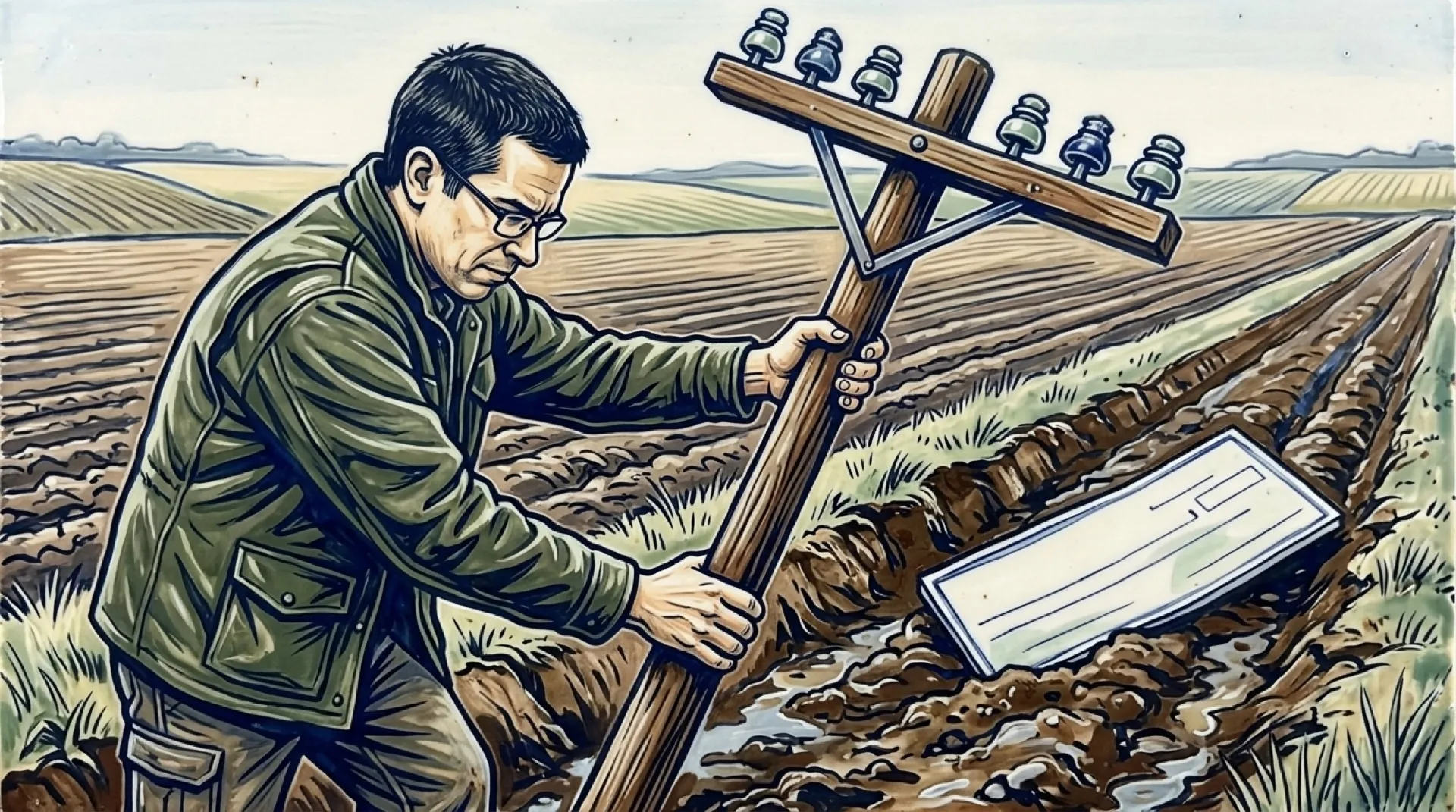
Evan Callicoat learned over the weekend that there was a push to get an Ohio utility bill through the lame-duck session. The Ohio Farm Bureau’s state policy director told Karen Kasler of the Statehouse News Bureau that discussions about this kind of power went back to Ohio’s 2007 eminent domain overhaul. The push to move the bill was the new part. Callicoat called the proposal “an egregious expansion of eminent domain authority.”
The draft would give certain utilities faster access to procedures currently specified for public road and rail projects. An independent appraiser would set the deposit required to take the property. Once the utility put that money down, crews could start work while the owner and utility were still at odds over compensation. Think about seeing the first transmission pole go up while you’re still contesting what the land under it is worth. That’s a power move in the most literal sense.
The Ohio Business Roundtable calls it “deposit and build” (sounds almost turnkey). The Farm Bureau calls it “quick take.” Both names describe the same sequence. The business group starts with the money the utility puts down. The farm group starts with what happens to the property. Callicoat told Kasler that the utilities in question already have eminent domain authority. He also said other states that use quick take often have stronger farmland protections, and that the Ohio proposal could affect any property owner in the state.
Sen. Bill Reineke, who worked on the draft, said in a statement that landowners should retain the ability to appeal court decisions. He argued that building out the grid would bring Ohioans’ energy costs down. An appeal and a construction crew could still be moving on separate clocks. As of Kasler’s November 18 report, lawmakers were still working on the proposal and the bill had yet to be introduced.
A data center developer could have a site and a date circled for switching on the racks and still have an open question about the route that gets the electricity there. If Ohio adopts this approach, a utility could move one part of that schedule forward by paying the deposit while leaving the eventual land cost open. That might give a project manager a firmer date for putting crews in the field, with a blank still sitting in the budget.
For the landowner, those dates come in the opposite order. You can still be making your case about what the acreage is worth while the crew assigned to that acreage is already on the clock.
The pole could go up first.