
An internet design rule said to accept bad input; a later RFC warns the bugs can become permanent
The IAB’s 2023 guidance explains how interoperability workarounds accumulate, with an important limit: its maintenance approach needs implementations that can still be updated.
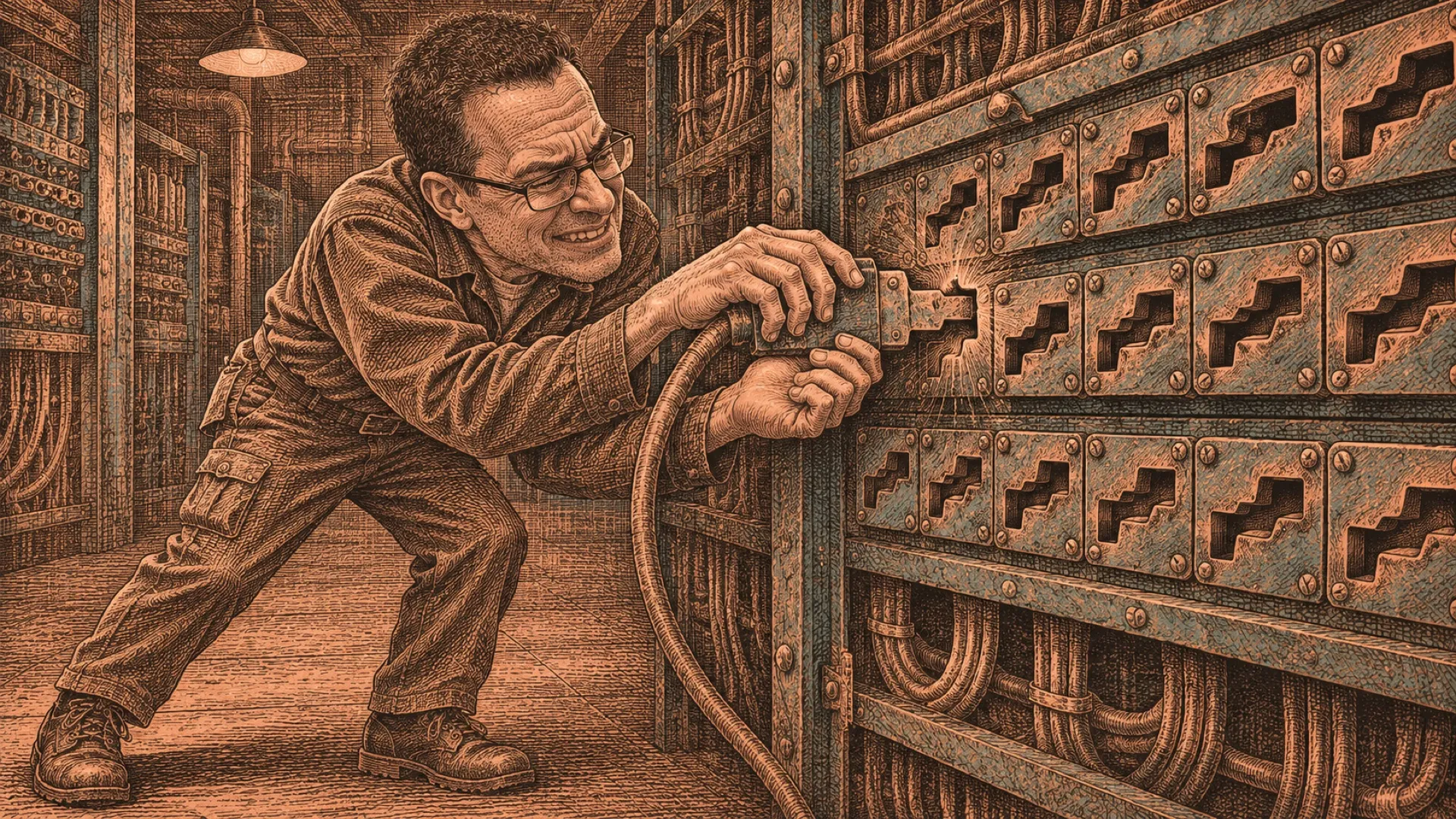
A receiver quietly fixes a malformed message, the sender keeps sending it, and eventually the workaround becomes something everyone else has to reproduce. Congratulations, the bug has acquired compatibility requirements.
The original TCP specification states the robustness principle in section 2.10: “be conservative in what you do, be liberal in what you accept from others.” That January 1980 instruction became a compact way to describe generous receiving behavior.
The later RFC 9413, Maintaining Robust Protocols, examines where that generosity causes trouble. It describes errors becoming entrenched until implementations must replicate aberrant behavior to interoperate. A receiver that helps today can make tomorrow’s correction much harder, because the sender never had to notice the original problem.
The document is June 2023 Informational guidance from the Internet Architecture Board, authored by Martin Thomson and David Schinazi. It is not an Internet Standards Track specification or a formal retraction of the older sentence. Calling it a retraction would conveniently turn a nuanced maintenance argument into a slogan. The internet already has enough of those (and several backups).
RFC 9413 keeps resilience to defects and attacks separate from silently accommodating unexpected input. It recommends communities actively maintain specifications, implementations and deployments together. That leaves a practical limitation: if the deployed software cannot be updated, the proposed maintenance work has fewer places to go.
Imagine a hypothetical receiver that accepts a misspelled field name. If it silently treats the spelling as correct, the sending team may never see a failure. A second receiver that follows the written field name can look broken to users, even though it is the first receiver that expanded the effective contract.
The fix would need more than making the second receiver equally forgiving. Somebody has to identify the producer, determine what the specification means and give users a path through the transition. Otherwise the misspelling becomes permanent documentation that nobody intended to write.
This is why “reject everything unusual” would be an equally lazy reading. Error handling and extension rules need to be defined deliberately. A protocol can explicitly permit several valid forms without asking every receiver to guess the sender’s intention independently.
For a team maintaining a protocol today, the useful work could begin with one tolerated deviation. Name it, find its callers and decide whether the specification should recognize it or the sender should stop producing it. The unpleasant unknown is how many other implementations already depend on that same deviation; the first successful response won’t reveal them.
The typo has dependents now.