
Nokia 3310 vs. Nokia 1100: 47 grams lighter, with a flashlight
The original models reward two different collectors: one wants the familiar games, the other wants a small tool that happens to make calls.
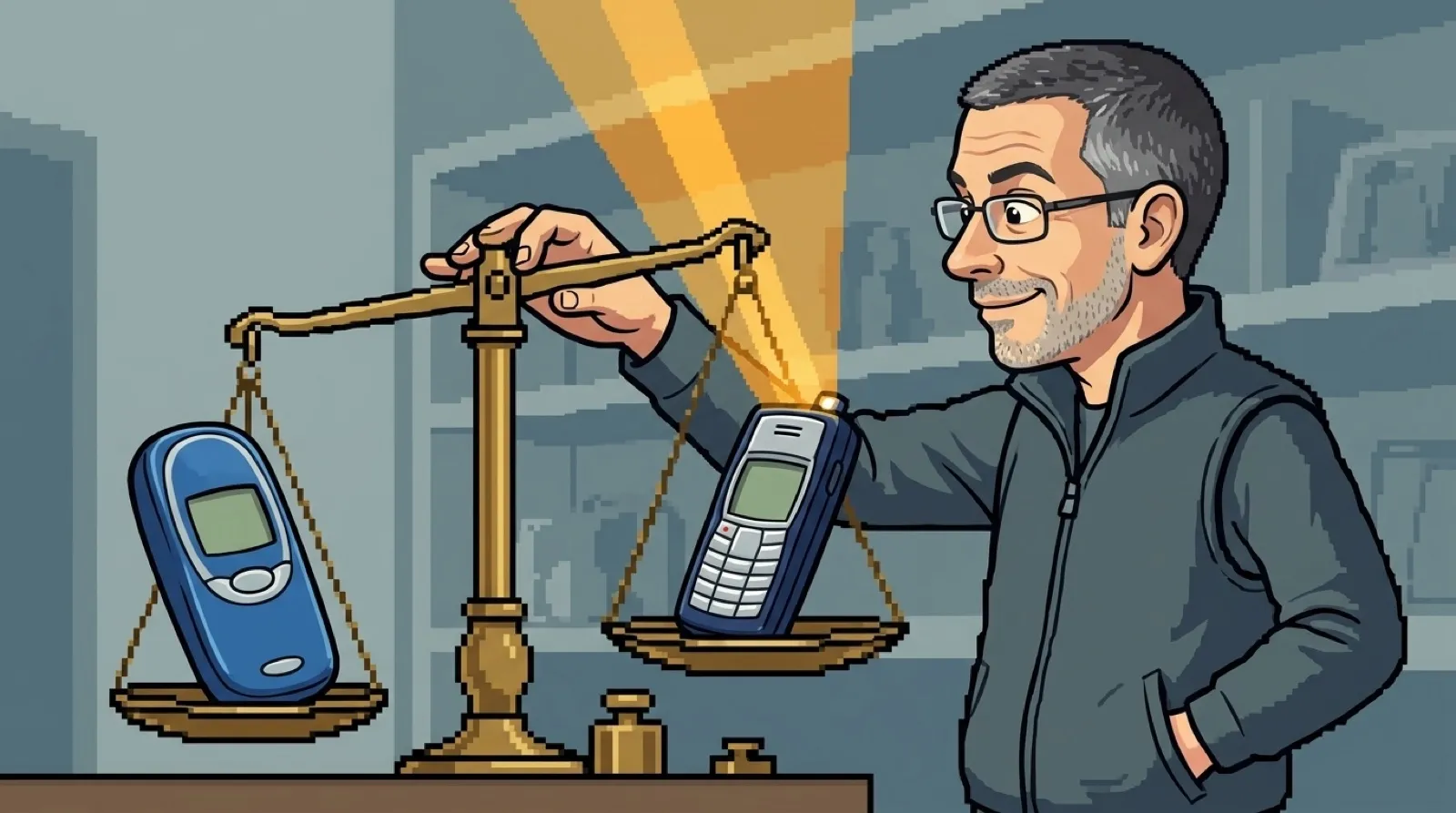
The Nokia 1100 has a feature that makes a surprisingly good argument against a spec-sheet contest: a flashlight. The Mobile Phone Museum says holding the C button activates it. No app to download, no account to create, no software asking whether darkness may track you.
The original Nokia 3310 arrived on September 1, 2000, according to the museum. The 1100 followed on August 27, 2003. These are the old models; a later phone reusing a familiar number would make a very different comparison. Model names apparently need their own family tree.
| Deciding detail | Nokia 3310 | Nokia 1100 |
|---|---|---|
| Museum-listed weight | 133 g | 86 g |
| Monochrome display | 84 × 48 pixels (Wikipedia) | 96 × 65 pixels (Wikipedia) |
| Total display pixels | 4,032, calculated | 6,240, calculated |
| Practical hook | Snake II, Space Impact, Bantumi, Pairs II | Built-in flashlight |
The weight subtraction is 133 − 86 = 47 grams, using the museum’s listed configurations. An individual surviving phone still needs its battery and condition checked; a number in a record doesn’t weigh the replacement parts in a seller’s photograph.
The screen calculation uses Wikipedia’s 3310 dimensions and 1100 dimensions: 84 × 48 = 4,032 and 96 × 65 = 6,240. The difference is 2,208 pixels. Both are monochrome screens. That arithmetic measures available dots, not how large the letters look or how readable a particular old display remains.
The 1100’s museum entry describes a non-slip casing and dust-proof design, with calls and text messages as its basic job. A flashlight fits that emphasis. Somebody needed to find something in the dark, and the phone already happened to be in their hand. For once, adding a feature didn’t require another screen of settings.
The 3310’s museum entry devotes much more room to personalization and communication extras: composed ringtones, changeable covers, predictive text and a chat function using short messages. Its four named games give the collector a specific shopping list. “Has Snake” is less useful than seeing the correct game’s menu on the actual handset.
Nokia’s contemporary positioning called the 3310 a “lifestyle accessory,” as preserved by the museum. Even a basic phone came with a lifestyle attached (batteries extra, emotionally). The 1100’s torch offers a wonderfully literal alternative: it helps you see the lifestyle you’ve dropped behind the couch.
A buyer hunting for the Nokia 3310 or Nokia 1100 should separate the collectible from the intended daily phone. This comparison establishes their documented hardware and features. It supplies no promise that either will work on the buyer’s current carrier; that needs a separate answer for the exact handset and network.
The museum also qualifies its huge 1100 sales total as covering various versions. Subtracting that from a 3310 figure would lend false precision to a contest the records don’t define equally. The small, reproducible comparison is more fun anyway: fewer grams in the pocket, more dots on the display, and a light at the top.
C is for “can’t see.”