
Producer sends one encoded live show to Twitch, Kick and YouTube, with a self-hosted option
The AGPL desktop studio combines guest links and server-side posting, while its beta warning sets a clear limit on readiness.
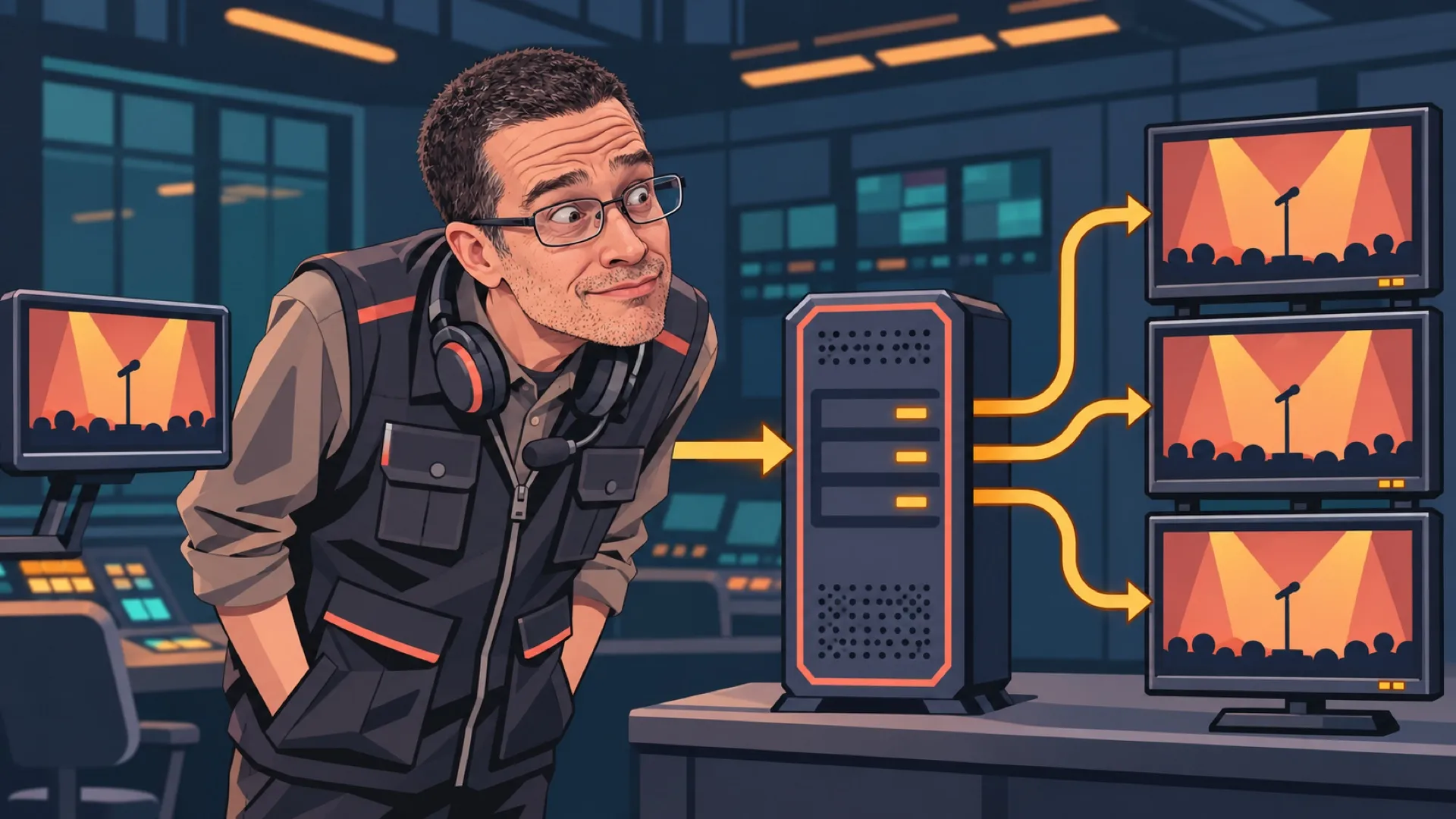
A live show can go to three platforms without asking the computer to encode the same picture three times. Producer makes that the center of its pitch, then offers something else worth noticing: the backend can be yours.
The desktop studio combines scenes, sources, local recording, guests and publishing tools. The maker says Apple silicon uses VideoToolbox H.264 hardware encoding, with the result fanned out to Twitch, Kick and YouTube. Windows uses x264 today; the site lists NVENC, AMF and QSV as future work.
That boundary belongs beside the sales pitch. Hardware encoding on one platform doesn’t silently become hardware encoding on every download. The site’s illustrated CPU usage and stream figures also need a rehearsal on the intended computer before they become anybody else’s expected performance.
The encoded stream still has to travel to each destination. One encode can reduce repeated compression work without making three outbound streams cost the same bandwidth as one. The project says it uses no relay and charges no per-destination fee. Your connection still has to carry the show; the internet doesn’t accept an open-source license in place of upload capacity.
The repository is more candid about readiness than the shiny interface. Its warning is unambiguous: “not recommended for production shows yet.” Expect breaking changes and keep a fallback, the maintainers say. The useful comparison at this stage is a trial run against your actual requirements, rather than immediately replacing the one setup you trust for a paid broadcast.
Guests join through a browser link or another Producer installation. The server handles signaling, while media goes peer to peer, according to the README. It also admits the current setup is STUN-only unless a TURN server is configured, so guests behind restrictive network translation can fail to connect. The guest has arrived, but their packets may still be arguing at reception.
Self-hosting uses the server directory’s Cloudflare Worker backend, with D1, R2, scheduled work and a Durable Object for guest signaling. The project describes a free-tier starting point. That is a deployment option to evaluate against usage and provider limits, rather than a promise that every possible broadcast business has no hosting bill.
Scheduling runs on the backend, so the README says posts can fire with the laptop closed. It also says the self-hosted Instagram and Facebook senders have fewer real runs than Threads. That is a useful admission when deciding which part to try first.
Future destinations are listed as work to do, including X, TikTok and custom RTMP targets. They should stay in the future tense until shipped. There is already a substantial rehearsal to run with the current adapters, an ordinary guest link and a fallback ready beside it.
The chair comes with a beta label.