
Capcom reused fighting-game sprites, then its crossover hits paid for Strider Hiryu’s return
Planner Atsushi Tomita’s recollection connects arcade production budgets to a character artist’s chance to bring back an older hero.
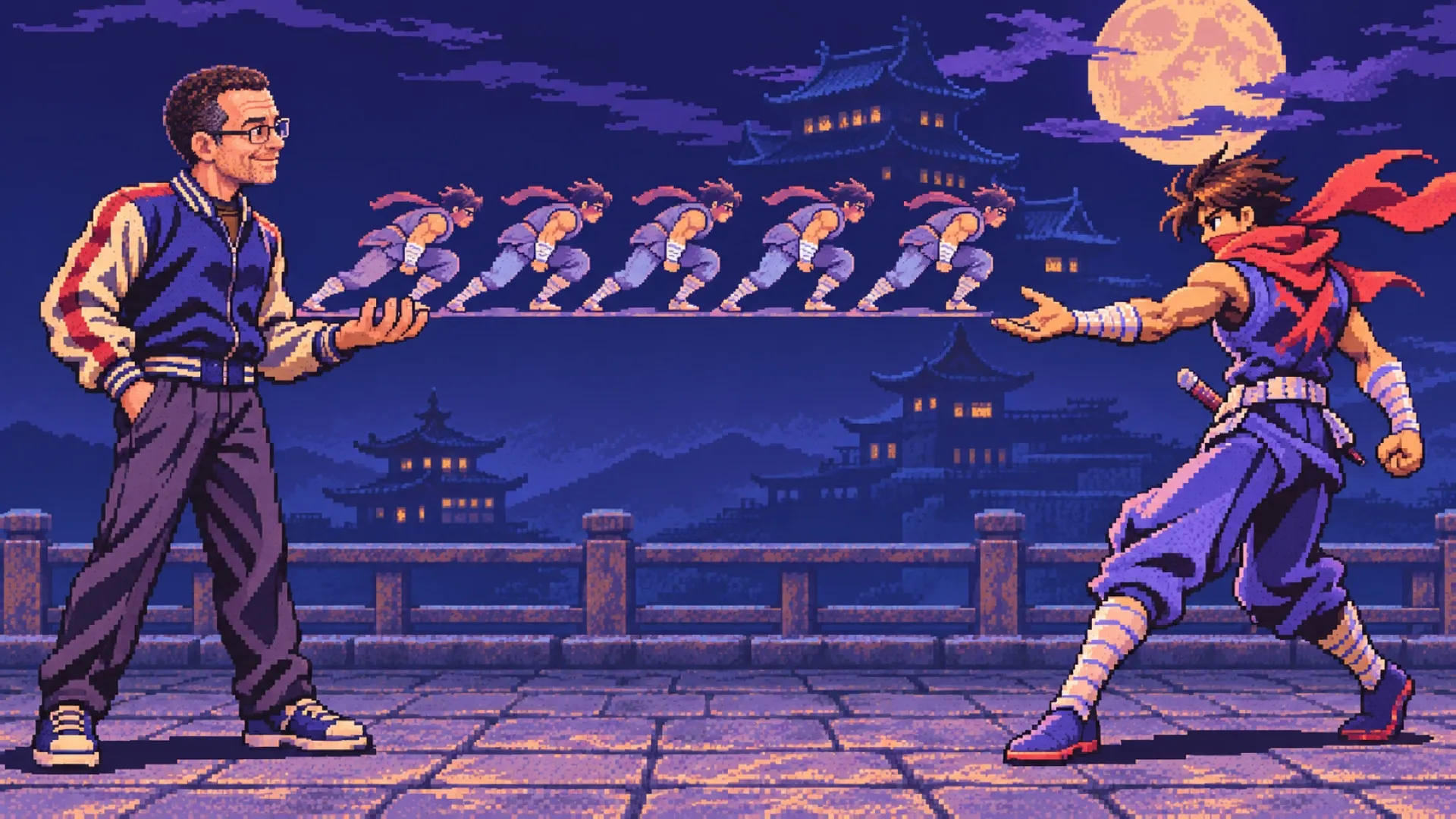
Capcom’s crossover fighters had an economical starting move: put existing sprite artwork back to work. A punch drawn once could keep earning its lunch money. According to former planner Atsushi Tomita, @tommy_tin, that reuse was part of the original point of the X-Men vs. Street Fighter series.
Tomita’s November 11 thread, written in Japanese, describes a production effort built largely around younger character artists. In translation, he says the original objective was recovering investment through reused pixel art. That is a much more practical origin than imagining every crossover began with a roomful of people shouting their favorite characters.
Then the games kept hitting. Tomita says that success let the team bring in an ace character artist he identifies as F-hara, already associated with Spider-Man and Sakura sprites, to create Strider Hiryu. Recycling the old drawings helped create an opening for somebody who needed new ones, giving the old pixels a return on investment beyond another round of familiar punches.
The thread follows the team’s move from a title that read “vs. Street Fighter” toward one that could credibly read “vs. Capcom.” Within the work they could actually do, Tomita considered adding Mega Man, Strider Hiryu, Captain Commando and Arthur. That last choice did not survive unchanged: he recalls Arthur being rejected over concerns about his visual style, with Cyberbots’ Jin taking the spot.
@tommy_tin's post on X
Character selection had to answer a production question as well as a fan question. A roster could suggest the breadth of Capcom without requiring every old hero to become a fully animated fighter. Tomita describes putting additional characters into supporting roles, where even some less obvious choices could appear. Even a dream crossover roster had to fit the amount of drawing its artists could actually finish.
Strider got the more expensive invitation. Tomita credits Bengus with the Marvel vs. Capcom character design and basic standing pose, including the red scarf inspired by the manga version. He separately credits the sprite work to the character artist. Those are different jobs; compressing them into one heroic name loses the collaboration that made the character move.
The animation became popular enough that a proposal to use it for another Strider sequel started moving. Tomita says he never imagined he would end up joining that project partway through as its main planner. The thing intended to broaden a fighting-game roster had acquired another assignment.
There is a useful limit to the recollection. It does not give a complete budget, a measured reduction in development time or an accounting of every factor behind the sequel. Calling the games “half the work” would turn a specific production memory into a number the thread never supplies. That shortcut can stay on the cutting-room floor.
For developers revisiting old assets, this is an appealing possibility: reuse can fund the one unfamiliar element that gives the next project its identity. It depends on what the recovered time and money actually buy. Another roster of familiar faces would have been the predictable result; Tomita’s account leaves a different image, an older hero getting new animation and then an unexpected second engagement.
Strider picked up another shift.